
Men’s hairstyles for your face shape
A lifted front, a softer fringe or more length? Compare men’s cuts for your outline, texture and daily routine.
Texture, length & styling
Manual reference, not a scan. Use the face detector
Worth a closer look
3 starting points · no shape assumed
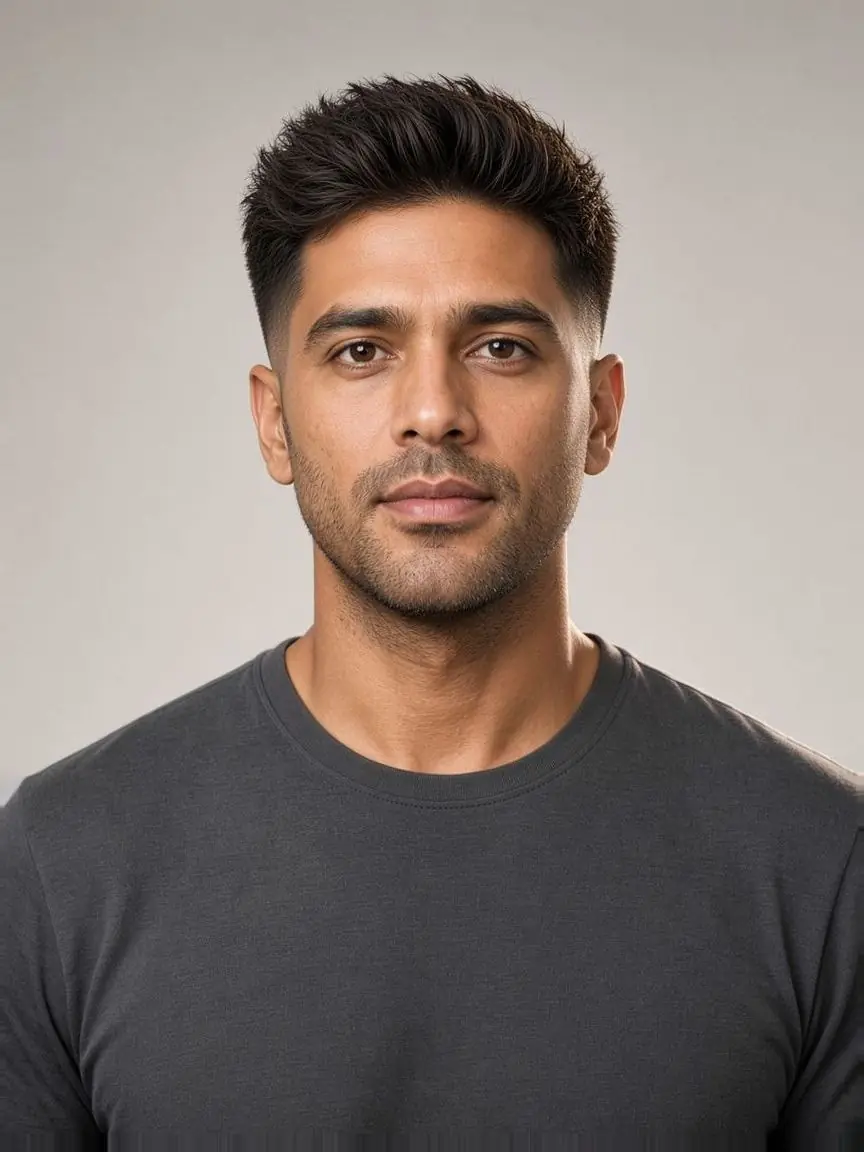
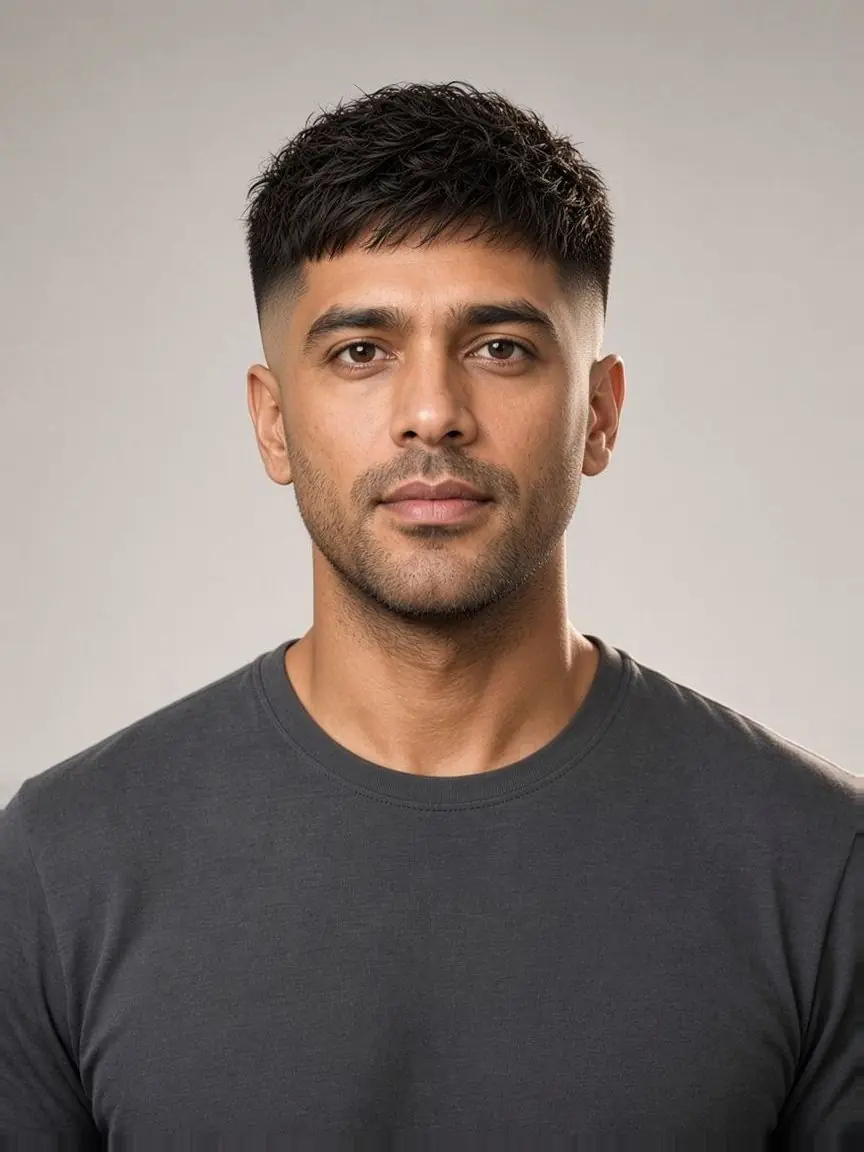
Quiff
The front lifts upward, opening the forehead and placing more height above it.
The photographed lift depends on density, growth direction and arranging the front; it is not a promise of the same height on fine hair.
Choose this if arranging the lifted front fits your routine; a crop offers less front height to maintain.
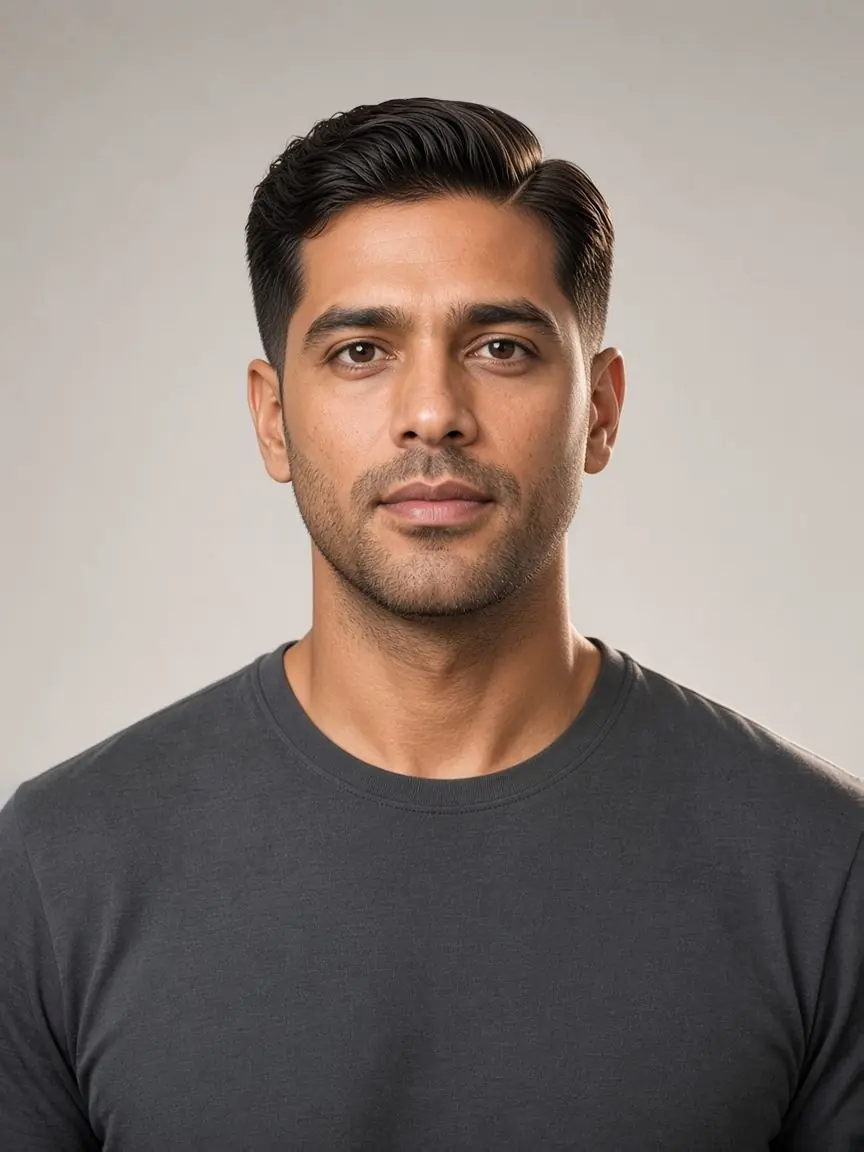
Side part
A defined part directs the top sideways while leaving the forehead open.
The sweep is fairly smooth; ask where your part naturally settles instead of forcing the photographed line.
A defined sweep needs placing; compare with a shorter crop if you want less front length to arrange.
Textured crop
A broken forward fringe and short sides keep the front lower than a lifted quiff.
The visible top has a broken, fairly straight edge; it is not a preview of tight curls.
A shorter front is an alternative to styling upward; the texture can still need placing and the sides need trims.
Bring your photo, when you’re ready.
Optional: prepare a photo on your device, then carry it with selected cuts into the studio. No face analysis or generation happens here.
JPEG, PNG, WebP or supported HEIC/HEIF · up to 20 MB.
AI generation is a separate action: sign-in, 1 credit per successful style, and upload to our image provider when you choose Generate.
Read the outline, then choose what to emphasize.
Compare the forehead, cheekbones and jaw. These seven outlines are starting points for a haircut conversation, not rules about how a man should look.
Oval
A longer-than-wide outline with a gradually curved lower edge.
Round
Length and width appear close, with a softer lower outline.
Square
A broad lower outline with more visible jaw corners.
Heart
The upper face looks broader and the outline narrows toward the chin.
Oblong
Length stands out, often with comparatively straighter sides.
Diamond
Cheek width stands out against narrower temples and a narrower jaw.
Triangle / pear
The jaw appears wider than the upper face; this is not an inverted triangle.
Illustrative outlines, not scans. Compare the seven-shape chart.
Start with the change, not a perfect-match score
Choosing men’s hairstyles for your face shape is easier when you name one visible goal. You might want an open forehead, less width beside the cheeks, a lower front or more movement around the ears. Your outline helps frame that choice; it does not prescribe a haircut or tell you which features need fixing.
Compare up to three catalog styles. Set a shape if it helps, then narrow texture, length and styling effort. Keep two different directions: a high front and a forward fringe teach you more than nearly identical fades.
Compare the front: lift, direction or coverage
A quiff raises the front and shows more forehead. A side part directs the hair across rather than straight up. A textured crop brings a shorter, broken fringe forward. Those are concrete differences you can discuss even if your face falls between categories. These photos show AI catalog models, not a verified example of each face shape or a promised result on you.
Quiff
An upward front exposes the forehead and adds visible top height.
Side part
A side-directed front gives structure without the same upward sweep.
Textured crop
A shorter, forward fringe keeps the front lower and broken.
AI catalog references, not measured face-shape examples or results from your photo.
Seven face shapes, several useful starting points
Oval: decide how much forehead to show
For an outline that is longer than wide with gradual transitions, compare a crew cut with curtains. The crew exposes more of the upper frame; curtains bring a divided fringe toward it. Short or long hair can work. If you prefer less apparent height, compare a lower front before choosing a tall quiff. The oval face-shape guide explains how oval and oblong descriptions differ.
Round: compare side width with front height
When length and width look closer and the lower outline is rounded, a quiff or diagonal side part offers an upward direction. A crop gives a lower, more covered alternative. A fade alone does not settle the choice: check the width above it and the front you will actually style. The men’s round-face haircut guide compares these options in more detail.
Square: choose definition or softer movement
A comparatively straight jaw outline can sit alongside either a defined side part or the softer movement of flow. Neither needs to disguise your jaw. Compare how much hair remains near the temples and ears, then choose the edge you prefer. A shorter textured crop may reduce the length you arrange, while a longer sweep leaves more room to change direction between cuts.
Heart: compare an open front with a falling fringe
A broader upper face narrowing toward the chin gives a different starting point from a broad jaw. Try curtains or a textured crop beside a side part and look at forehead coverage. Some charts call this an inverted or upside-down triangle. A widow’s peak is not required. Use the heart comparison guide when the terminology is unclear.
Diamond: look at the temples, not only the cheeks
When the cheek area looks wider than both the forehead and jaw, compare curtains with a side part. One brings pieces toward the temples; the other opens a directional line. Check whether close sides expose more upper width than you want. A longer flow is another comparison if keeping length matters. Your natural part and the way the front falls still decide what is practical.
Oblong: consider height and side fullness together
For a noticeably longer outline, compare a low crop or side-directed front with a taller quiff. If you want less apparent length, retain some side fullness and inspect where the fringe ends. Rectangle and long-face descriptions often overlap with this category. A long beard also changes the visible lower outline; look at the full frame rather than treating the haircut as an isolated shape.
Triangle or pear: describe the wider jaw
Here, triangle means a wider lower outline and a narrower upper face, the reverse of heart. Compare flow, a side part or a modest quiff to explore different amounts of upper fullness. You can also choose a crew cut because you prefer short hair. The useful question is where you want volume, not whether your jaw follows a rule from a chart.
Pick a length you are willing to maintain
Short hair is not automatically maintenance-free. A crew cut leaves less to arrange each morning, but close edges can need regular tidying. Curtains need enough front length to divide and fall as pictured. Flow keeps more side and back length; ask how it will sit behind the ears and at the collar when dry.
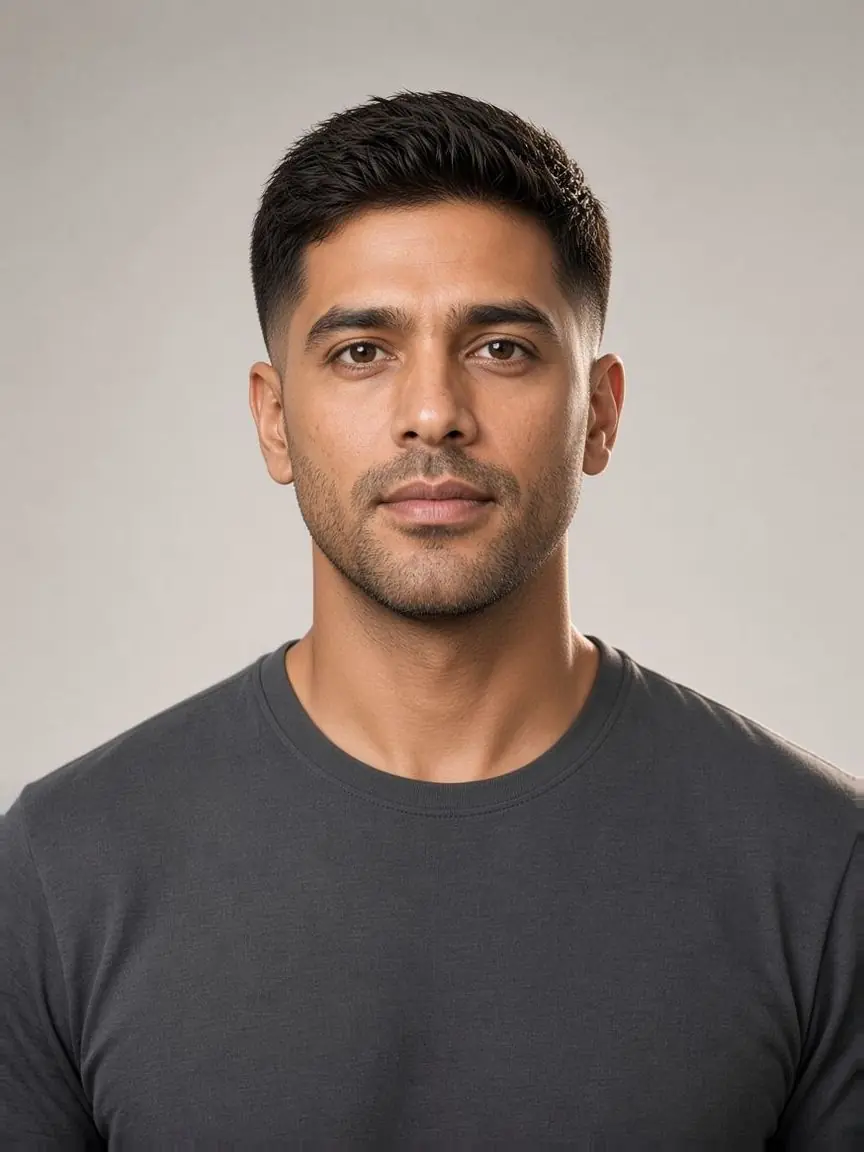
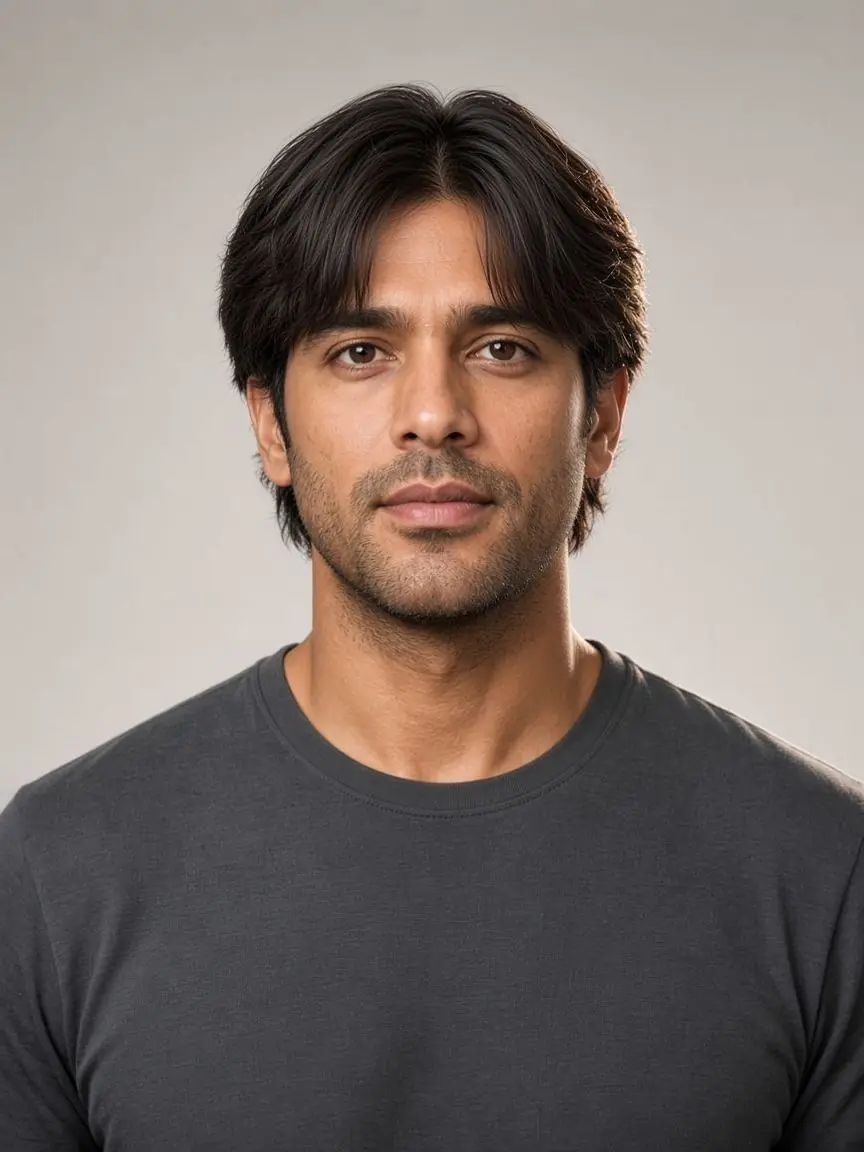
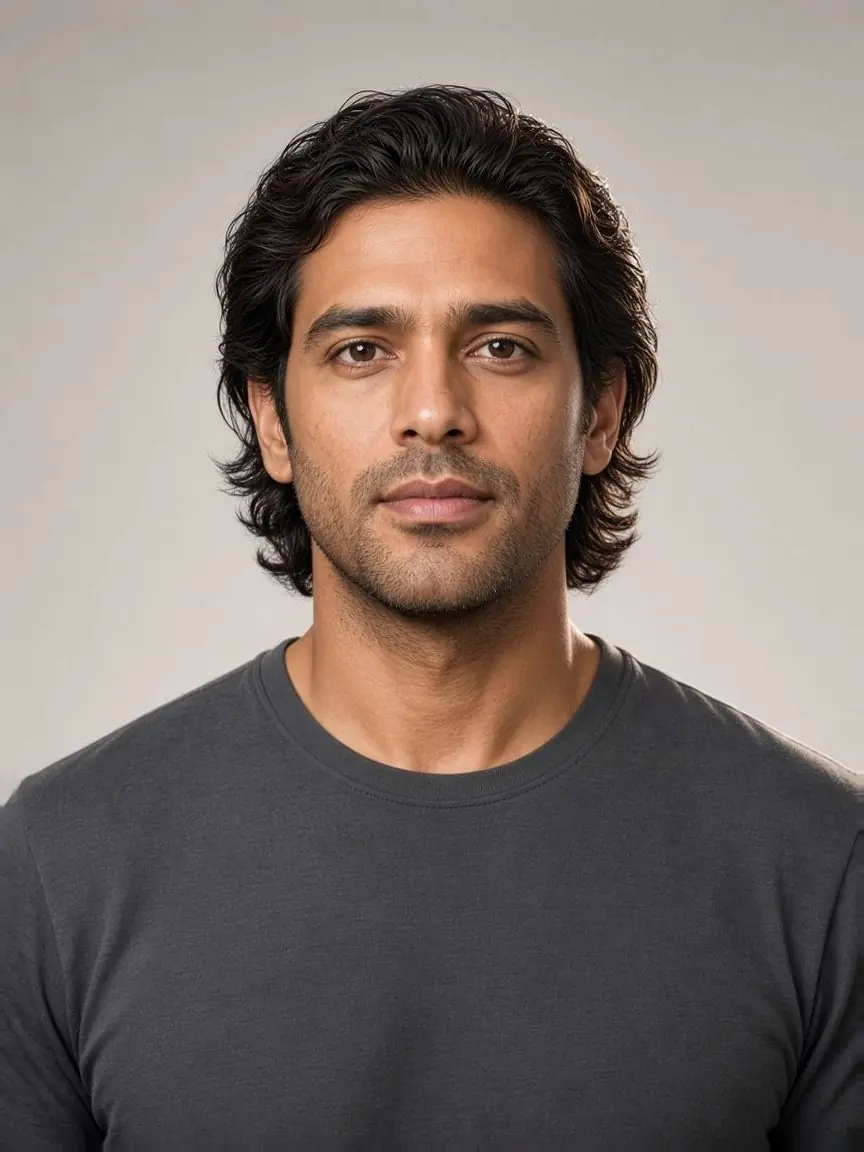
Crew cut
Shorter front and sides leave less length to arrange. Keeping this outline still means regular trims.
Curtains
A divided fringe frames the temples. The part and dry front length determine how much forehead stays visible.
Flow
Longer side and back pieces retain movement around the ears and neck, with more hair to wash and dry.
AI catalog references, not measured face-shape examples or results from your photo.
If you want an extremely short comparison, the buzz cut preview has its own presets. If a wolf cut or mullet interests you, discuss the longer back separately from the front: both the neckline and the styling routine matter. A catalog name is a reference, not a complete set of cutting instructions.
Match the reference to your natural texture
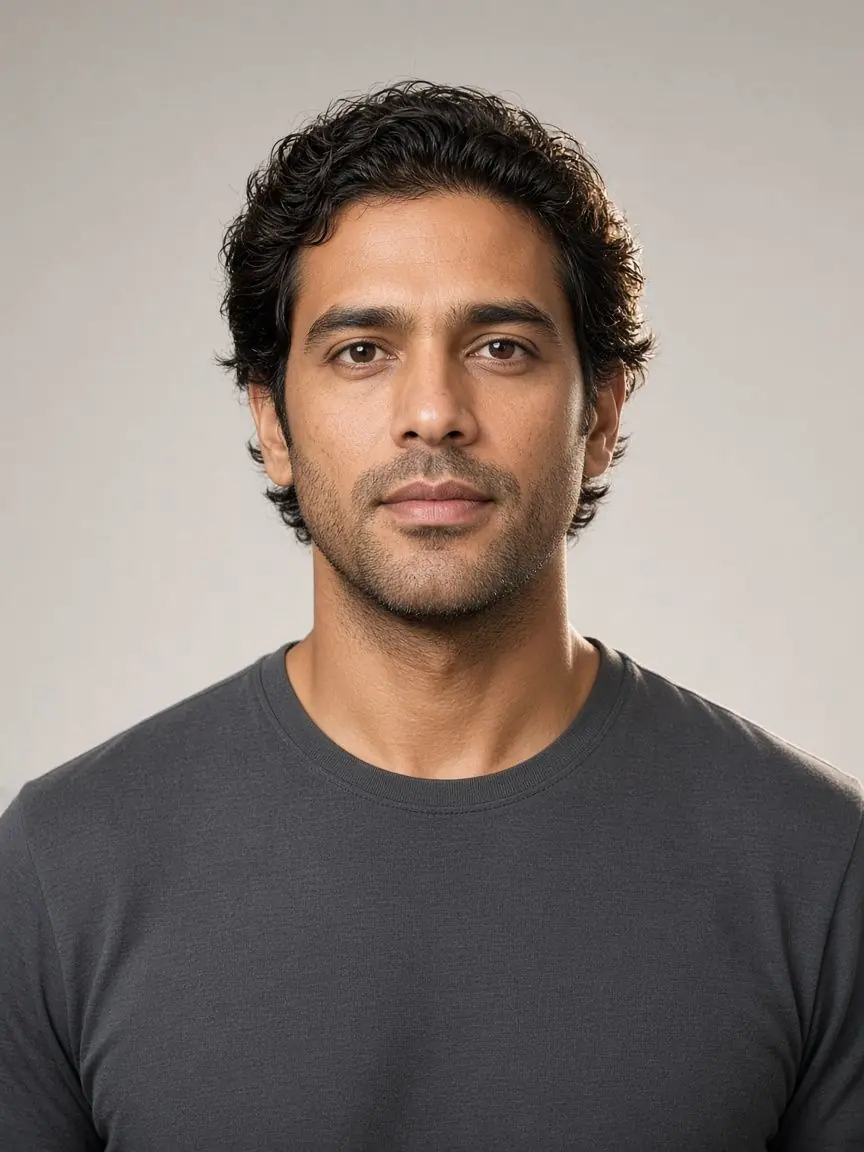
Straight, wavy, curly and coily hair create different outlines at the same nominal length. Start with the texture you wear, then compare the dry front and perimeter. For straight hair, a precise fringe exposes its line clearly. Waves can open or close that line as they bend; curls and coils need room for their natural pattern and shrinkage.
Wavy side part
Loose waves move sideways while the sides keep fullness. Compare this with the straighter side-part reference above.
Curly crop with low taper
A curl-led front sits above a closer lower edge. Judge the fringe in its dry, resting position.
Short natural afro
Visible coils form a rounded perimeter. Discuss the height and side width you want to retain without requiring straightening.
AI catalog references, not measured face-shape examples or results from your photo.
The chooser uses your selected preferences, not an assessment of your hair from a photograph. It does not infer ethnicity, density or curl pattern. A Korean-style two block or comma fringe is a look to discuss, not a rule about who can wear it. Keep the part, front length and silhouette you like, and ask how your own growth pattern changes the result.
If a combination returns no catalog reference, broaden one preference. That message means this catalog has no match for those filters; it does not mean your hair cannot suit the cut. “Less daily styling” also does not remove washing, detangling, drying or occasional shape maintenance.
Hairline, beard and side profile can change the decision
A frontal photo cannot tell you everything about a haircut. A cowlick may lift a fringe that looks flat in a reference. Fine or sparse hair may not hold the same volume; a tall styled top is not a promise of extra density. Bring your normal, unarranged hair to the consultation so the barber can assess its direction and coverage.
Beards can hide the lower outline or add visible length. Compare the haircut with the beard you plan to keep, rather than forcing a face-shape label from its edge. Bring a side-view reference when temple shape, the back of the head or the neckline matters. This page and its photo preview do not measure those features or diagnose hair loss.
Turn two references into a useful barber brief
Choose one feature to keep from each picture: for example, the crop’s lower front and the side part’s retained side length. Then explain what you do not want, such as a high exposed fade or a fringe that needs blow-drying every morning. Ask the barber which parts can realistically coexist with your current length and growth pattern.
Agree on the dry fringe position, the amount left above the ears, how much scalp the sides should show, and the routine you will use at home. Two annotated ideas are more useful than asking for “whatever suits my face.” Save a generated preview if it helps communicate, while keeping the original reference available for comparison.
Preview on your photo without losing the shortlist
Browse and choose references without signing in. Optionally add a clear, front-facing photo or use the labeled AI sample; preparation happens on your device. “Try selected” carries the selected styles into the hairstyle studio. Review the photo and selected cuts there before choosing Generate. Selecting a card here does not spend credits.
Generation requires sign-in and credits, and sends the photo to our image provider. Each successful style costs one credit; check current pricing before generating. Compare the finished preview with your original, looking at the hairline, ears and face details as well as the hairstyle. AI can change details unexpectedly. Use an acceptable result as a visual reference, not a guarantee of what a barber can reproduce; the privacy policy explains photo handling.
Questions before you choose
Do I need to know my exact face shape?
No. Keep “Not sure” and choose the changes you want to compare. The optional men’s face-shape detector provides an estimate, not a required score. If a chart calls your outline hexagonal, describe the forehead, cheeks and jaw instead of looking for an eighth category in this chooser.
Is this a free hairstyle app?
This is a browser tool. Reading the guide and filtering catalog references do not require payment. A new AI image on your photo is a separate action that requires credits; a catalog picture is not a free personalized result. You can also explore the full hairstyle chooser for other style collections.
What is the best haircut for my face shape?
There is no single answer. Pick two options you can explain, check their texture and maintenance tradeoffs, then use a preview or barber consultation to refine the choice. Men with similar outlines can reasonably prefer different cuts because their hair, routine and taste differ.