
Hairstyles for your face shape
Compare your outline, natural texture and daily routine. Find two or three cuts worth trying.
Texture, length & styling
Manual reference, not a scan. Use the face detector
Worth a closer look
3 starting points · no shape assumed
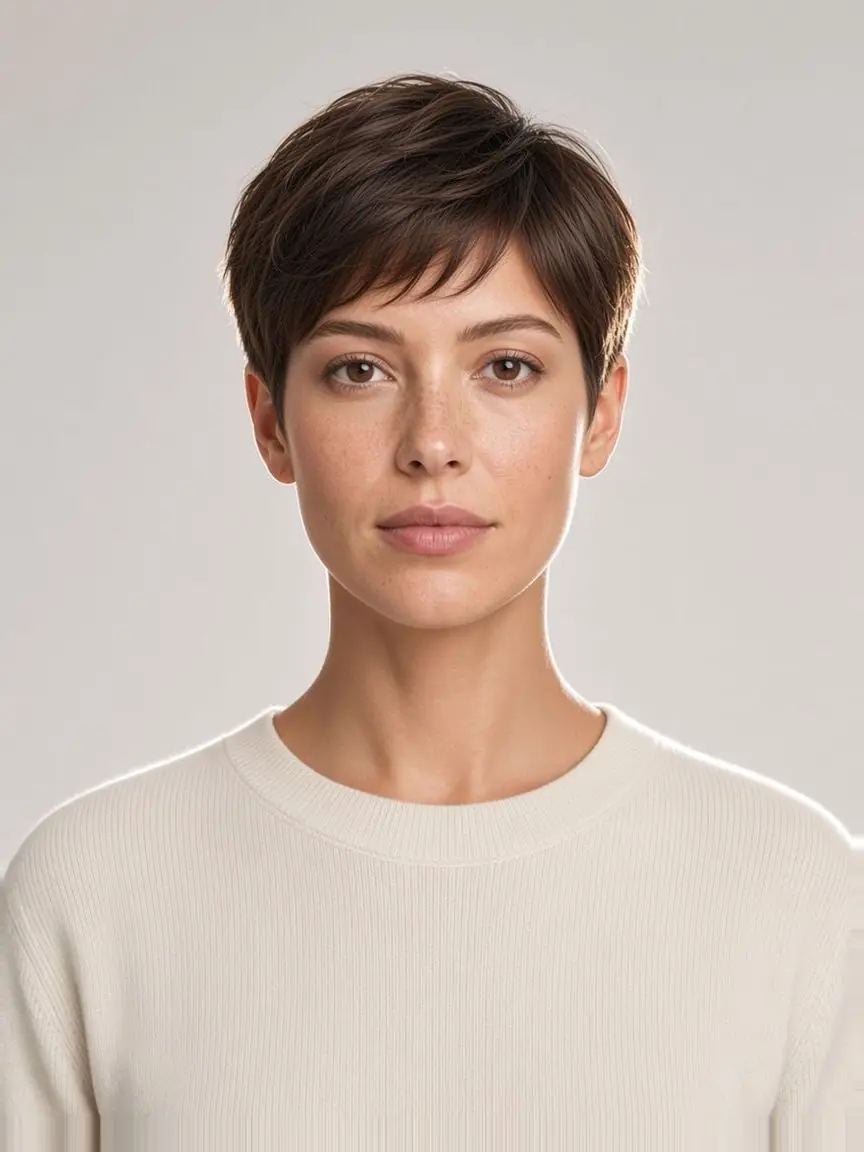
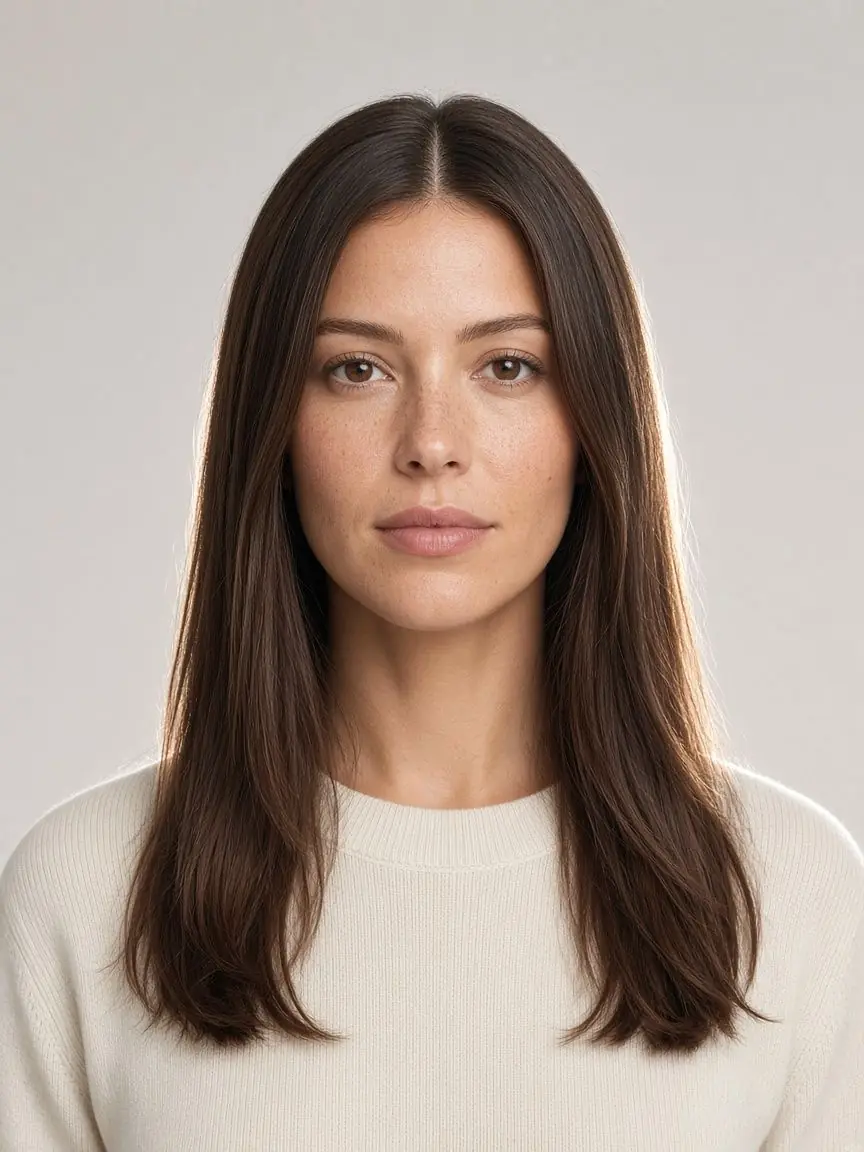
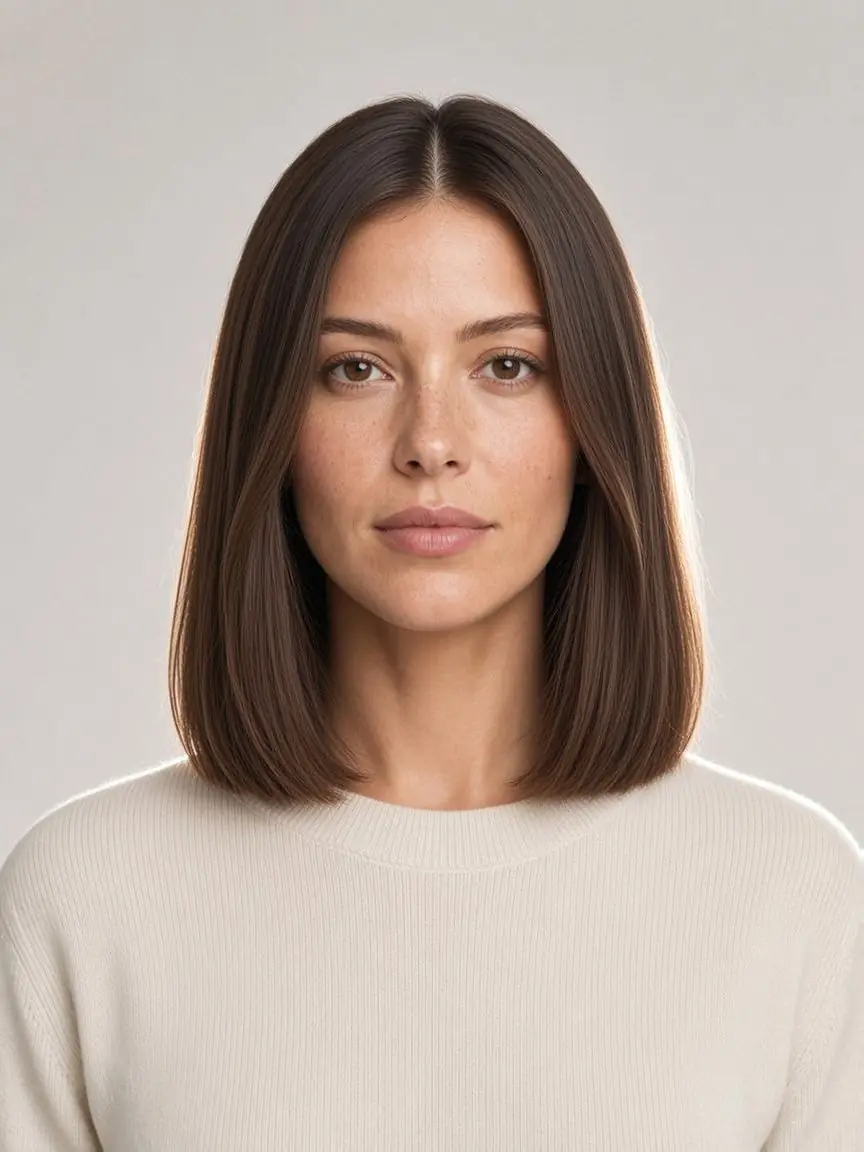
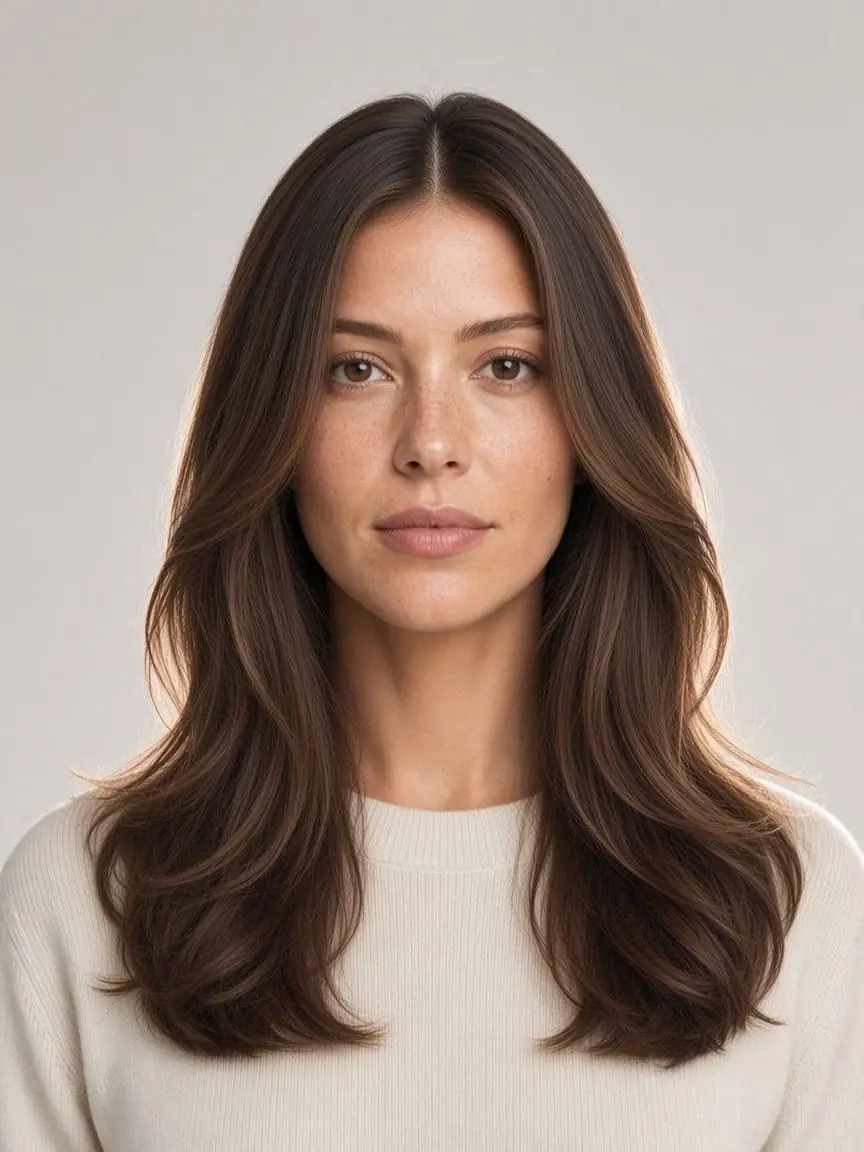
Pixie
Short sides and a longer, side-moving front leave the jaw and neck visible.
The reference has a soft side sweep. Ask how your growth direction and natural bend would change that front.
Less length to dry and arrange; the short outline and front still need shaping as they grow.
Lob
An open front and a longer edge retain length around the sides below the jaw.
This fairly straight reference shows the perimeter clearly. Waves can move that edge upward and outward.
A contained perimeter can be a starting point if you prefer fewer separate layers to place; texture and density still affect drying.
Long layers
Retained length and lower, bending layers keep movement around the shoulders.
The reference shows a loose bend. Density and natural wave affect how much the layers separate.
Consider this if retaining length matters more than arranging a precise fringe; longer hair still needs drying and care.
Bring your photo, when you’re ready.
Optional: prepare a photo on your device, then carry it with selected cuts into the studio. No face analysis or generation happens here.
JPEG, PNG, WebP or supported HEIC/HEIF · up to 20 MB.
AI generation is a separate action: sign-in, 1 credit per successful style, and upload to our image provider when you choose Generate.
Read the outline, then choose what to emphasize.
A hairstyle for face shape starts with proportions, not a score. These outlines are references; you can browse every option without matching one exactly.
Oval
A longer-than-wide outline with a gradually curved lower edge.
Round
Length and width appear close, with a softer lower outline.
Square
A broad lower outline with more visible jaw corners.
Heart
The upper face looks broader and the outline narrows toward the chin.
Oblong
Length stands out, often with comparatively straighter sides.
Diamond
Cheek width stands out against narrower temples and a narrower jaw.
Triangle / pear
The jaw appears wider than the upper face; this is not an inverted triangle.
Illustrative outlines, not scans. Compare the seven-shape chart.
Choose the change you want to see
Finding a hairstyle for face shape starts with a visible goal: more height at the front, less weight beside the cheeks, an open forehead or a softer edge around the jaw. None is a correction everyone needs. Name the change you want, then ask whether your current length, texture and routine can support it.
Keep two different ideas in the shortlist. A lifted front and a forward fringe answer different preferences; comparing two almost identical pictures may teach you less. Look at where the hair ends, where it creates width and how much forehead remains visible. Those observations are more useful than an unexplained “perfect match.”
Make the shortlist work for your life
The best hairstyle for face shape is not necessarily the style with the tallest top or longest layers. Choose the collection you want to browse, then set the length you would consider keeping. Texture and upkeep help narrow the next decision; they are preferences you provide, not properties inferred from a photograph.
Use “Not sure” when a shape is unclear. You can compare options without uploading. The seven-shape chart explains visible outlines. A photo added here is prepared in your browser, not analyzed for face shape. The separate detector estimates a category; choosing a label here remains a manual reference.
Three lengths, three different frames
A hairstyle for face shape should make its tradeoffs visible. In the women’s references below, a pixie removes much of the length around the neck and ears, a lob retains a lower perimeter, and long layers keep length while changing how the ends move. These are actual catalog presets, shown on an AI reference model whose face shape is not verified here.
For a pixie, discuss front length and how the sides sit rather than treating “short” as a complete instruction. With a lob, decide where the lower edge should fall when the hair is dry. For long layers, ask where the shortest pieces begin and whether they need arranging away from your face. The name alone does not answer those questions.
Pixie
A shorter perimeter with room to shape the front and crown.
Lob
An edge below the jaw, retaining length around the sides.
Long layers
Length stays; the layers change movement and where fullness falls.
AI catalog references, not measured face-shape examples or results from your photo.
Compare haircuts for round faces by length and upkeep.
Lift, part or bring the fringe forward
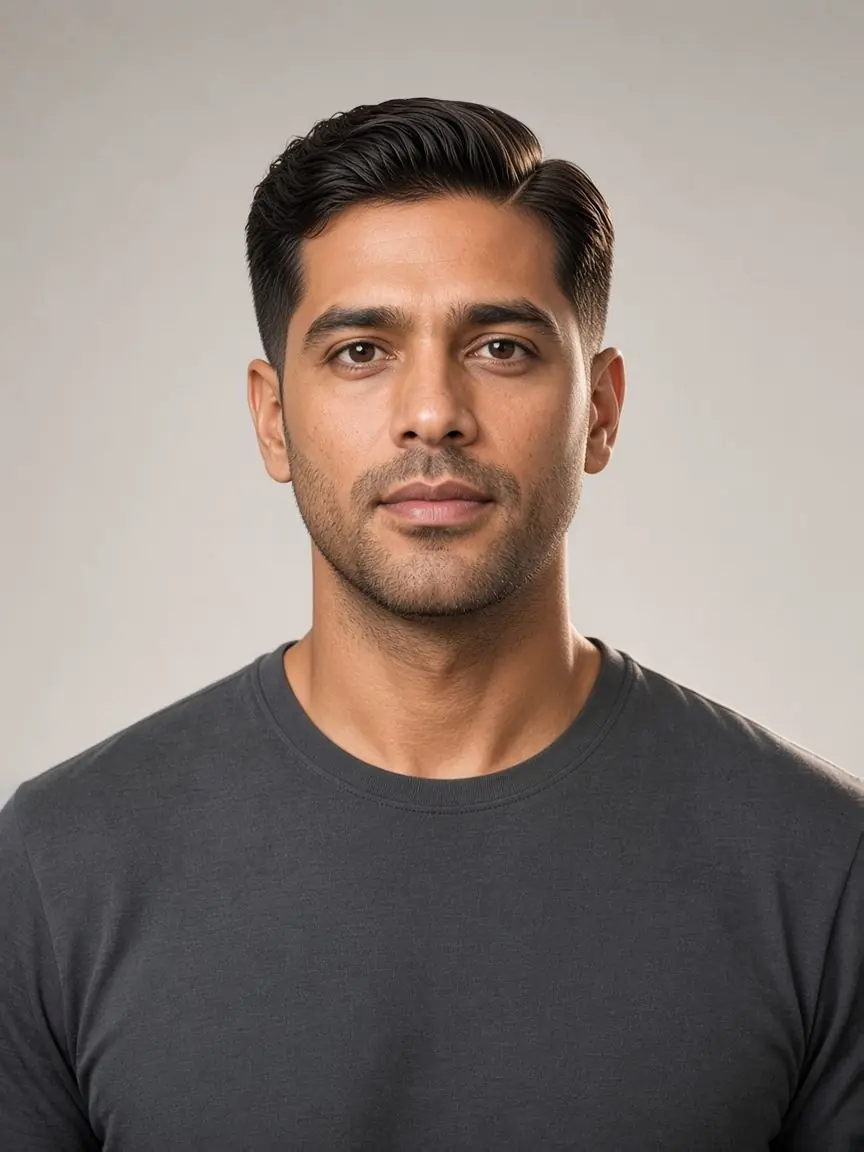
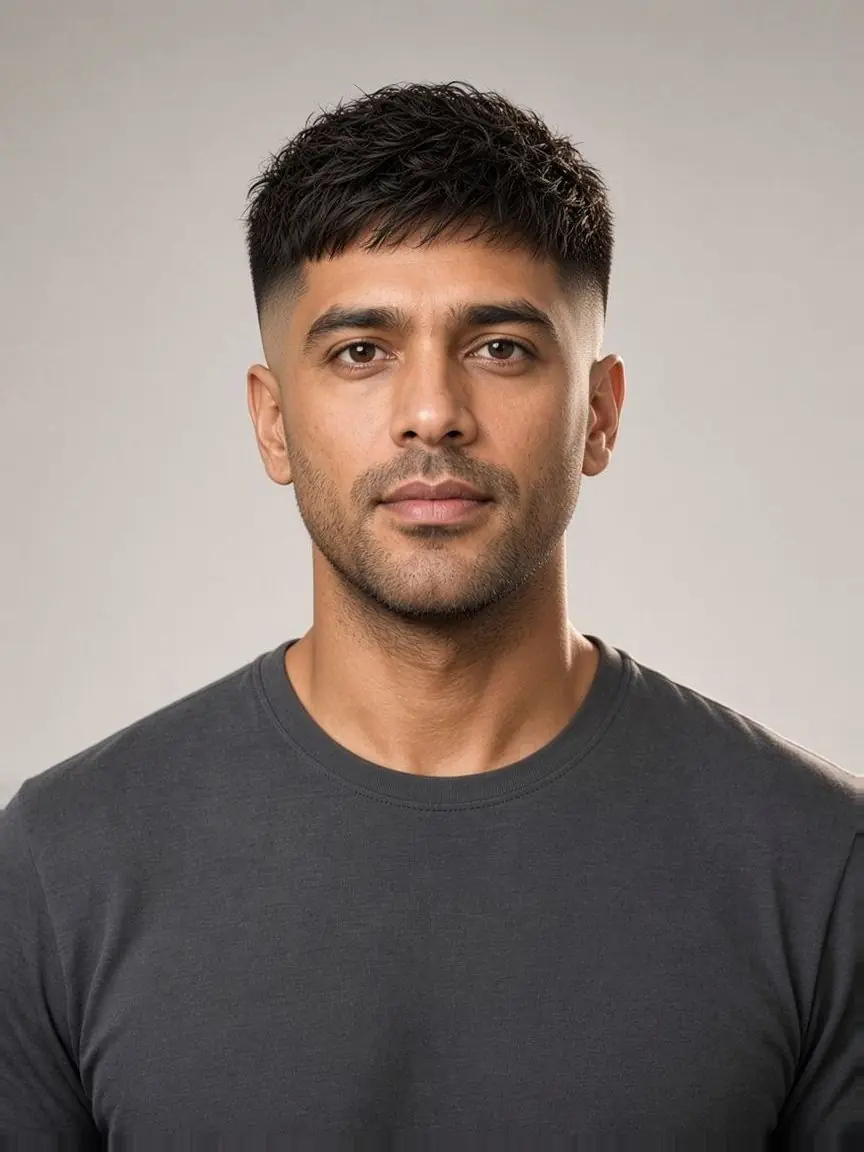
In the men’s collection, choosing a hairstyle for face shape means comparing the front before the label. The quiff reference lifts upward and opens the forehead. The side part gives the front a defined direction. The textured crop brings a shorter, broken fringe forward. Each changes a different part of the visible silhouette.
A quiff needs enough front length to lift and direct. A side part depends partly on where your hair naturally separates. The crop reduces the length you arrange, but its edge and short sides still need attention. Ask your barber about your growth pattern and the outline you can maintain between cuts, especially when the photograph shows a shape your hair does not naturally hold.
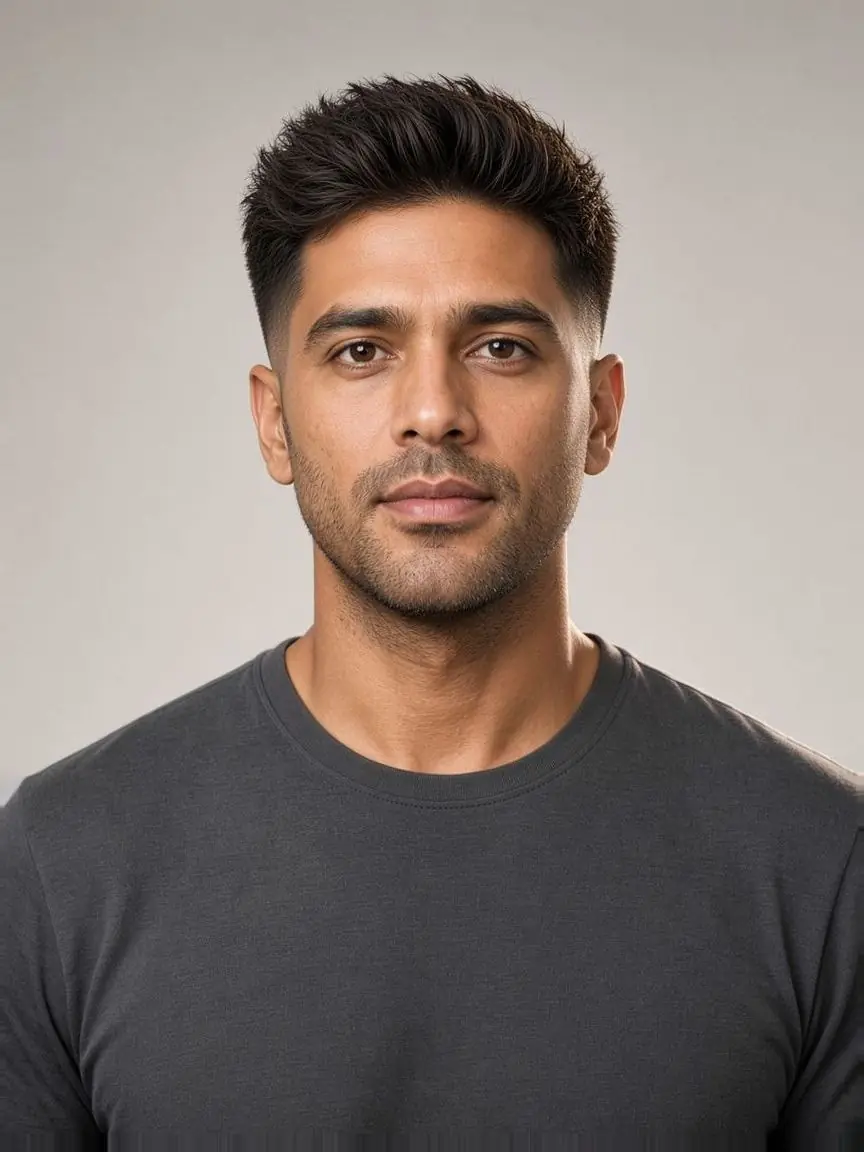
Quiff
An upward front exposes the forehead and adds visible top height.
Side part
A side-directed front gives structure without the same upward sweep.
Textured crop
A shorter, forward fringe keeps the front lower and broken.
AI catalog references, not measured face-shape examples or results from your photo.
Read the outline, then choose a direction
Use these descriptions to explain a possible hairstyle for face shape, rather than to rank faces. Hair texture, density and preference can lead two people with similar outlines toward different cuts. Where two categories overlap, keep the features you can describe instead of forcing certainty.
Round: decide what happens beside the cheeks
If you want a longer-looking silhouette, compare a lifted or diagonal front with a lower fringe, then inspect the width at the sides. Round outlines can still wear short cuts, curls and a bob. Choosing a hairstyle for face shape does not mean banning every cut that adds some width.
Oval: choose your preferred balance
An oval outline often has gradual transitions and more length than width. Decide whether you want to emphasize that length or retain more fullness around the sides. Extra height is an option, not a requirement. The oval comparison also explains nearby round and oblong descriptions.
Square: compare a clear edge with movement
A straighter lower outline can be paired with a defined cut or with softer movement around it. Neither approach is compulsory. Before selecting a hairstyle for face shape, compare how the actual reference ends near the jaw and how much daily shaping creates the pictured finish.
Heart: look at the upper and lower frame
When the upper face appears broader than the jaw, compare forehead coverage with an open front and retained length below the cheeks. You do not need a widow’s peak. The heart guide separates this taper from diamond and explains why inverted-triangle naming varies.
Diamond: notice the temples as well as the cheeks
Cheek width against narrower temples and jaw gives a different starting point from a broad upper face. When considering a hairstyle for face shape, look at where the hair introduces fullness or exposes the temples. A fringe can change that frame, but its placement must work with your hairline and growth direction.
Oblong: check height and side volume together
If your outline already looks long, decide whether additional top height serves your goal. A lower front, visible fringe or more side fullness offers a different comparison. There is no universal photo ratio that dictates the right haircut; check the full contour and how you want it framed.
Triangle or pear: describe the wider jaw
Here, triangle means a comparatively wider jaw and narrower upper face; pear is another styling description readers may encounter. It is the reverse taper of heart. Discuss where you want upper or side volume before choosing a hairstyle for face shape, without treating the jaw as something that needs hiding.
Your texture changes the plan
Straight, wavy, curly and coily hair can create different outlines at the same cut length. The chooser narrows catalog starting points; a photograph does not establish your density, curl pattern or likely shrinkage. Treat an image with a different texture as a discussion reference, not a promise of that finish.
For a hairstyle for face shape to be practical, consider the dry result. Fine hair may not hold a tall lifted front without preparation. Thick hair can place more weight at the sides than a reference suggests. Curly and coily hair need a conversation about natural shape, shrinkage and where layers sit when dry. Straightening is not a condition of finding a suitable cut.
When no candidate fits your chosen combination, loosen one preference and compare again. You can also keep the desired outline in your notes and ask a stylist how to interpret it in your own texture, rather than selecting a misleading picture just to obtain a result.
Shorter is not always simpler
Length describes what you retain; upkeep describes what you are willing to do. Short edges may need regular reshaping even when daily arranging is limited. Longer hair can need detangling, drying and care, while a fringe may require deliberate placement regardless of the overall cut length.
Choose a hairstyle for face shape that fits the routine you will actually follow. Compare what happens without blow-drying or styling product, and what needs refreshing between appointments. “Less daily styling” does not mean no maintenance, and this page does not assign a universal number of minutes to a haircut.
Take a usable brief to your stylist
Finish the comparison with two references and a short explanation. Write down the length you want to retain, where you want less or more volume, how much forehead you want visible, and the daily steps you prefer to avoid. Add your texture, growth pattern and any uncertainty about the outline.
For example: “Keep length below my jaw, avoid a heavy horizontal fringe, and show me a version that can dry with my natural wave.” This makes a hairstyle for face shape a starting point for a conversation. Ask what the reference would require on your hair before agreeing to remove length.
Before opening the try-on
Will choosing a cut generate an image?
No. A catalog action opens the corresponding preset in the hairstyle studio. If you added a photo here, check that same photo and the selected cut there. Generating is a separate action you choose; selecting a hairstyle for face shape does not automatically spend credits.
Is detection the same as AI hairstyle generation?
No. The face detector analyzes a photo locally in the browser and estimates a styling category from visible proportions. AI hairstyle generation uploads the submitted image for cloud processing, requires sign-in and costs one credit per generated style. Guest examples and catalog portraits are illustrations, not newly generated results on your photo.
Can a preview tell me exactly how a cut will look?
A preview is an idea to inspect, not a guarantee about density, hair behavior or a stylist’s finished work. Compare the visible change and check whether the face and surroundings remain convincing. Keep your practical notes alongside the picture when deciding what to try in real life.
Research context: FaceRater’s finder, HairstyleAdvisor and WearTryOn illustrate different ways to combine appearance, preferences and a shortlist. Their public claims about pricing or results are not promises about this tool.