
Free · Private · No sign-up
Face Shapes Men Can Compare
Explore face shapes men use as a starting point for choosing a haircut. Upload a clear photo or run the sample to see a shape estimate, four proportions and men’s styles to try.
Your photo stays in this browser. It is not uploaded.
JPEG, PNG, WebP, HEIC or HEIF up to 20 MB
Start with a usable photo
Your face, measured on this device
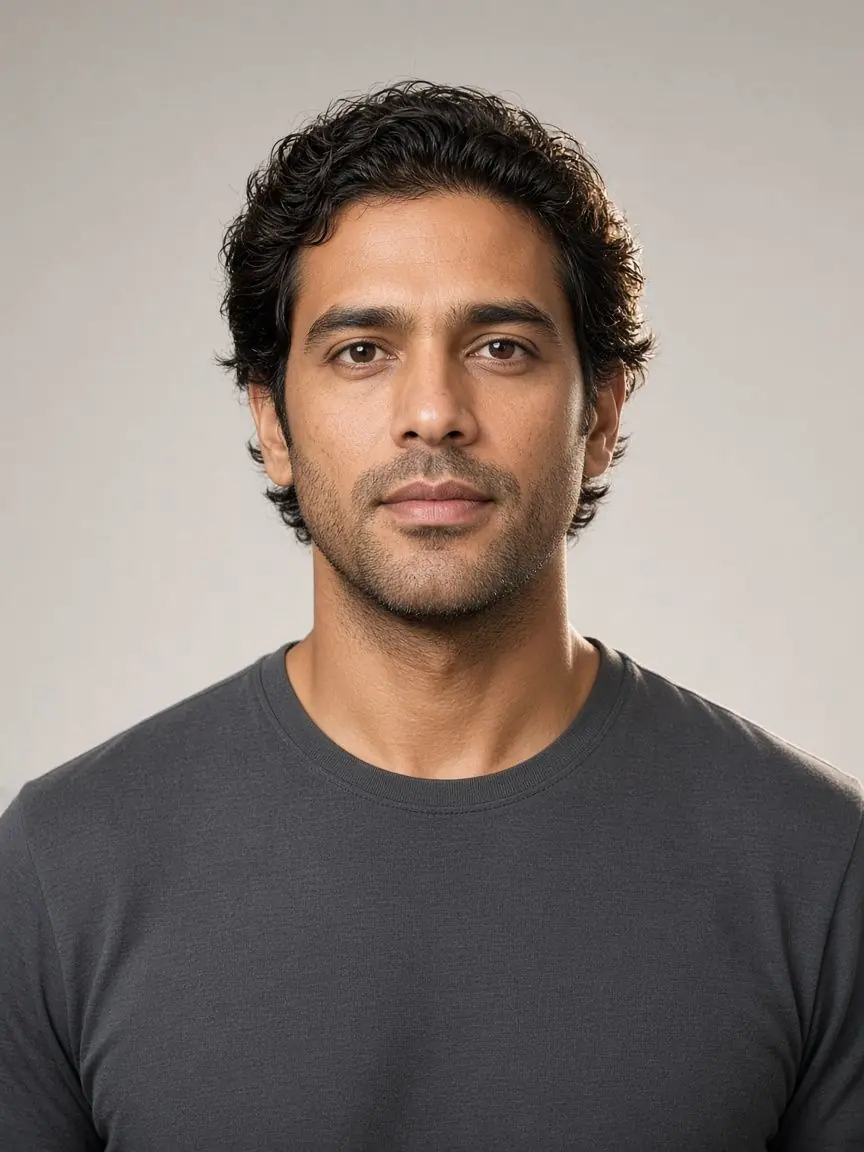
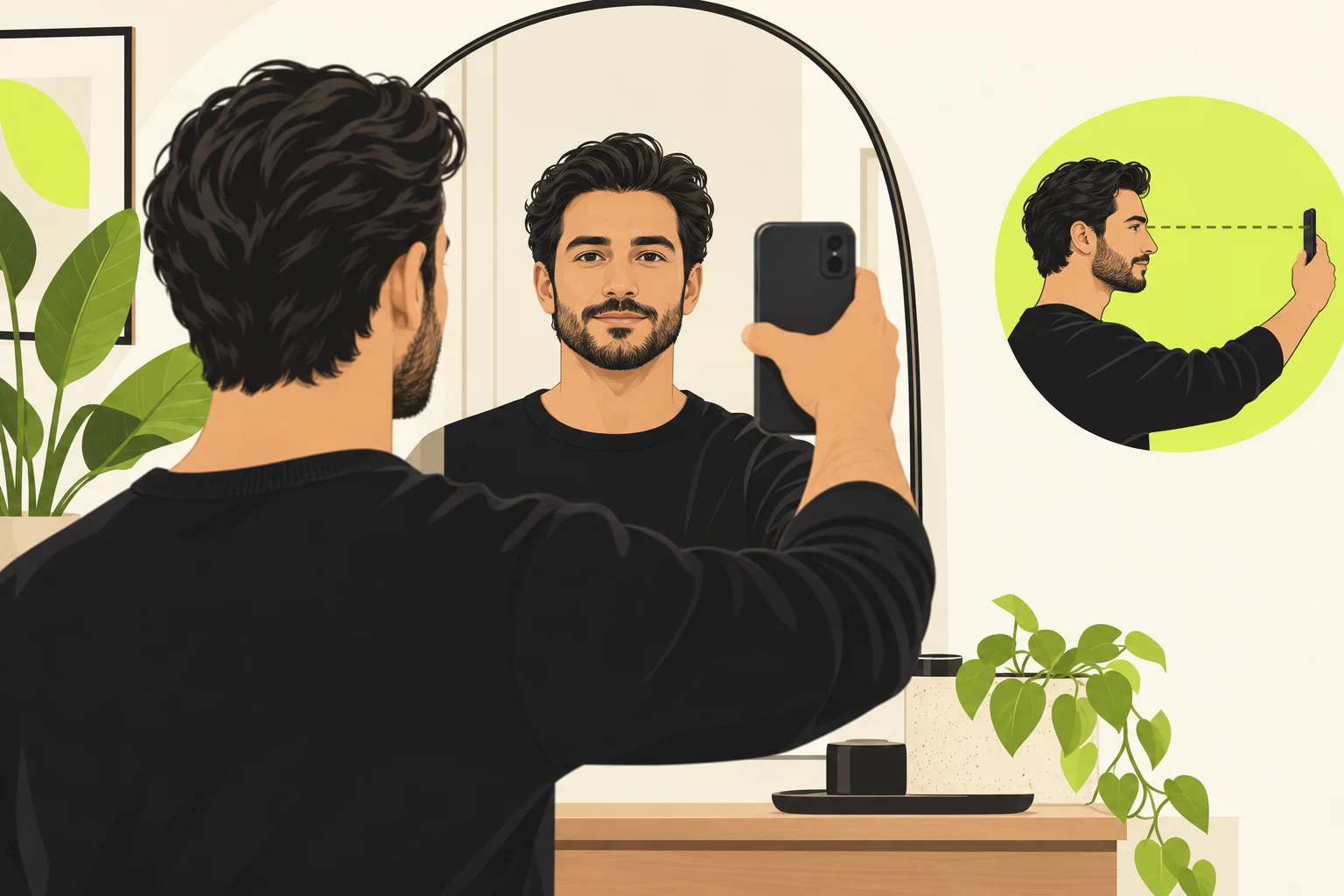
- Face the camera straight on, at approximately eye level. Keep your head upright and your expression relaxed; a tilted head changes the apparent proportions.
- Move fringe away from the upper face and use even light. Avoid sunglasses, strong shadows and a tight wide-angle selfie. Leave the whole chin and both sides of the face inside the image.
- Choose Upload photo or Use sample photo above. Inspect the outline and four ratios before using the recommended styles. Repeat with a better photo if the landmarks miss your face.
The face shapes men compare here describe the underlying visible outline, rather than the silhouette of a haircut or beard. Keep that distinction in mind when you prepare your image. The sample is an AI-generated model, not a customer photograph.
Seven useful descriptions
A guide to the face shapes men compare
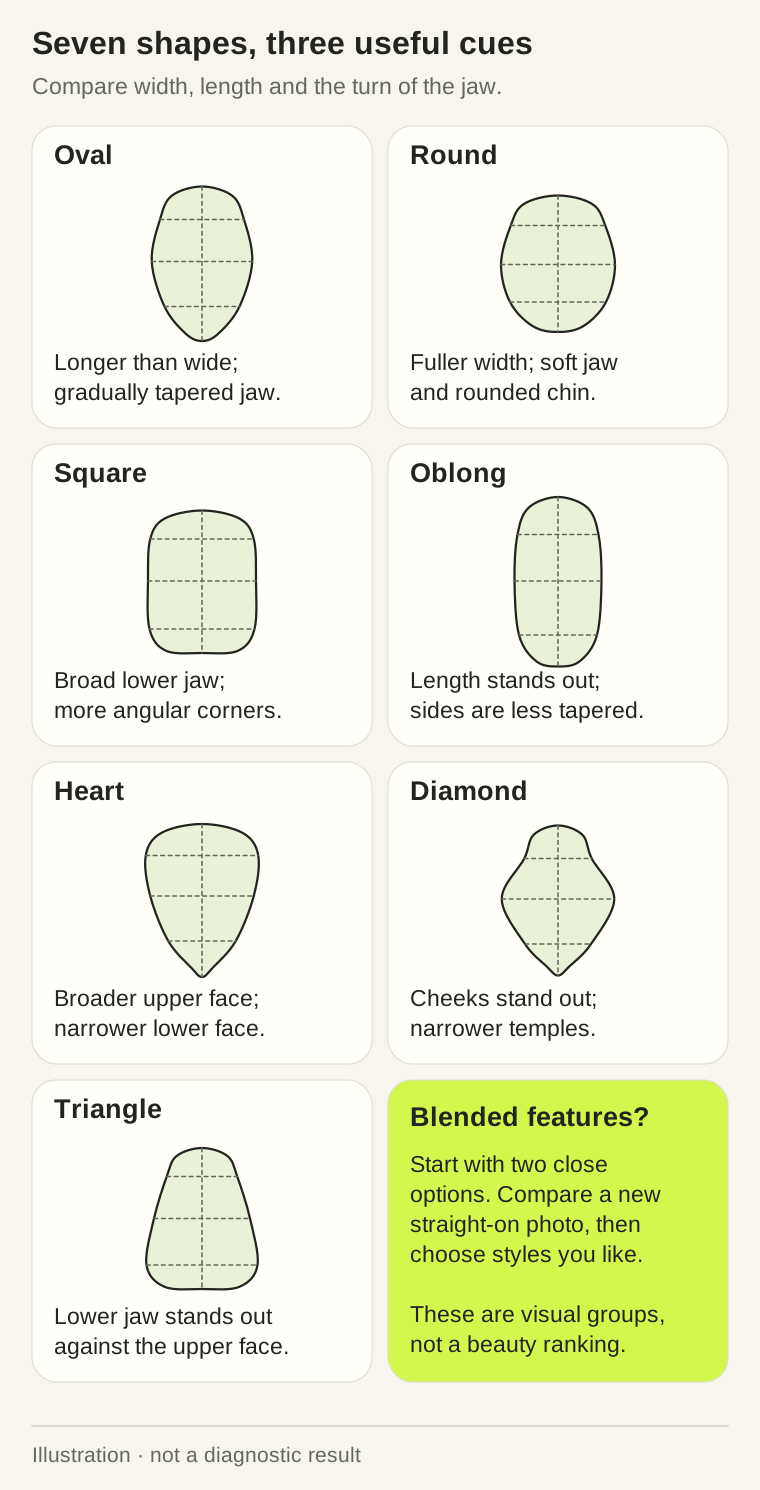
- Oval
- More length than width, with a gently rounded jaw and no sharply dominant corner.
- Round
- Length and width feel close, while the cheeks and jaw create a soft outline.
- Square
- A comparatively broad jaw and visible corners give the lower face a straighter outline.
- Oblong
- The outline reads noticeably long, rather than simply having a narrow chin.
- Heart
- The upper face appears broader than the jaw, with a taper toward the chin.
- Diamond
- The cheek area stands out compared with both the temples and the narrower jaw.
- Triangle
- The lower face appears comparatively broad, rather than tapering strongly toward the chin.
A widow’s peak is not required for a heart-shaped outline. Likewise, hair length does not make a face oblong. When comparing face shapes men often see in haircut guides, look at the visible structure and proportions before borrowing a label from a celebrity photograph.
Read the output
Four proportions, with visible limits
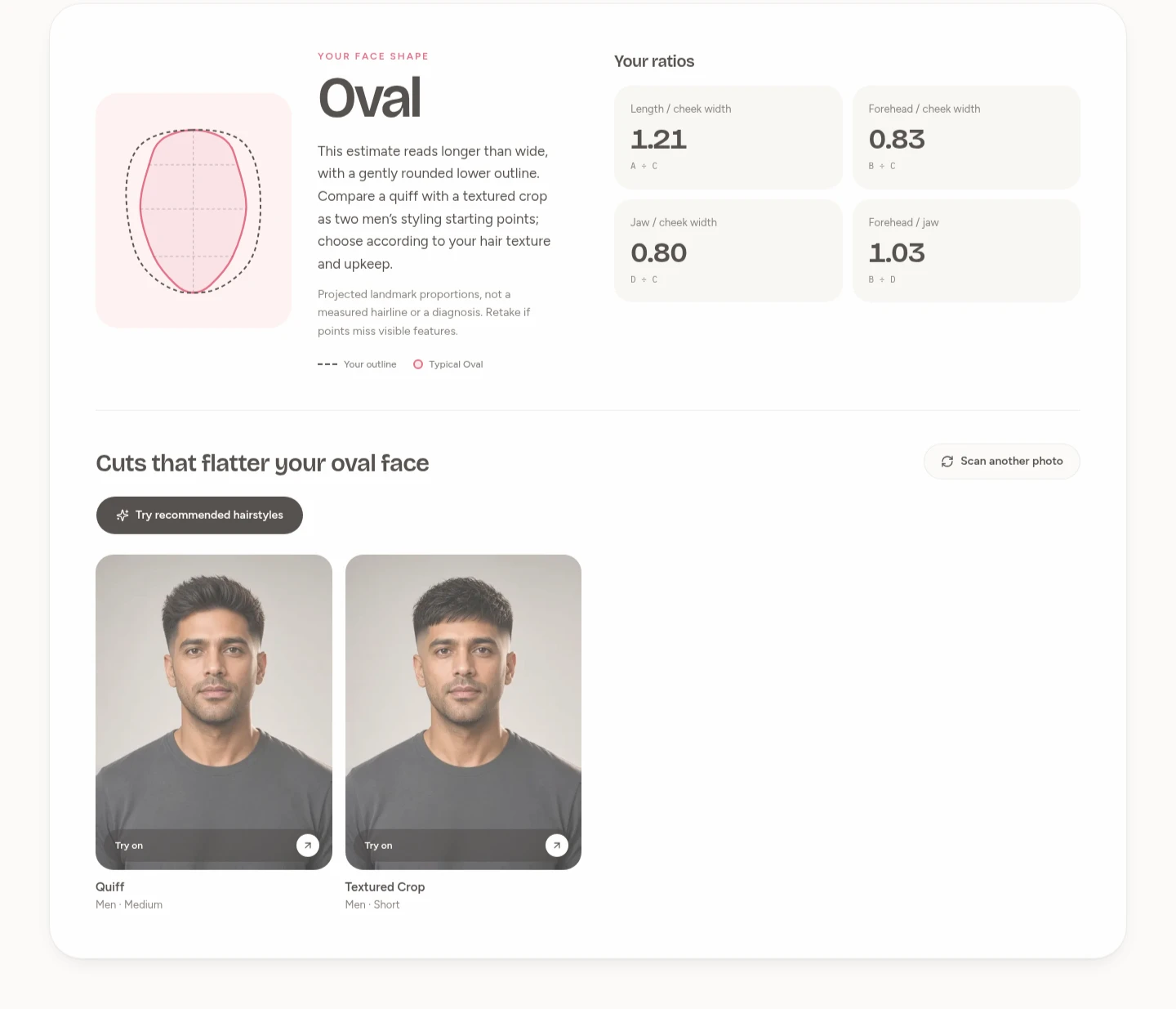
The face shapes men receive from this detector are heuristic estimates, not diagnoses or measurements in centimeters. The upper point is a facial landmark, not a reliable reading of your hairline. Do not compare its ratios directly with rules based on a tape measure following the surface of your skin.
For a manual check, use one straight-on photograph and compare straight distances within that same image. First compare overall length with cheek width. Next compare the upper face with the jaw. Finally inspect whether the jaw looks rounded, angular or tapered. Keep the method consistent rather than mixing several measurement systems.
Use the face shape chart to compare the seven outlines and work through a manual check alongside your detector result. If your upper face appears broad and the jaw narrows toward the chin, the heart face shape guide explains that pattern and its look-alikes.
If the measured outline cuts through a beard or misses a cheek, the resulting shape estimate becomes less reliable. Improve the input before interpreting the label. A second clear photo is more useful than repeatedly scanning the same obstructed image.
When two descriptions fit
Compare the feature that separates them
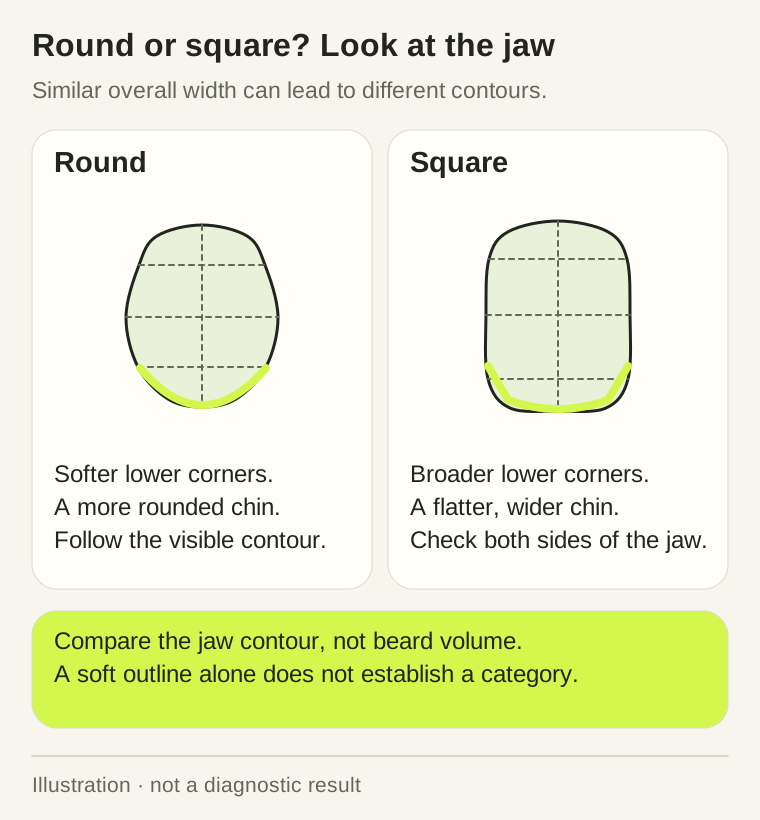
Round or square?
Both can look broad relative to length. Look for a rounded transition into the chin versus a straighter, cornered jaw. A beard can create square-looking edges, so do not judge solely from its trimmed outline. Among face shapes men compare, these two need a particularly clear view of the lower face.
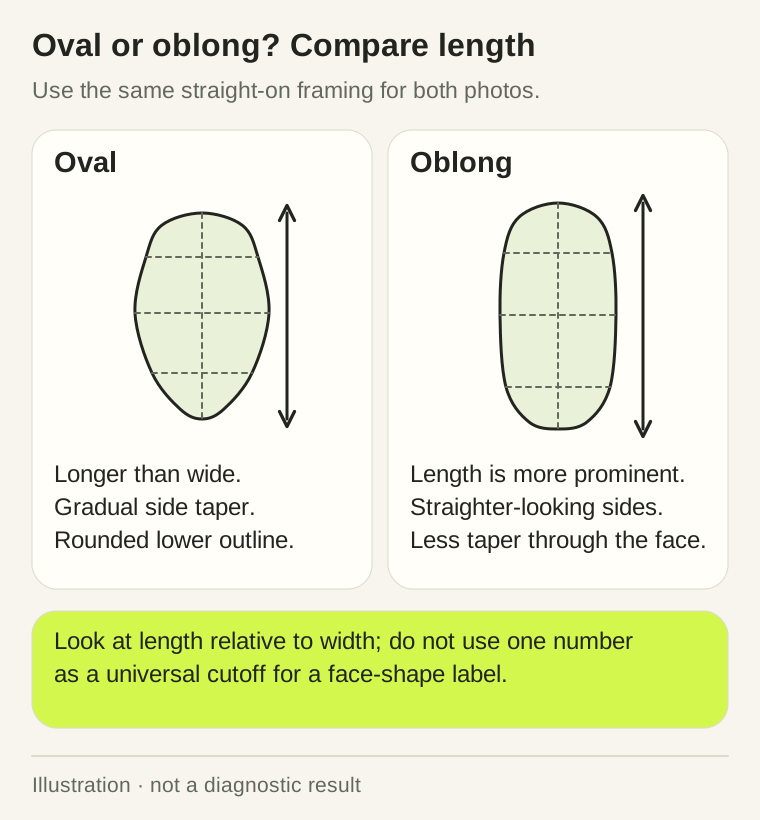
Oval or oblong?
Both are longer than they are wide. Ask whether length strongly dominates, rather than assuming every longer face is oval. Check a neutral photo; camera tilt and a high hairstyle can exaggerate apparent length. The face shapes men use for styling should reflect the face, not the height of the finished haircut. The oval face shape guide compares a gradual taper with more prominent length.
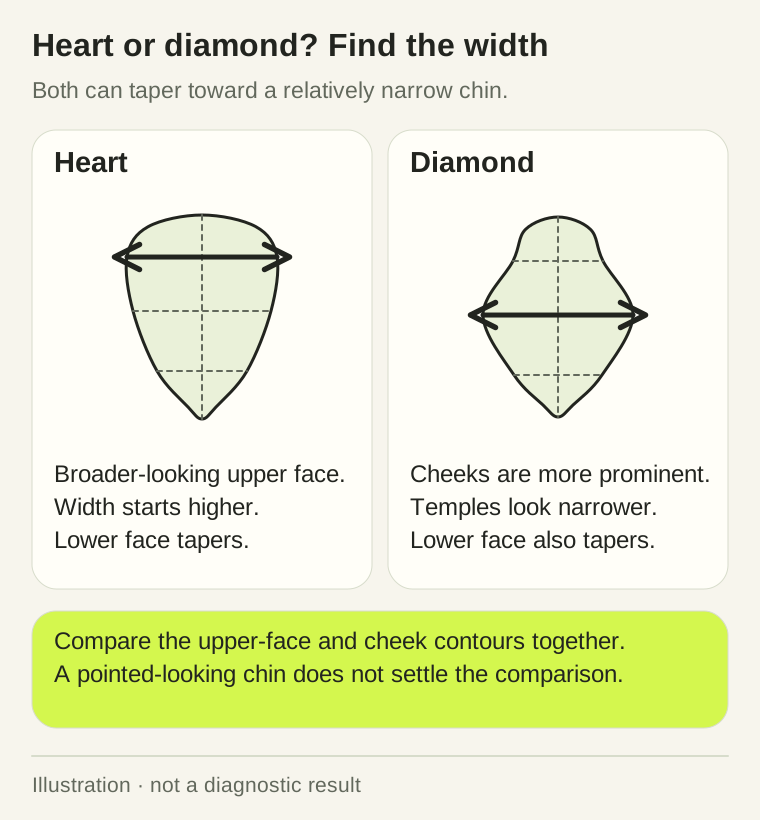
Heart or diamond?
Both may taper toward the chin. Compare where the width is most noticeable: the upper face for heart, or the cheek area relative to narrower temples for diamond. A fringe can hide that difference. With these face shapes men should check the upper outline before using the chin alone to decide.
A starting point for your haircut
Turn an estimate into styles you can compare
Face shapes men use for haircut decisions are only one input. Hair texture, density, growth direction, maintenance and your preferences matter too. Use the shortlist to compare what you like and to make a more specific request to a barber. This page does not rank faces or promise that a particular haircut will suit everyone with the same shape.
Before you decide
Questions men ask about their face shape
What are the seven basic face shapes men can compare?
How do I know my face shape without uploading a photo?
Will a beard change the result?
Are face shapes men have different from women’s categories?
Is the detector free, and does trying a hairstyle cost anything?
Further reading: the MensFashioner face-shape guide provides a manual styling perspective. This page’s ratios describe its own browser landmark method, rather than reproducing a tape-measure classification system.