
Face Shape Chart: Seven Outlines and How to Compare
Use this face shape chart to compare seven outlines, learn a consistent photo measurement method and understand mixed features without forcing an exact label.
A face shape chart is a comparison aid, not a test you pass. Start with three questions: does your face look noticeably long, which area looks widest, and is the jaw rounded or angular? Together, those observations are more useful than matching a single feature to a silhouette. Keep two possible descriptions if both fit.
Read the face shape chart before choosing a label
The seven names below are this guide’s working vocabulary. Other guides combine categories or use different names, such as rectangle for an elongated, straighter outline. Nobody’s face needs to match a drawing perfectly. The purpose is to give you clear language for comparing proportions before making a styling decision.
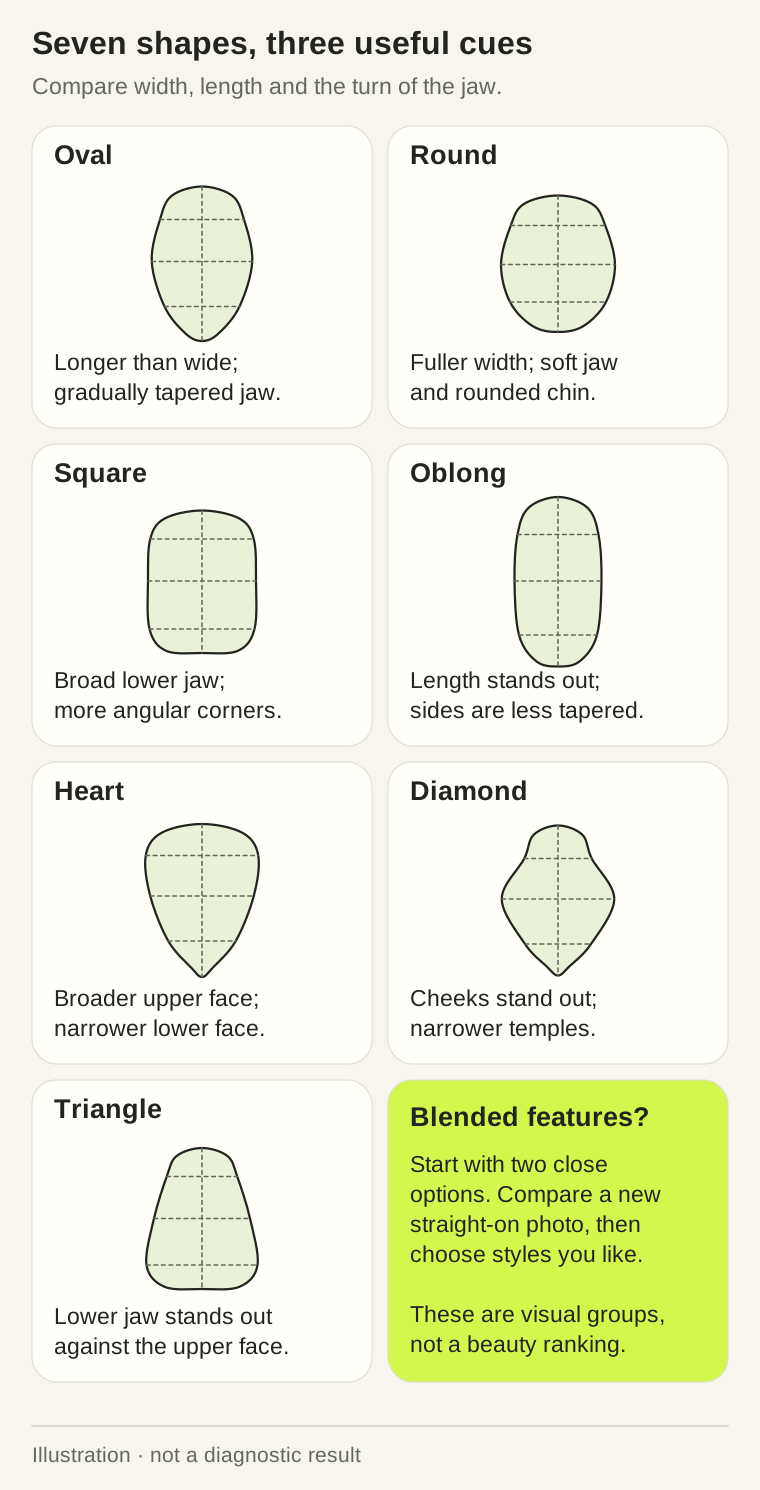
Shape | Main comparison | Compare next |
|---|---|---|
| Oval | Longer than wide, gently rounded jaw, no strongly dominant corner. | Oblong if length stands out. |
| Round | Length and width feel close, with a curved lower outline. | Square if the jaw has clear corners. |
| Square | Comparatively broad jaw with straighter sides or visible corners. | Round if the lower outline curves. |
| Oblong | Length noticeably dominates the overall outline. | Oval if elongation is gentler. |
| Heart | Broader upper face tapering toward a narrower jaw and chin. | Diamond if the cheeks stand out most. |
| Diamond | Cheek area stands out compared with narrower temples and jaw. | Heart if the upper face is broad. |
| Triangle | Lower face appears broader than the upper face. | Check whether a beard creates that width. |
These face shape examples deliberately keep hair and accessories out of the outline. A tall hairstyle can make a face appear longer; a wide beard can make the jaw appear broader. Look for the visible facial boundary instead of copying the silhouette of a finished haircut.
Use one consistent face shape measurement method
For this face shape chart, a straight-on photograph is enough to make qualitative comparisons. You do not need “ideal” percentages or measurements in centimeters. Keep all comparisons within the same image, so changing camera distance or mixing measurement methods does not confuse the result.
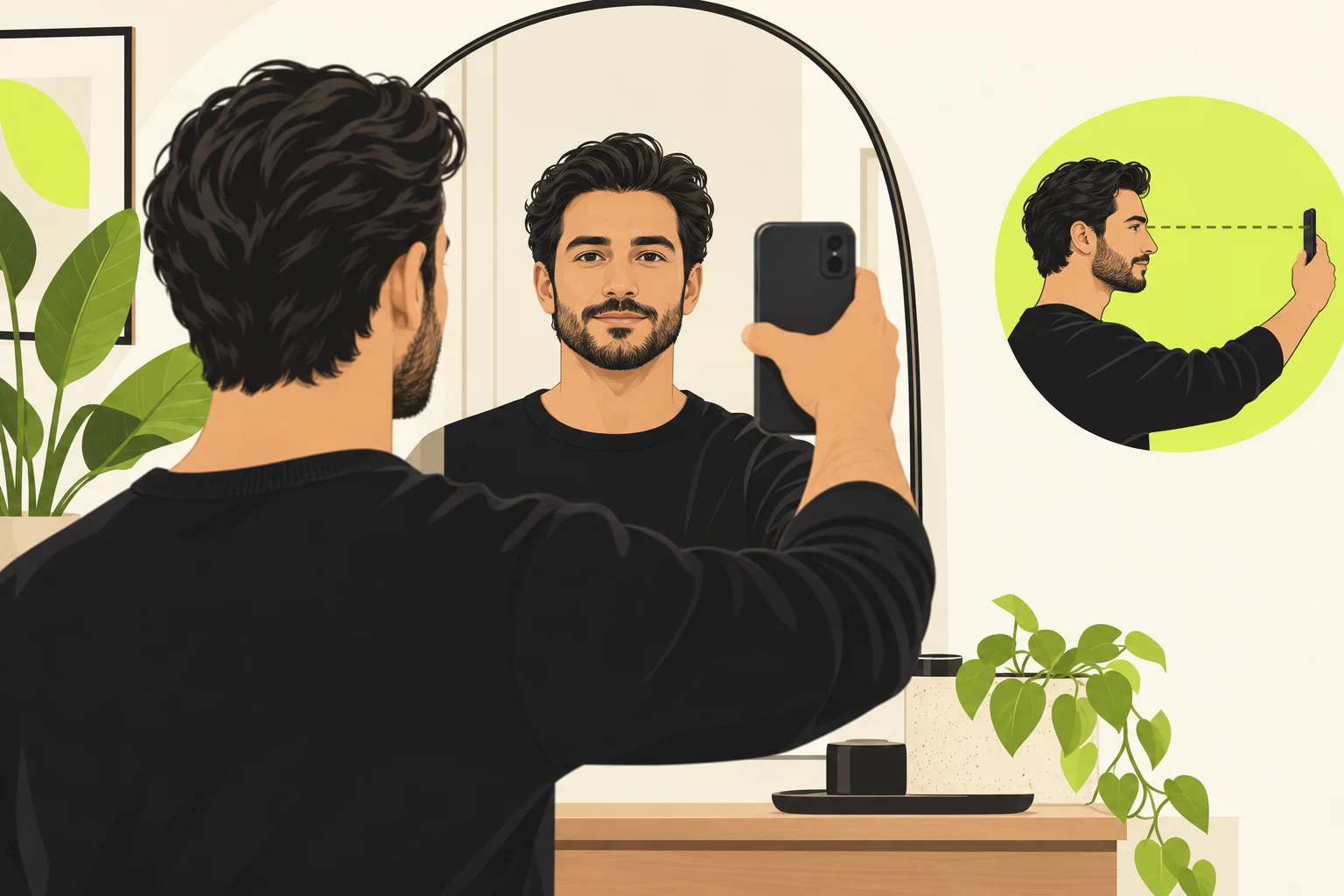
- Prepare the view. Face the camera at eye level, keep your head upright and use a relaxed expression. Show both cheeks, the upper face and the chin in even light.
- Compare length with width. Look from the visible upper face toward the chin, then compare that length with the widest cheek area. Note whether the outline feels elongated or relatively compact.
- Find the broadest zone. Compare the upper face, cheeks and visible jaw. Write down where width stands out before deciding on a label.
- Inspect the lower outline. Look for curved transitions, straighter jaw corners or a pronounced taper. If hair or a beard hides the boundary, mark that observation uncertain.
The diagram below explains the detector’s projected photo distances: A is the upper facial landmark to the chin; B spans the temples, C the cheek landmarks, and D the lower-jaw landmarks. These points do not measure your hairline or the curve of your skin.
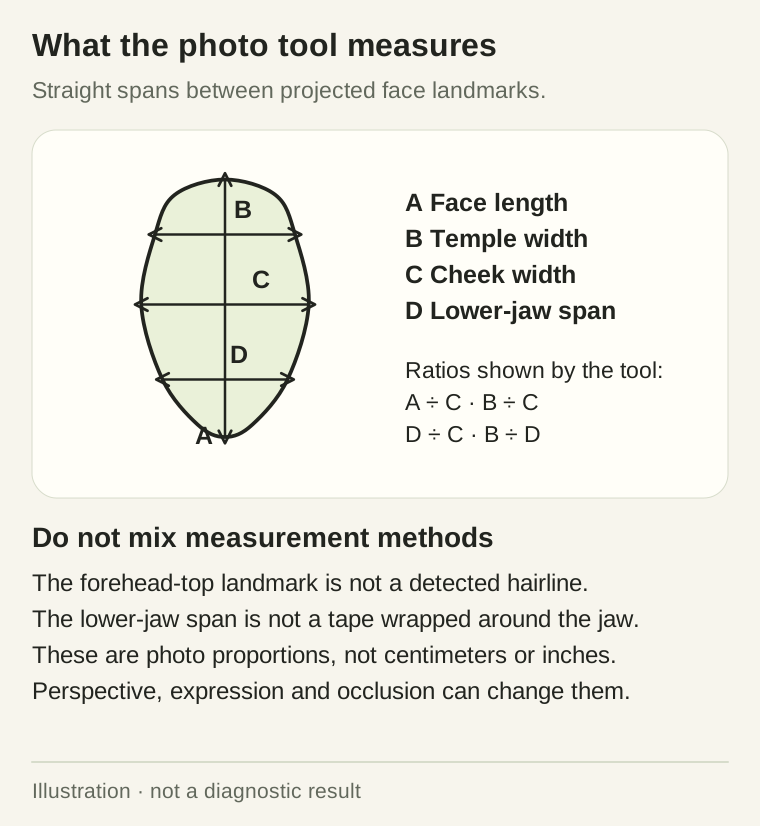
Do not feed a curved tape measurement into straight-photo rules. This face shape chart uses visible relationships rather than the detector’s internal numerical cutoffs. If you want a separate check, the face shape detector can analyze a photo locally and show its estimate, four ratios and a drawn outline.
Three comparisons that prevent common mix-ups
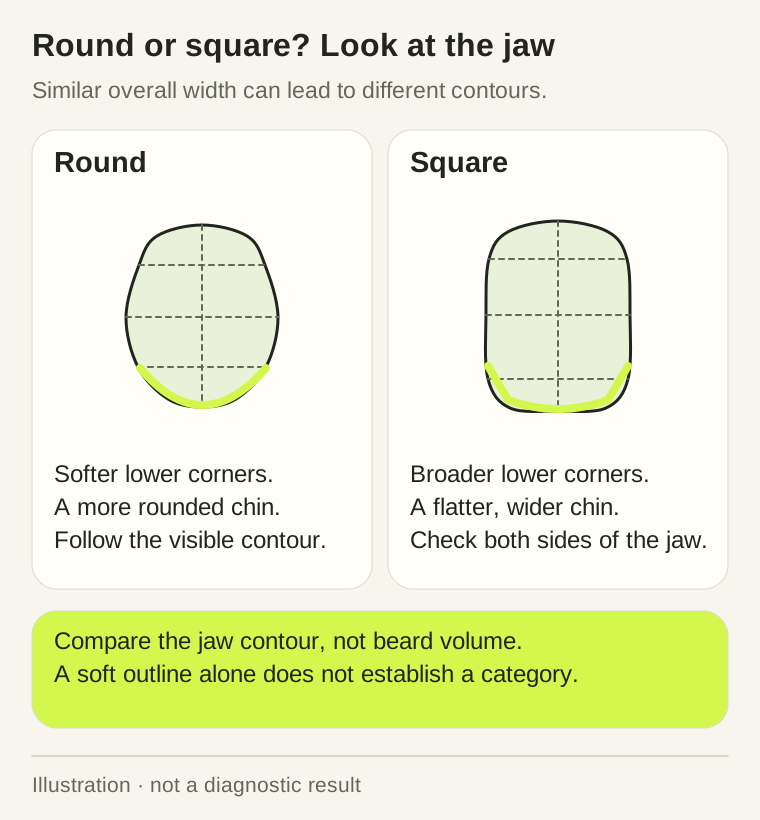
Round or square: inspect the jaw
Both outlines may look broad relative to length. In this face shape chart, the useful distinction is the lower boundary: a softer continuous curve suggests round, while visible corners suggest square. Wide cheeks alone do not settle the question. Inspect the actual jaw, because a neatly edged beard can create an angular silhouette over a softer face.
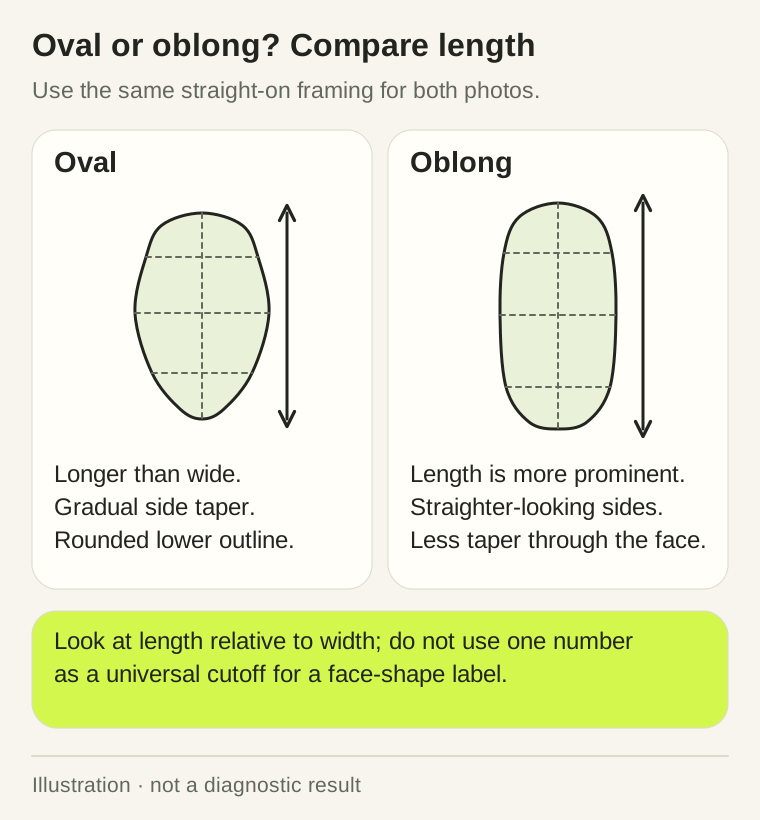
Oval or oblong: compare relative length
Both are longer than they are wide. The face shape chart distinguishes a gently elongated outline from one where length is especially noticeable. Retake a tilted photograph before judging that difference. A high hairstyle, camera angle or cropped chin can exaggerate length; none of those changes proves that your underlying face belongs in a different category.
The oval face shape guide explains a gradual taper and compares oval with round, oblong and heart outlines.
Heart or diamond: locate the width
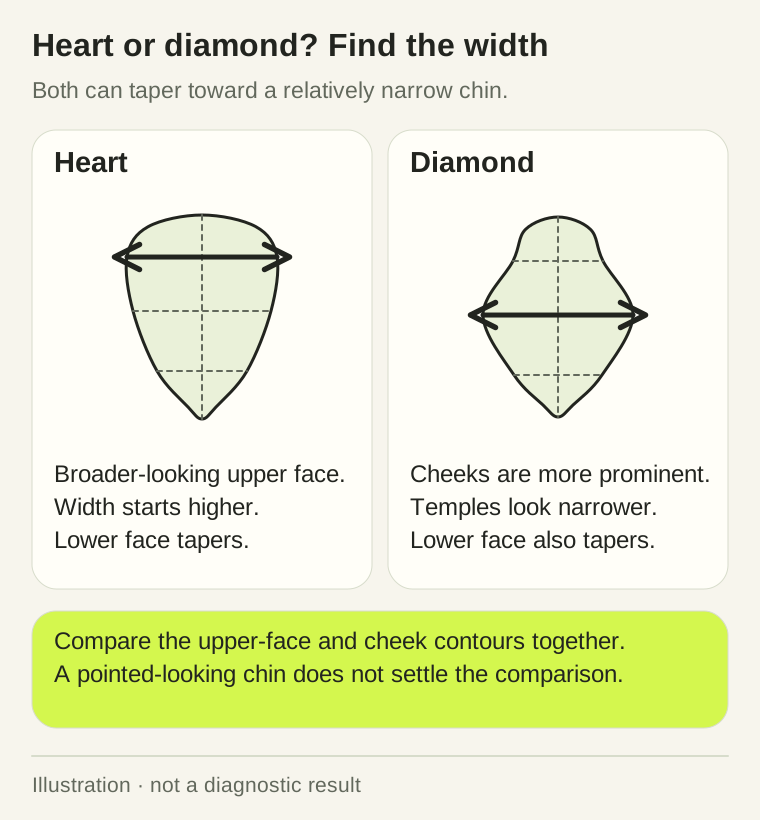
Both may narrow toward the chin. On the face shape chart, compare the upper face with the cheeks: heart describes a broader upper area, while diamond emphasizes the cheek area against narrower temples. A widow’s peak is not required for heart. Move fringe aside if it prevents a fair comparison, and leave the label open if the upper boundary remains hidden.
For a closer check, the heart face shape guide explains the upper-face-to-jaw taper, optional hairline clues and the difference from a jaw-wide triangle.
When the face shape chart gives you two possibilities
A mixed description is useful information. For an illustrative case, imagine a face that looks noticeably long but has a softly curved jaw. Record “long outline, rounded jaw” before considering oval and oblong. Nothing in that description requires an exact percentage match. This is a reasoning example, not a customer result or invented measurement.
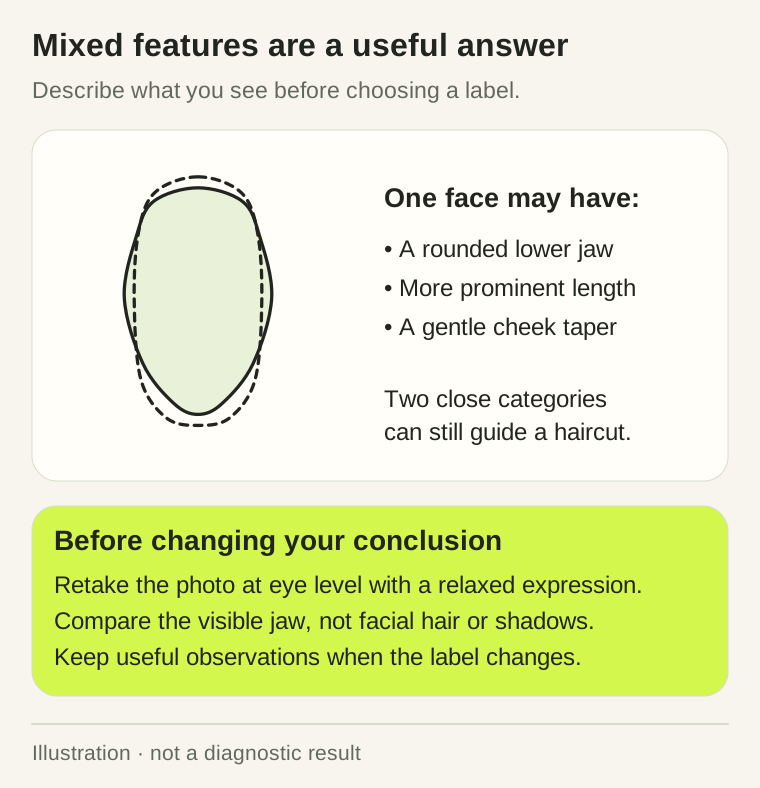
Similarly, a wider lower face has a destination in this face shape chart: triangle. Check that the jaw itself, rather than beard volume, creates the width. If two photographs disagree, compare framing and visibility before trusting either label. Keep the actual observations you can repeat; the category is a summary of those observations, not a replacement for them.
Use the comparison as a starting point
After using the face shape chart, you can keep a written description, discuss it with a stylist, or optionally check the existing detector. The men’s detector page starts with men’s hairstyle suggestions. Both detection pages measure a photo in the browser; choosing actual AI hairstyle generation is a separate action with sign-in and credit requirements.
Hair texture, density, upkeep and personal taste still affect the final choice. The hairstyle studio lets you explore available styles. This article does not promise that a shape label selects a universally best haircut.
Questions about using a face shape chart
Can a face shape chart tell me my exact shape?
No. It helps organize visible features, but camera perspective, obscured boundaries and overlapping categories limit a precise answer. The face shape chart is most useful when you can explain which features led you to one or two descriptions.
Is the face shape chart different for men and women?
The same comparison vocabulary can be useful across genders. Hair and beard styling may change the visible outline or the next styling decision. Neither the drawings nor the detector determine biological sex, gender identity or attractiveness.
Do I have to upload a photo to finish this guide?
No. The table, diagrams and written steps provide the answer independently. Uploading to the detector is optional; the article itself does not scan your face or calculate a personalized result.
Sources and measurement context
Further reading: StyleSeat’s face-shape guide and Byrdie’s face-shape guide describe additional styling perspectives. Their naming and measurement methods may differ. Use one consistent method when applying this face shape chart, rather than combining incompatible rules.