
Oval Face Shape: Features, Comparisons and Style Ideas
Identify an oval face shape with a consistent photo check, compare round and oblong outlines, and explore practical hair, beard and styling choices.
An oval face shape usually describes a face that looks longer than wide, with a gently curved lower outline and gradual narrowing toward the chin. It is one useful styling description, not a measure of beauty or a promise that every haircut will work. Start by comparing overall length and contour, then keep the features you can actually observe rather than trying to match every detail of a drawing.
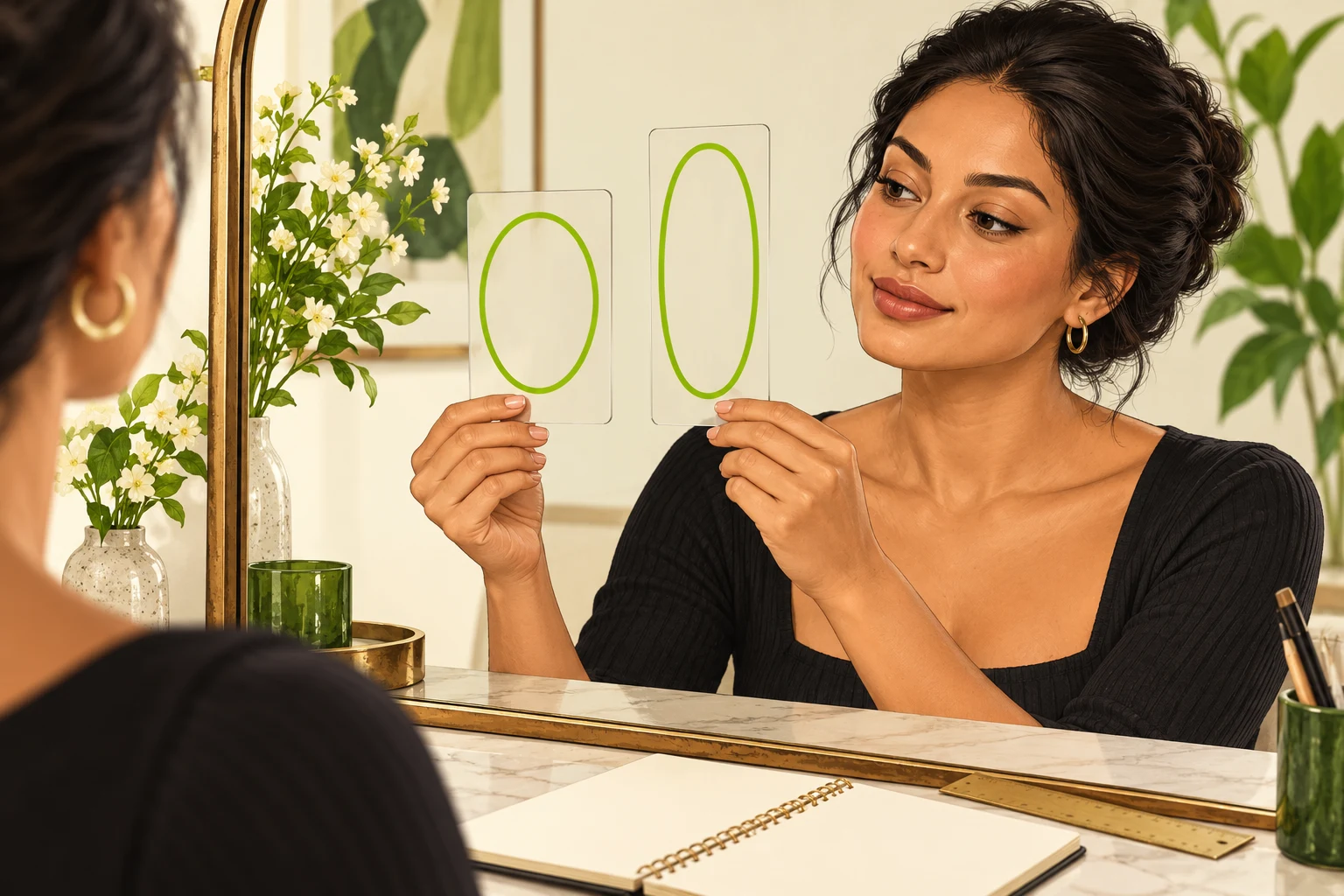
Features to look for together
The oval face shape combines some length with a softer transition around the sides and jaw. The cheeks may be the broadest area, but there is not usually a strongly jaw-dominant corner or a sudden upper-to-lower taper. A rounded chin can fit this description. You do not need a narrow face, perfect symmetry or a particular hairline.
Inspect the outline as a whole. Full cheeks alone do not make a face round; extra length alone does not make it oblong. An oval face shape can share features with either category. That overlap is a reason to describe the actual proportions, not to treat a close comparison as a failed test. The seven-shape chart explains the vocabulary used across this site.
Make a consistent photo or mirror check
For an oval face shape check, use one straight-on view with your head upright and expression relaxed. Keep the camera near eye level and show the chin, both cheeks and the upper face. Even lighting makes boundaries easier to inspect. If fringe or facial hair hides a feature, mark that part uncertain instead of assuming the tool or a drawing can reveal what is underneath.
- Compare length and cheek width. Does the face read longer than wide, or do those dimensions look close? Use the same photo for both observations.
- Follow the sides toward the jaw. Notice whether the change is gradual and curved, comparatively straight, or sharply tapered.
- Inspect the lower face. Look at the visible jaw boundary and chin together. A broad beard edge may not follow the jaw underneath.
- Write a short description. For example, “longer than wide, gently curved jaw.” Choose a category only after describing the pattern, and keep a nearby alternative if it fits too.
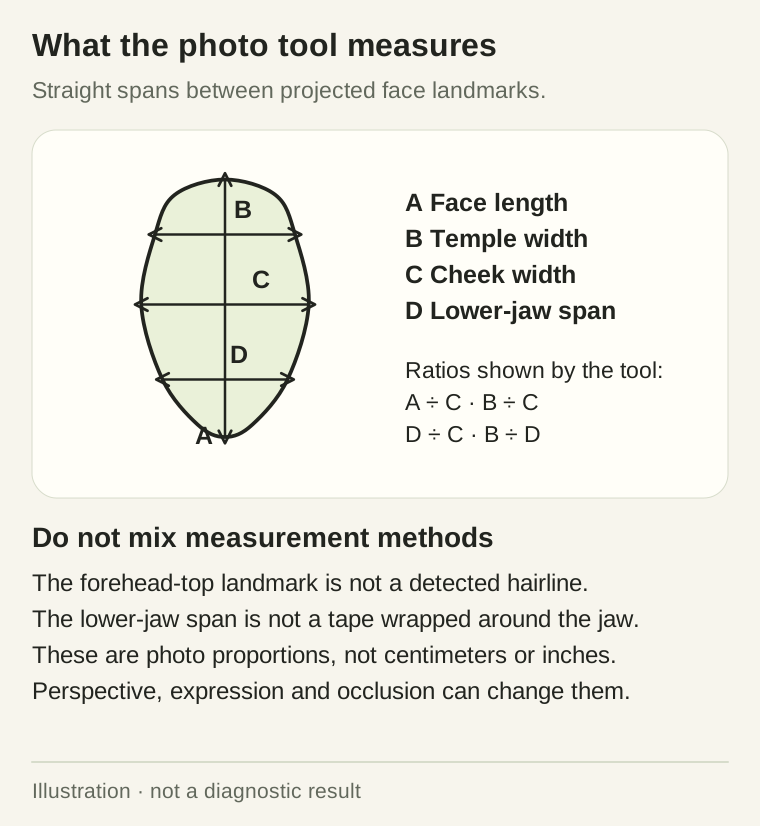
For oval face shape measurements, do not mix a straight segment in a photograph with a curved tape measurement around the jaw. They are different quantities. The detector’s upper landmark is not a reading of the hairline, and its four ratios are not dimensions in centimeters. Consistent comparisons are more useful here than trying to reproduce a decimal from a different guide.
Oval, round or oblong: the practical differences
Oval versus round
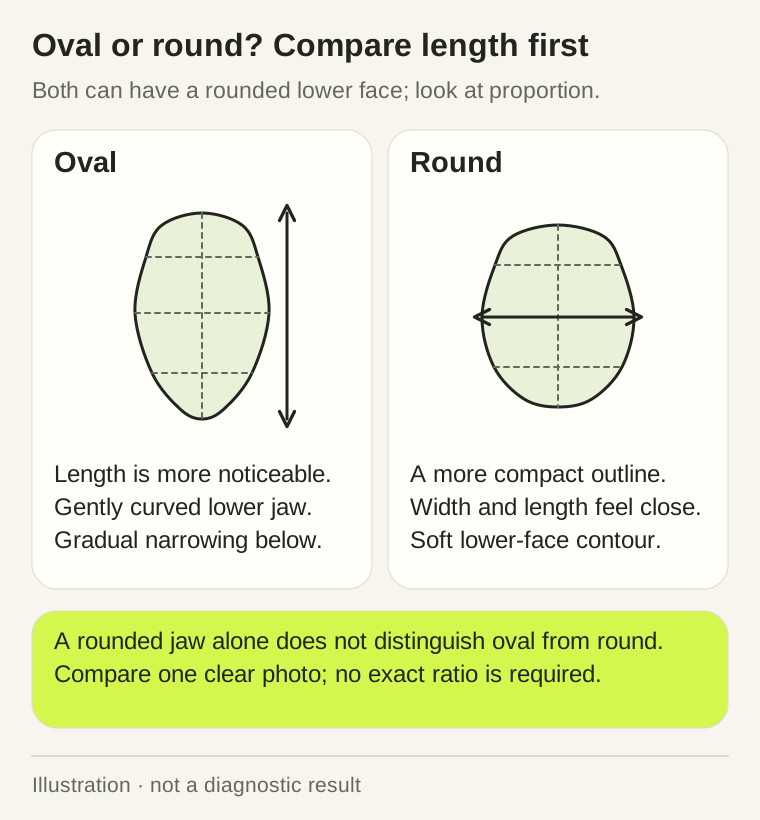
Both can have soft contours. In an oval face shape comparison, ask whether length is noticeably greater than width. A round description is more compact, with length and width feeling closer. A single cheek measurement or a fuller smile does not establish the category. Compare a neutral view and look at the whole outline rather than deciding from facial fullness alone.
Oval versus oblong or long
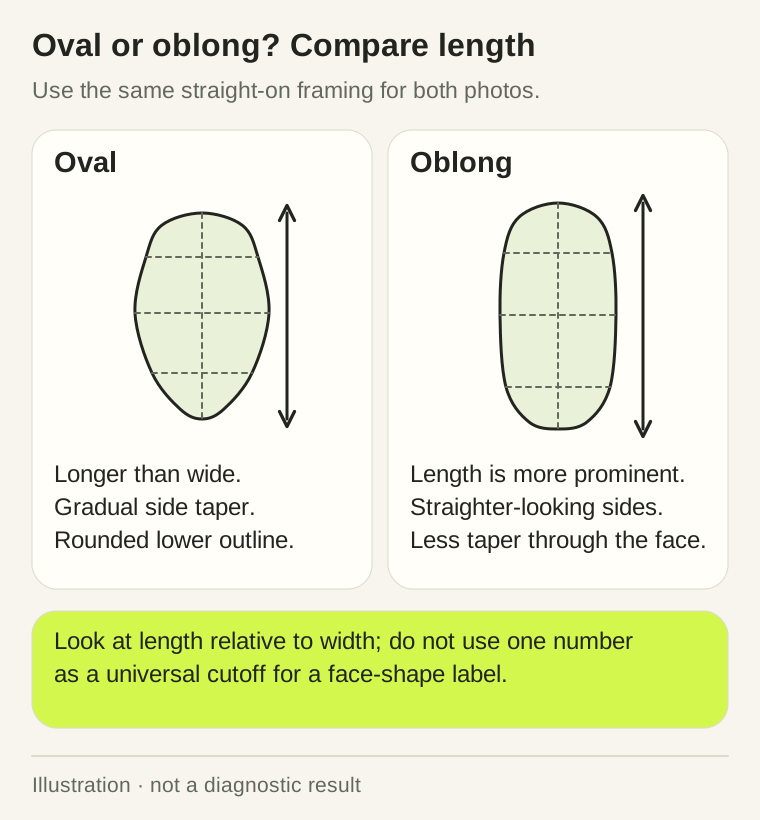
Both are longer than wide. An oval face shape generally has a more gradual curved taper, while an oblong description emphasizes length more strongly and may have comparatively straighter sides. Publishers sometimes combine rectangle and oblong, so check their definitions before comparing labels. A high hairstyle can lengthen the visible silhouette without changing the underlying face.
| What you can see | Consider | Check next |
|---|---|---|
| Softer outline, length and width feel close | Round | Retake if camera angle compresses apparent length. |
| More length than width, gradual curved taper | Oval | Inspect whether one upper or lower zone dominates. |
| Length stands out strongly, sometimes straighter sides | Oblong / long | Separate facial length from hairstyle height. |
This table is a reading aid, not an equation. Byrdie’s guide provides broader styling context for these descriptions. No universal 1.5 ratio is established here as a requirement for an oval face shape. The choice of endpoints and photo perspective affects any measured ratio, so a decimal alone cannot replace contour inspection.
When the answer stays mixed
Consider an illustrative case: the face looks long, but the jaw is softly rounded and the sides are not especially straight. “Long outline with a soft jaw” is already a useful result; oval and oblong can remain possible descriptions. This is a reasoning example, not a measured customer result. Try a clearer photo if the important boundary is hidden, then keep the observations you can repeat.
If the upper face looks distinctly broader and the lower jaw strongly tapered, the heart-shape comparison may help explain that different pattern. You do not have to choose an oval face shape simply because it was your first guess.
Oval face shape: men’s hair and beard considerations
The same outline criteria apply across genders. What changes is the style you want to explore and which parts of the outline a haircut or beard makes visible. For an oval face shape, first separate your actual facial boundary from the silhouette created by facial hair. A broad or square-edged beard may cover a narrower, softer jaw; that is an observation limit, not a reason you must shave.
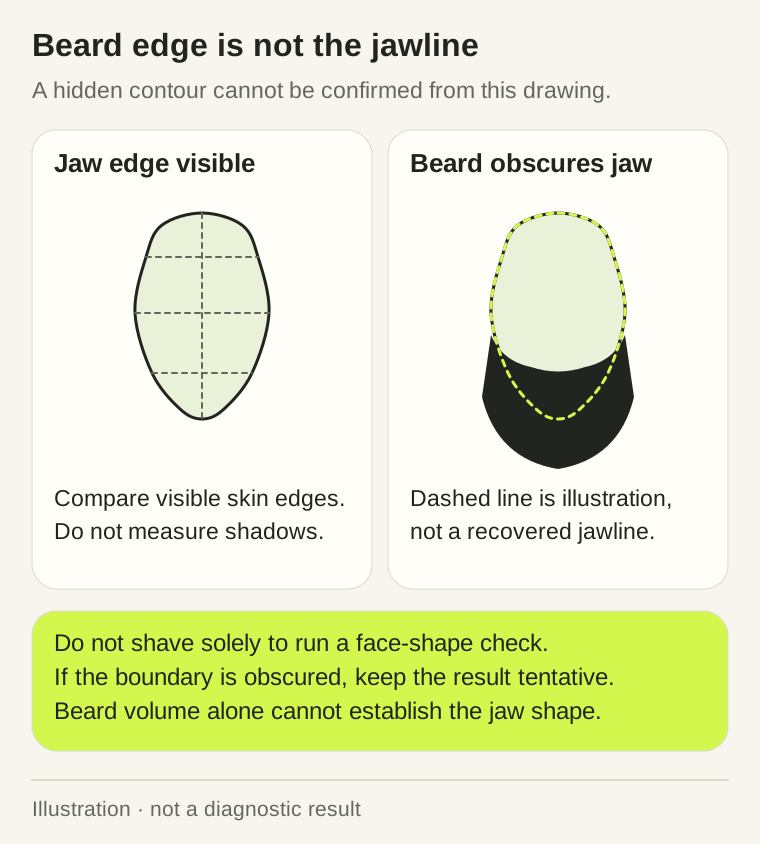
A fringe, changing hairline or high-volume style can also alter apparent length and upper-face visibility. An oval face shape estimate from a photo should remain tentative when those boundaries are hidden. The model does not identify the true hairline or infer biological sex or gender. The men’s detector simply starts with the men’s hairstyle collection.
For a practical barber discussion, bring your desired length, typical styling time and a couple of reference looks. Explain whether you want to reveal more forehead, reduce daily styling or keep longer movement at the sides. FashionBeans’ men’s guide offers additional grooming ideas; treat them as options to compare, not universal rules about which appearance you should prefer.
Three optional styling directions
An oval face shape does not make every hairstyle equally practical. Narrow the choice by what you want your hair to do, then consider texture, density, growth direction and upkeep. These three directions are starting points rather than prescribed corrections:
- A textured crop: compare a shorter silhouette and some fringe if that matches your length preference. Ask how your natural texture behaves and how often the shape needs trimming.
- A side part or softly directed shape: explore how much forehead you want visible. Check whether the part works with your natural growth direction and whether you want to use styling products.
- A bob, lob or longer layers: explore movement and fullness around the sides or jaw. Consider drying time, curl pattern and the amount of length you want to keep.
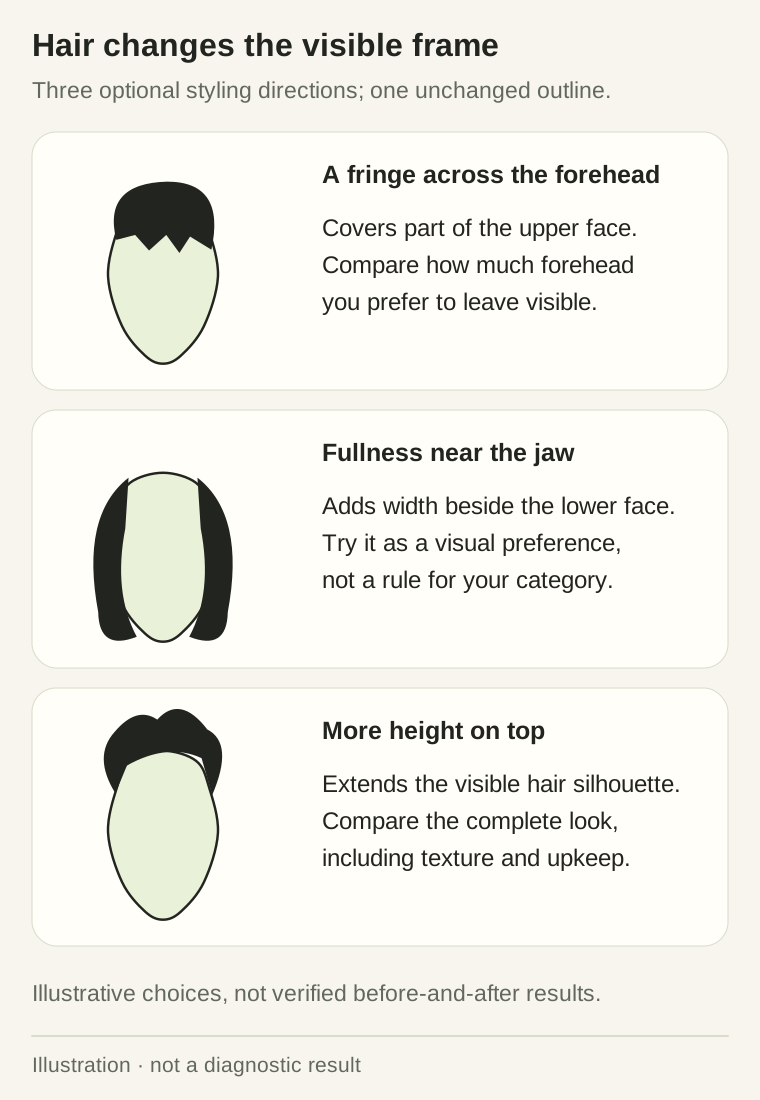
Extra height can make the overall silhouette look longer; side fullness can make it look wider. Neither effect is inherently better for an oval face shape. Choose based on your goal and comfort instead of assuming that a chart tells you to add height or hide length. A style that needs more daily work than you want may be a poor fit even if you like its outline.
A brief note on glasses
For an oval face shape, frame size and shape offer ways to change contrast around the face. Compare frames on yourself and inspect the effect you prefer, then check fit and comfort separately. A category does not guarantee a frame will fit, and this guide makes no claims about changing vision or treating eye strain through a shape match. Dedicated eyewear choices are a separate task from identifying the outline.
Optional tools after the comparison
You can finish this guide with a written description and a shortlist of styles. If you want another reference, the face shape detector analyzes a photo locally in the browser and shows an estimate, outline and four ratios. An oval face shape result is one heuristic reading of that input, not ground truth or proof of model accuracy.
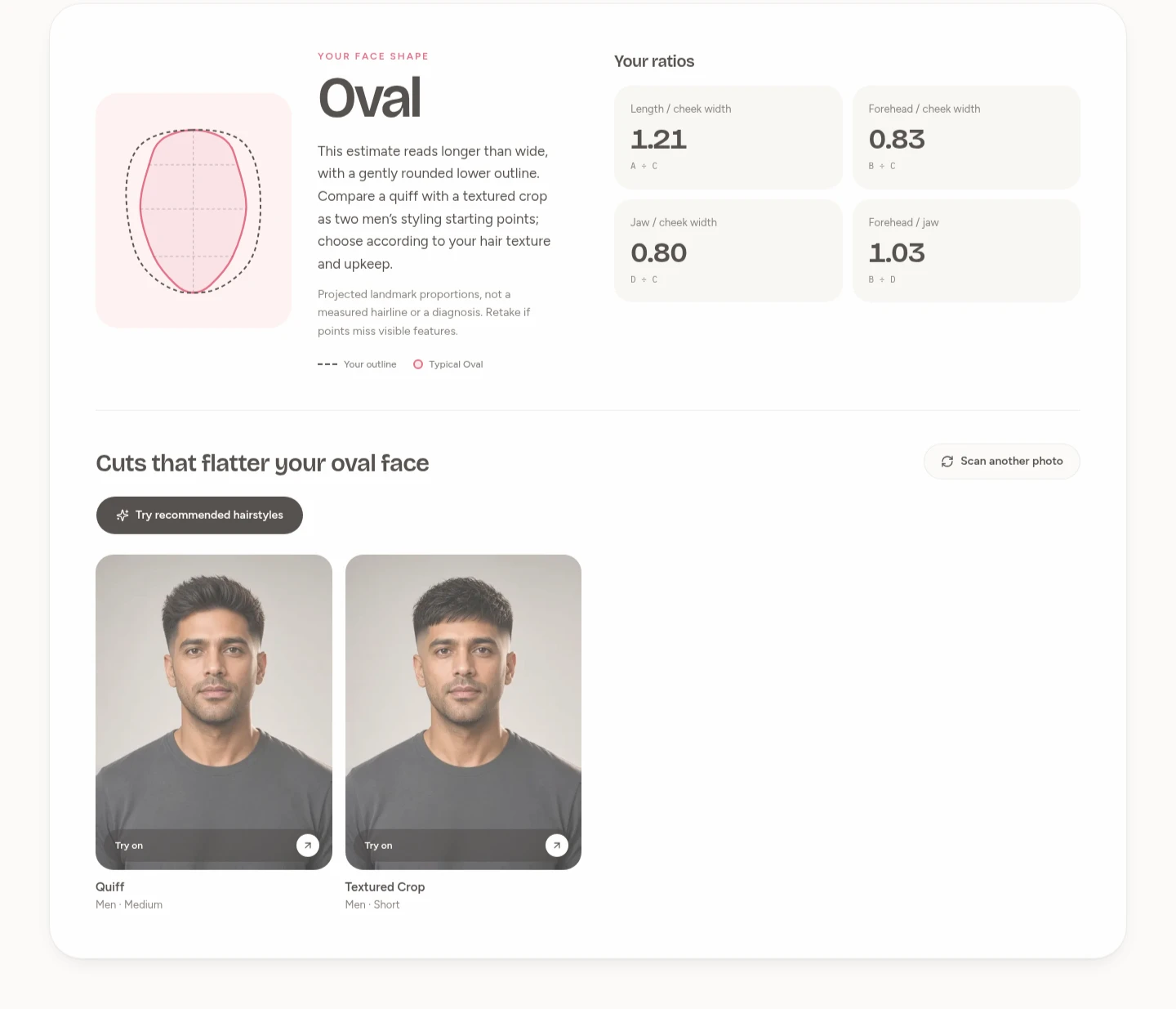
The hairstyle studio is a separate next step for exploring available cuts. Guest previews are marked as illustrations. Actual AI hairstyle generation requires sign-in and available credits; reading this article or running face detection does not automatically generate or charge for an image.
Questions to keep the label in perspective
Does an oval face shape need a precise length-to-width ratio?
No exact universal ratio is required by this guide. The observed proportion depends on how and where you measure. Use the relative length together with the sides and jaw, and avoid combining a curved tape measurement with the detector’s straight landmark spans.
Is oval more attractive or rarer than other shapes?
This research does not establish a reliable population rate or an objective attractiveness ranking. An oval face shape is descriptive vocabulary. It does not predict aging, establish superior genetics or tell you how you should feel about your appearance.
Why do two photographs give different descriptions?
Camera position, head tilt, shadows, fringe and beard coverage can change the outline you see. Compare well-framed photos with the relevant boundaries visible. If the same features still fit more than one category, keep both and state the actual observations instead of insisting on a single permanent label.
Are celebrity pictures reliable examples?
They can show styling ideas, but a posed or edited photograph is not a verified shape label. Different guides may classify the same person differently. This article uses original diagrams and clearly identified illustrations so that you can compare features without treating a celebrity as a diagnostic standard.
Further reading
Skin Beauty’s oval-face article covers more hairstyle options. Use that wider selection alongside your own preferences and practical constraints. This oval face shape guide keeps identification, uncertain cases and usable next steps together; it does not promise a universally best haircut.