
Haircuts for round-faced men
Start with the front you want: lift it, part it or bring it forward. Compare how much length to keep and what you want to do each morning.
A quiff opens the forehead with height, a side part gives the front a direction, and a textured crop brings a shorter fringe forward. Your texture, head outline and daily routine matter alongside face shape.

Start with the front, then choose the length
Choosing haircuts for men with round faces begins with the change you want to see. A lifted front, a sideward sweep and a short forward edge create different outlines. Compare those directions before deciding how short to cut the sides. A round face does not need correcting, and extra height is an option rather than a requirement.
Keep two references with a clear difference. You might prefer one for its open forehead and another because it needs less arranging. Your natural texture, growth direction and willingness to style matter as much as an outline label. If the label is uncertain, you can still compare the cuts.
Quiff or side part: lift or direct the front
The quiff reference makes upward movement easy to see. The side part changes the direction more clearly, with a smoother sweep. Both expose the forehead, but their upper edges look different. Choose the finish you would enjoy wearing, then ask how much front length and root control it needs on your hair.
Bring a relaxed-day reference as well as a styled one. A quiff may need the front dried upward; a part may need brushing into place. If you would skip those steps, compare the shorter options before committing to the pictured finish.
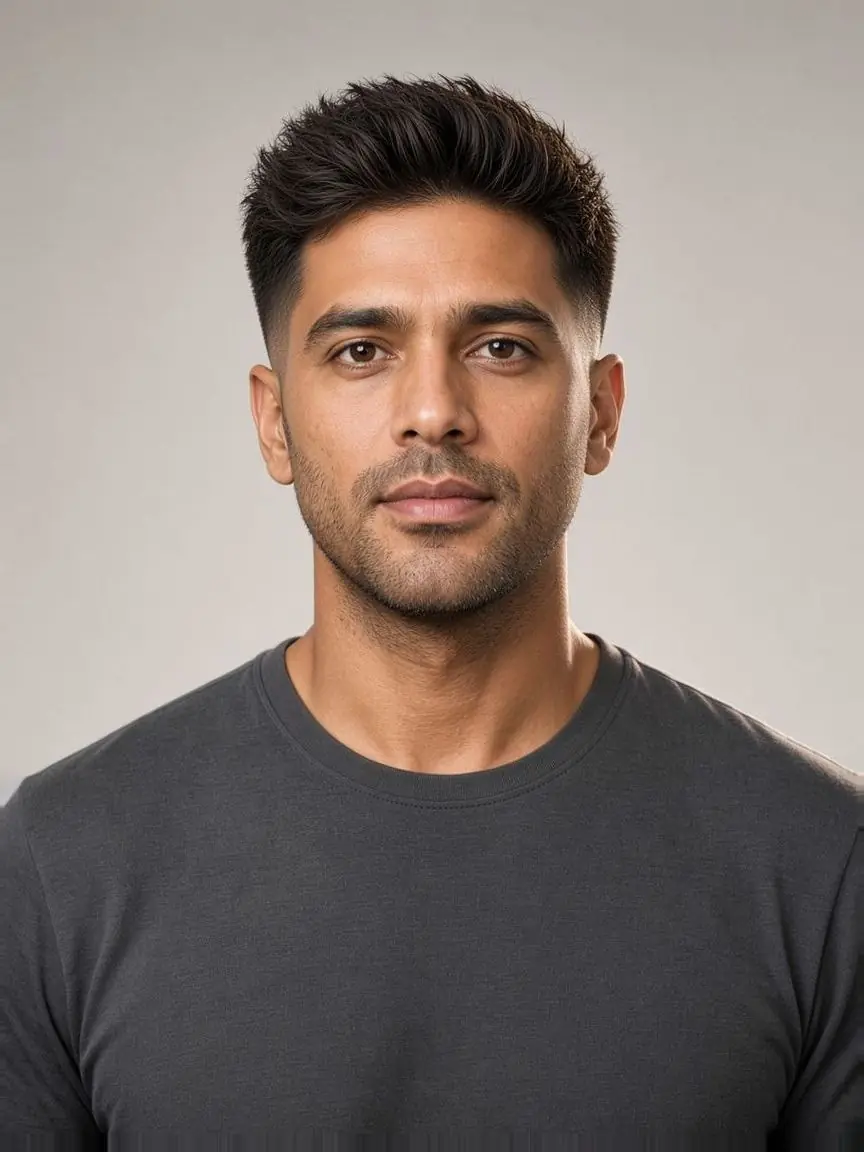

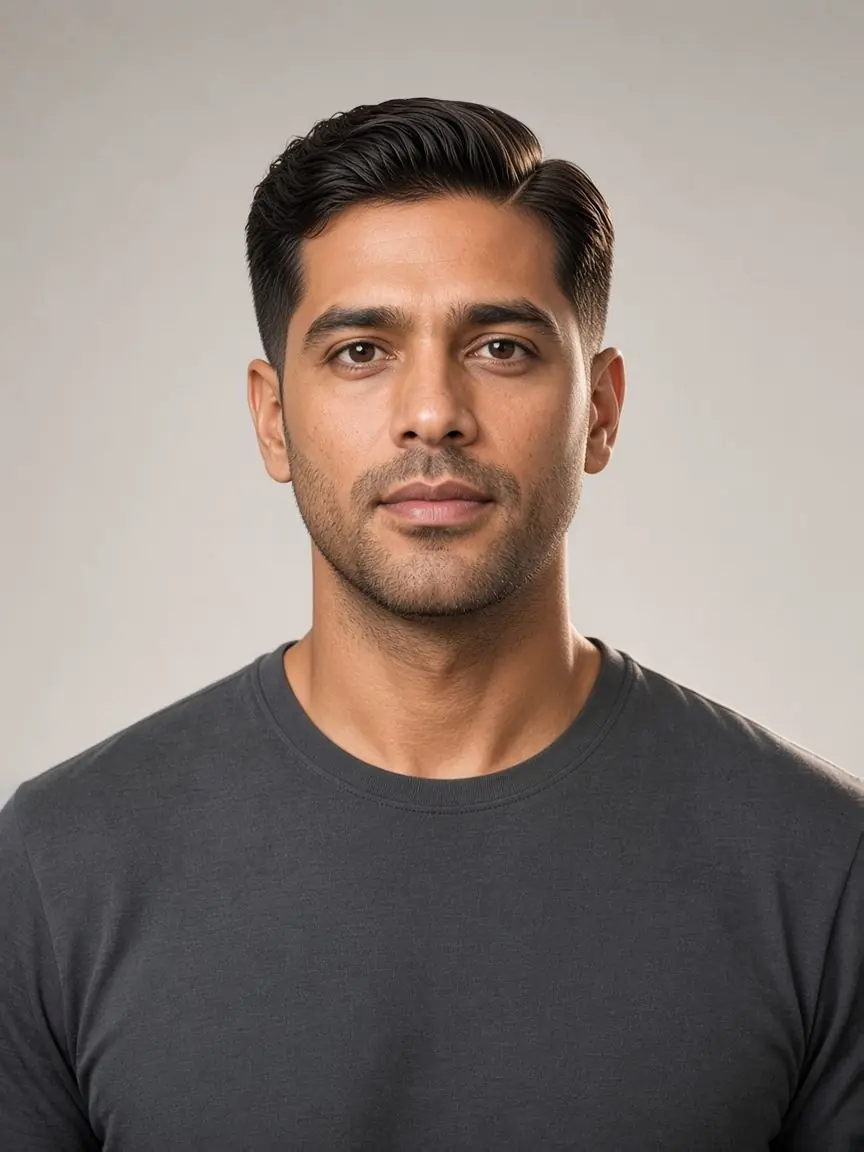
Quiff
The front rises away from the forehead, with a textured upper outline and closely cut sides. It adds more visible height than the side part while keeping the ears clear.
Keep enough front length to lift and direct. Ask how to dry the roots upward, then finish with a small amount of product. A lower version may be easier if your hair falls flat.
Side part
A visible part sends the front sideways in a smooth, raised sweep. The forehead stays open, but the outline is more controlled and less spiky than the quiff.
Work with a part your growth pattern supports. Comb or brush the front into place, and ask how it looks without a polished finish. The shorter sides still need occasional reshaping.
AI catalog references on another model, whose face shape has not been measured here.
Textured crop or crew cut: forward edge or open forehead
Short hair gives you choices beyond adding height. The textured crop shown here has a lower front that falls toward the forehead. The crew cut leaves a smaller amount to lift and shows more of the forehead. Compare that difference directly instead of assuming every short cut produces the same silhouette.
For a crop, discuss the fringe edge and how the pieces separate. For a crew cut, check the front and crown growth direction before shortening them. A short top can reveal a cowlick more clearly. Both cuts can involve relatively little daily arranging while still needing the perimeter maintained.
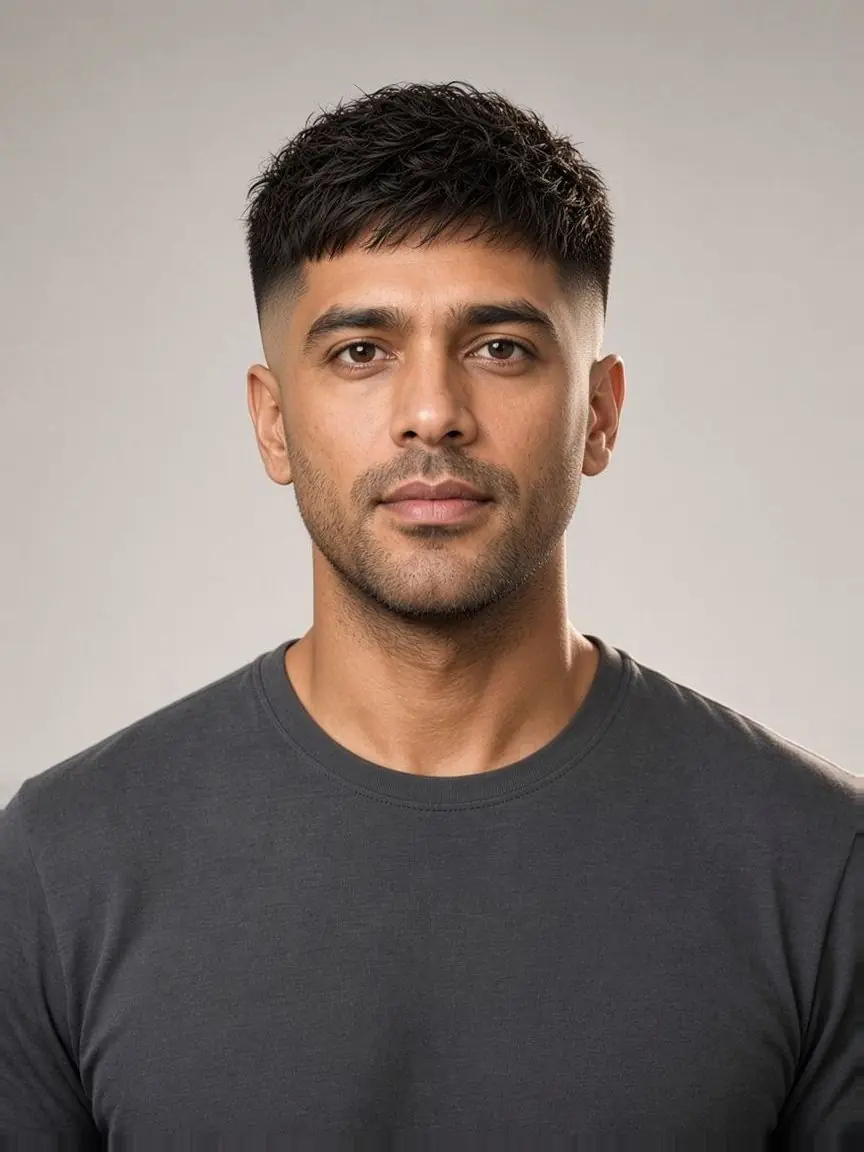
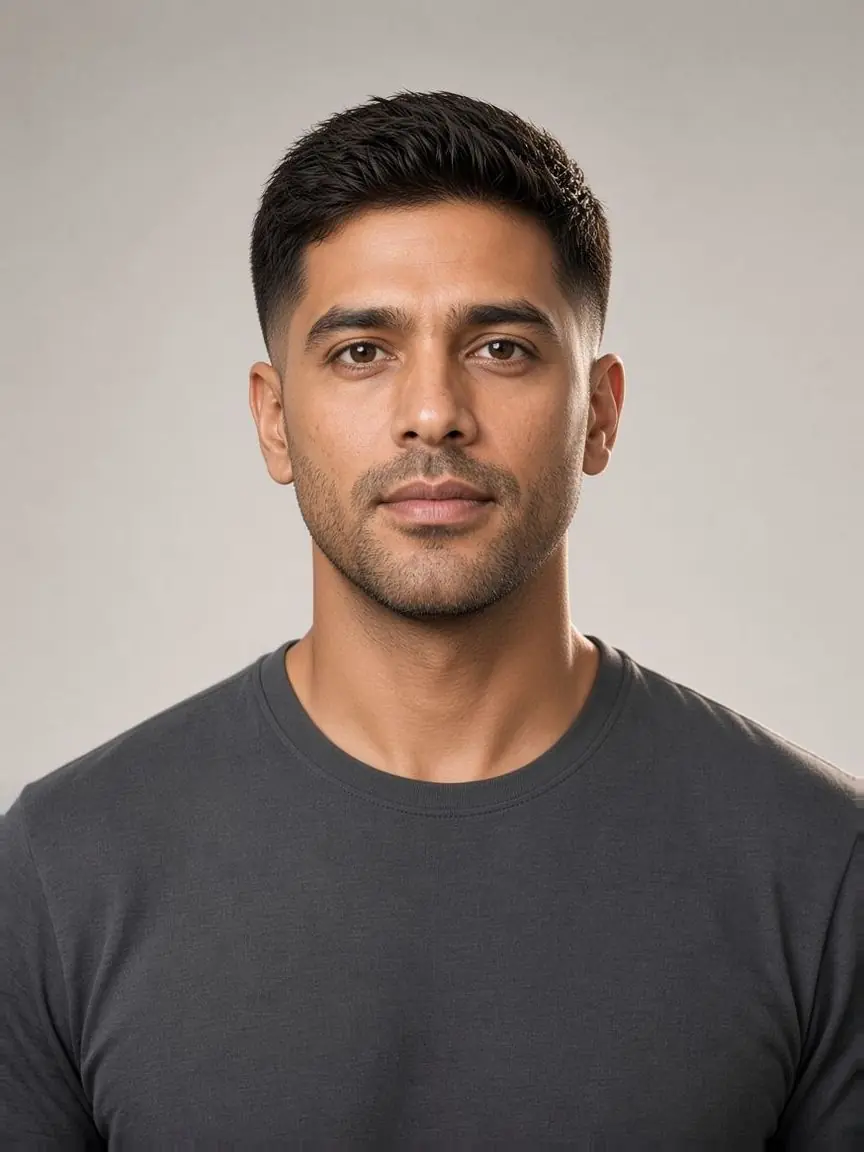
Textured crop
The short front points forward with a broken edge over the upper forehead. This is a lower outline than the quiff, with visible texture across the top and closely cut sides.
Compare how much forehead you want covered. Ask for enough length to separate the front rather than a solid heavy line. Light finger styling can define the pieces; regular trimming keeps the edge intentional.
Crew cut
The top is compact and brushed slightly upward at the front, leaving the forehead visible. It retains less front length than the quiff and a cleaner opening than the forward crop.
Choose it if you prefer less length to arrange. Check the crown and front growth direction with your barber. Limited daily styling does not remove the need to refresh the short perimeter.
AI catalog references on another model, whose face shape has not been measured here.
Flow or slick back: keep length, change the finish
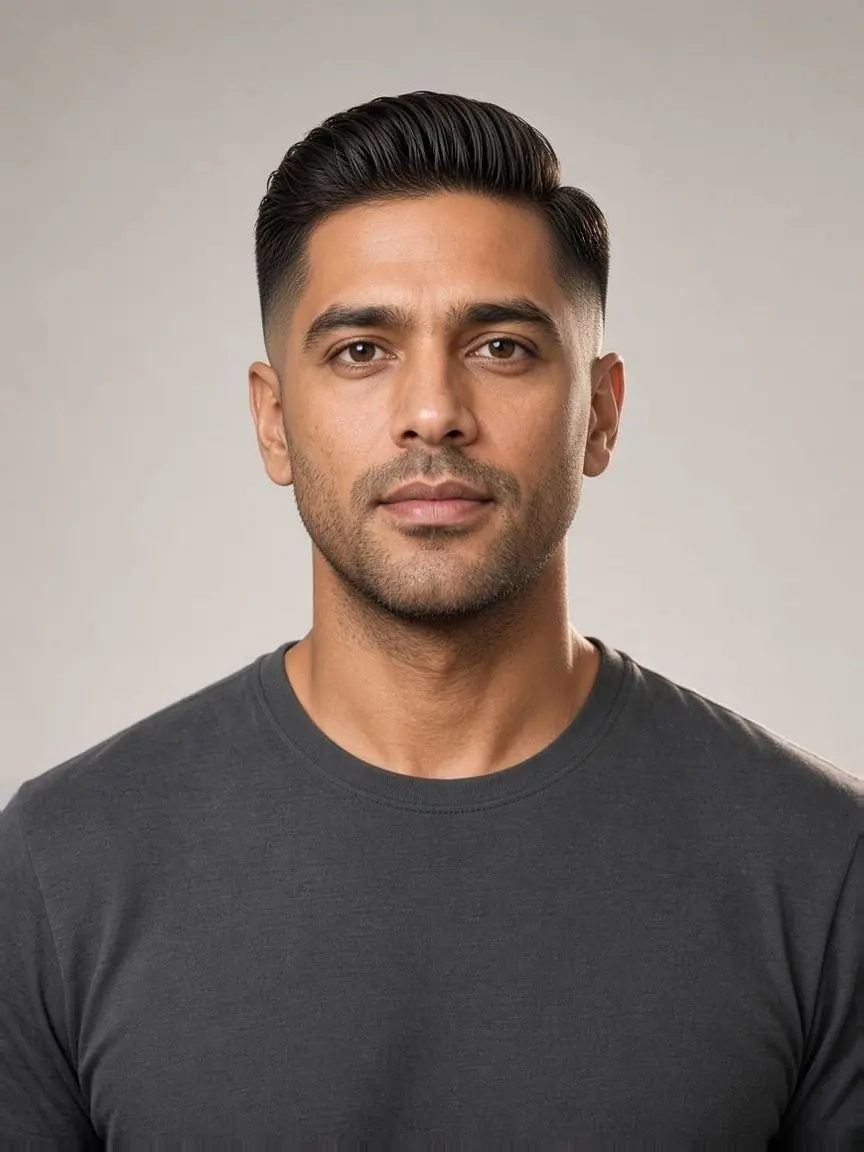
Round-faced men can keep length. The flow reference leaves more movement beside the ears and around the nape, while the slick back creates a more directed, controlled front. Decide whether you want that side fullness and softer movement or would rather brush the front back with a clearer shape.
Retained length brings its own work: drying, detangling and controlling pieces that expand or fall forward. Ask how the style changes when worn without product. If you like a wider hair outline, keep it; if you want a longer-looking silhouette, compare where the side volume sits before removing length everywhere.
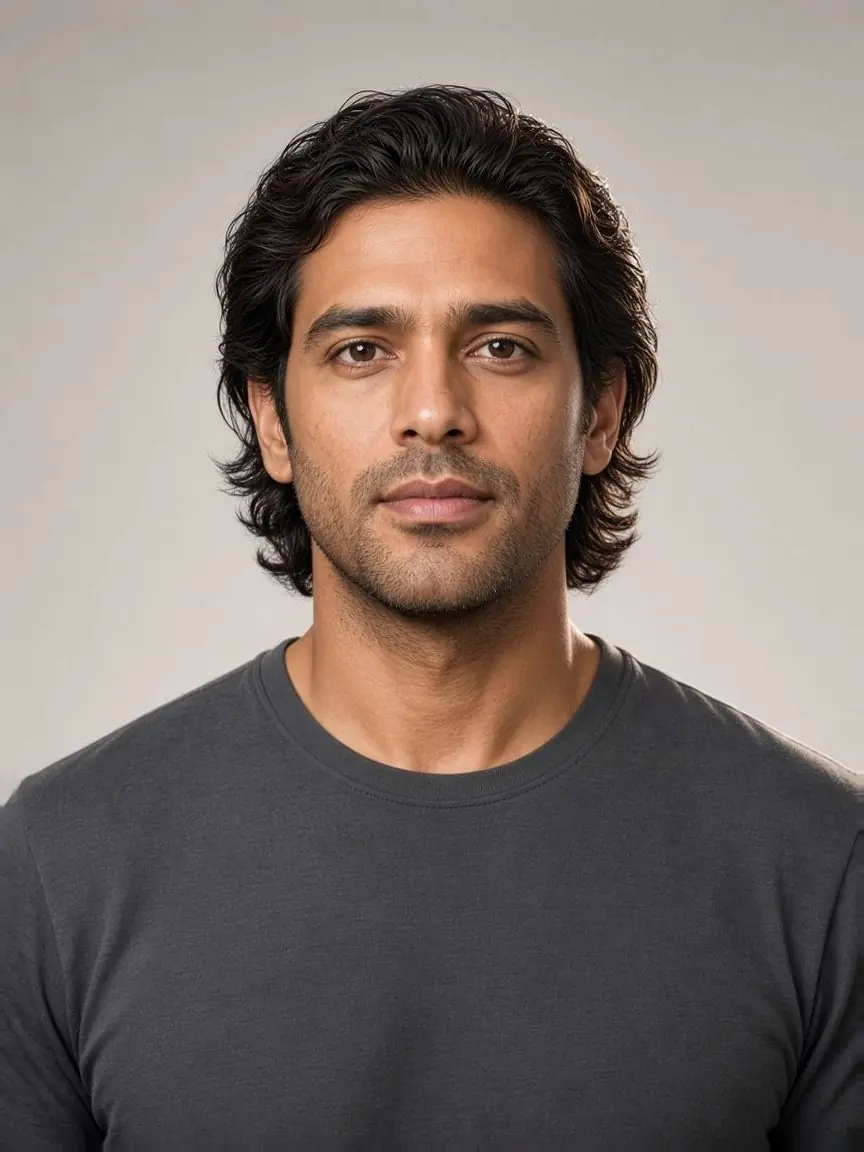
Flow
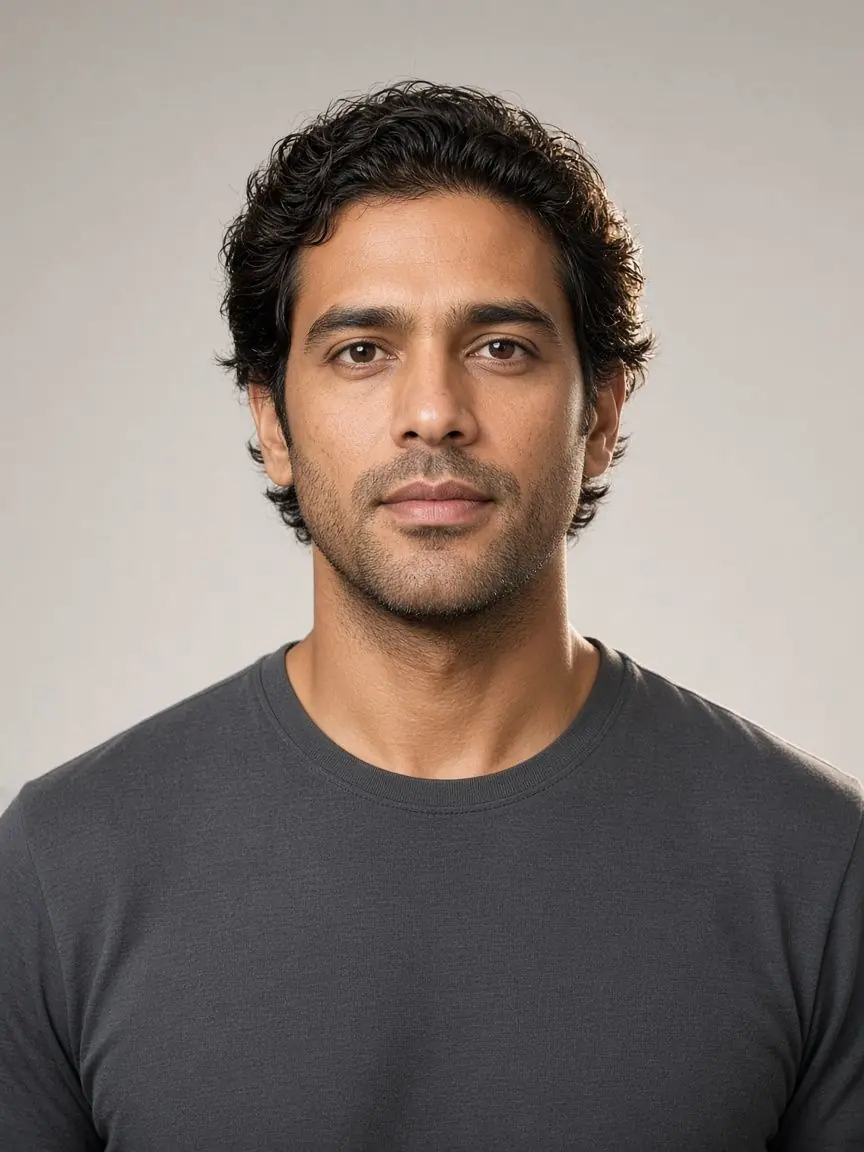
Longer, softly waved sections travel back from the forehead and remain around the ears and nape. The sides have more width and movement than the short-sided references.
Keep it in the comparison if you enjoy retained length and a looser finish. Discuss where the sides expand as they dry, along with detangling and shaping the longer perimeter.
Slick back
The front is directed backward into a smooth, defined ridge, with the forehead fully visible. This reference has some front height; it is not a flat, wet-looking finish.
Ask whether your front has enough length to stay back and how much hold it needs. Compare the look after brushing with its relaxed state, especially if you avoid daily product or heat.
AI catalog references on another model, whose face shape has not been measured here.
Work with the hair you have
Fine or lower-density hair may not hold the height in a reference without preparation. Discuss a lower front, less separation or a shorter option if you want to avoid a finish that relies on daily lift. Heavy product can change how strands group together, so ask for an amount and finish you can manage.
Dense hair can retain substantial width beside the temples or through the top. Explain where you want less weight, rather than requesting thinning everywhere. With wavy, curly or coily hair, compare the dry outline and natural shrinkage. These smooth and softly waved catalog references do not predict a different curl pattern; your barber can interpret the length and weight placement around your own texture.
A front growth pattern or visible hairline also affects what will stay up, part or fall forward. Choose how much forehead you want visible and ask what happens without deliberate styling. This is a haircut conversation, not a diagnosis of hair loss.
A fade is one part of the choice
Low, mid and high fades expose different amounts of the sides. Their effect depends on the top, the temple area and the back of the head. A higher fade is not a universal rule for a round outline. Ask to see where the shortest section would begin and where the transition would finish.
A taper can preserve more coverage while cleaning the edges. Compare how much scalp you want visible and whether you want a gradual or stronger contrast. Then discuss refreshing the sides separately from styling the top: keeping a close edge crisp is a different commitment from arranging the front each morning.
Keep beard shape and face outline separate
A beard can change the visible lower edge, especially around the jaw. Its outline is not a measurement of the face beneath it. If you are comparing round and square, use the face-shape chart or the optional men’s detector with those limits in mind.
You can discuss side fullness or chin length with a barber, but the hairstyle presets here do not promise to redesign your beard. For the haircut itself, say whether you want the hair above the temples to connect smoothly with the facial hair or create a clearer contrast.
Take two photos and a practical barber brief
Bring two references and point to what you like in each. Name the length to keep on top, the width beside the temples, the direction of the front and the amount of forehead to expose. Add the steps you would rather avoid, such as daily blow-drying, brushing a part or using a firm hold.
For example: “Keep enough front length to sweep sideways, reduce bulk beside my temples and leave a finish I can arrange with a brush.” Ask how the crown looks when dry and when the short edges are likely to lose their shape. Let your barber suggest a workable interpretation rather than expecting an identical copy of the photograph.
Carry a choice into the studio
The single-cut and paired actions open the actual catalog presets in the hairstyle studio. Preparing one photo below lets you carry it into the comparison. Selecting a preset does not generate an image or spend credits; Generate remains a separate decision.
Bring one photo to your chosen cuts
You can browse first. If you want to carry a photo into the studio, prepare it here on your device. Selecting a catalog cut will not generate an image or spend credits.
JPEG, PNG, WebP or supported HEIC/HEIF · up to 20 MB.
Common questions
Which haircut is best for a round face?
There is no single winner. Compare front direction, side width, retained length and the work needed to wear the finish. The hairstyle chooser offers another way to narrow those preferences without requiring a face scan. The short, mid-length and long-cut guide gives further comparisons if those collection styles interest you.
Is a very short cut off limits?
No. A crew cut or closer crop changes what is visible, including the hairline and head outline. That may be what you want. Compare it with a longer front and discuss crown direction, coverage and upkeep instead of treating a face label as a ban.
Does an AI preview show exactly how my haircut will turn out?
No. It is a visual reference, not a guarantee of density, texture, beard detail or a barber’s result. Generating sends the submitted photo for cloud processing, requires sign-in and costs one credit per successful style. AI illustrations and catalog portraits are separate from a new result generated from your photo.
For additional viewpoints, read Pete & Pedro’s round-face haircut guide and Rush’s haircut comparisons. Compare their styling conditions alongside the pictures; product recommendations and individual fade preferences are not universal instructions.