
Hairstyles for square face shapes: define or soften
Hairstyles for square face shapes can emphasize a clear jawline or surround it with movement. Choose the effect you enjoy first. You do not need to hide your jaw, grow your hair long, or rule out a bob.
Start with one decision: a visible edge or a more broken outline. Then compare where the hair ends, how the front sits, and what your normal texture will do. The six references below open actual studio presets, with two choices in each group and practical questions to take to a stylist.
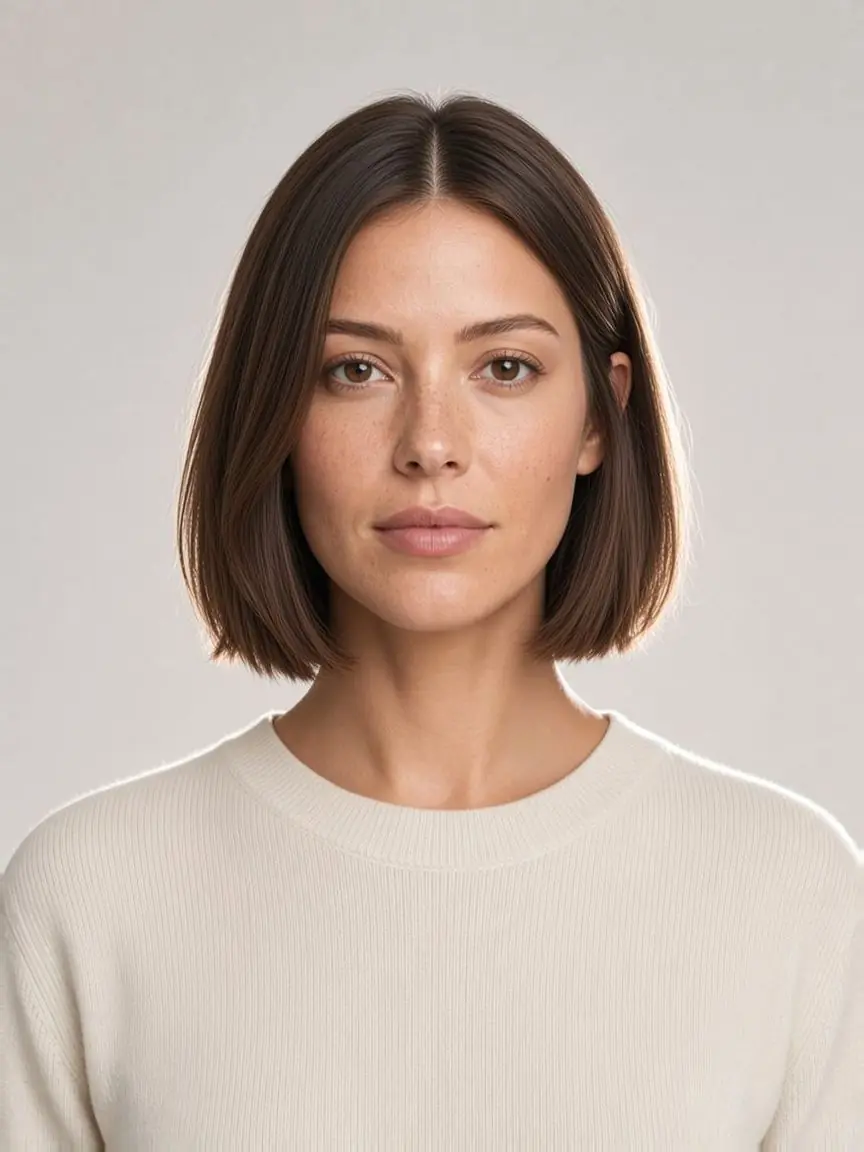
What does a square outline tell you?
A square outline usually has relatively similar width across the upper face, cheeks and jaw, with more noticeable corners at the lower face. It is a loose styling description. A photo taken close to your face or with your chin raised can change the impression, so avoid making a haircut depend on a single measurement.
When browsing hairstyles for square face shapes, separate the outline from the effect you want. Someone may love a compact bob against an angular jaw; someone else may prefer waves around it. The face-shape chart helps distinguish square from round or longer rectangular descriptions. A mixed outline does not prevent you from using this guide.
Hairstyles for square face shapes: bob or lob?
The ending point matters as much as the name. Compare a shorter edge beside the jaw with a perimeter sitting farther below it. These hairstyles for square face shapes give you two different amounts of retained length. Check the side profile and whether you want to tuck the front behind your ears.
Textured bob
This reference keeps a short outline with visible separation through the ends. Look at the interrupted edge and the amount of hair beside the cheeks, rather than treating every bob as the same shape.
Bring this option if you like a shorter perimeter with movement. Ask which parts come from the cut and which come from styling. Your own jaw and dry hair length may put the edge in a different place.
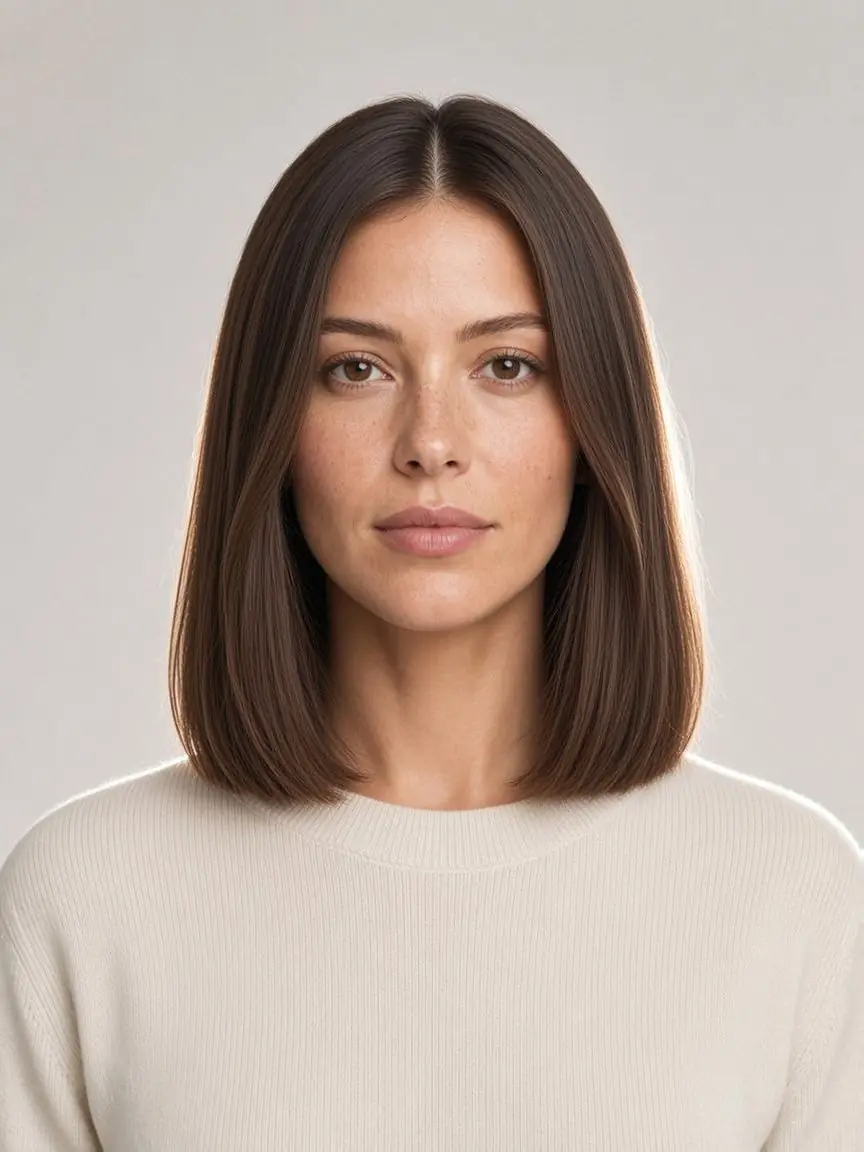
Lob
The lob places its lower edge farther down and retains more hair around the neck. It gives you a clear comparison when you like a bob but want less of the haircut ending beside the jaw.
Check whether the proposed length clears your shoulders or flips against them. Show the shortest length you can accept, and test the ponytail requirement with your stylist before assuming a longer bob will tie back.
AI catalog references on another model, not verified face-shape examples or results from your photo.
You can also choose a deliberately blunt edge. Recommendations for hairstyles for square face shapes often favor softness, but that is one aesthetic preference. If you like a defined outline, say so. Ask for a clear perimeter while discussing how much weight to retain, instead of asking a stylist to make your face less square.
Bangs and layers change different things
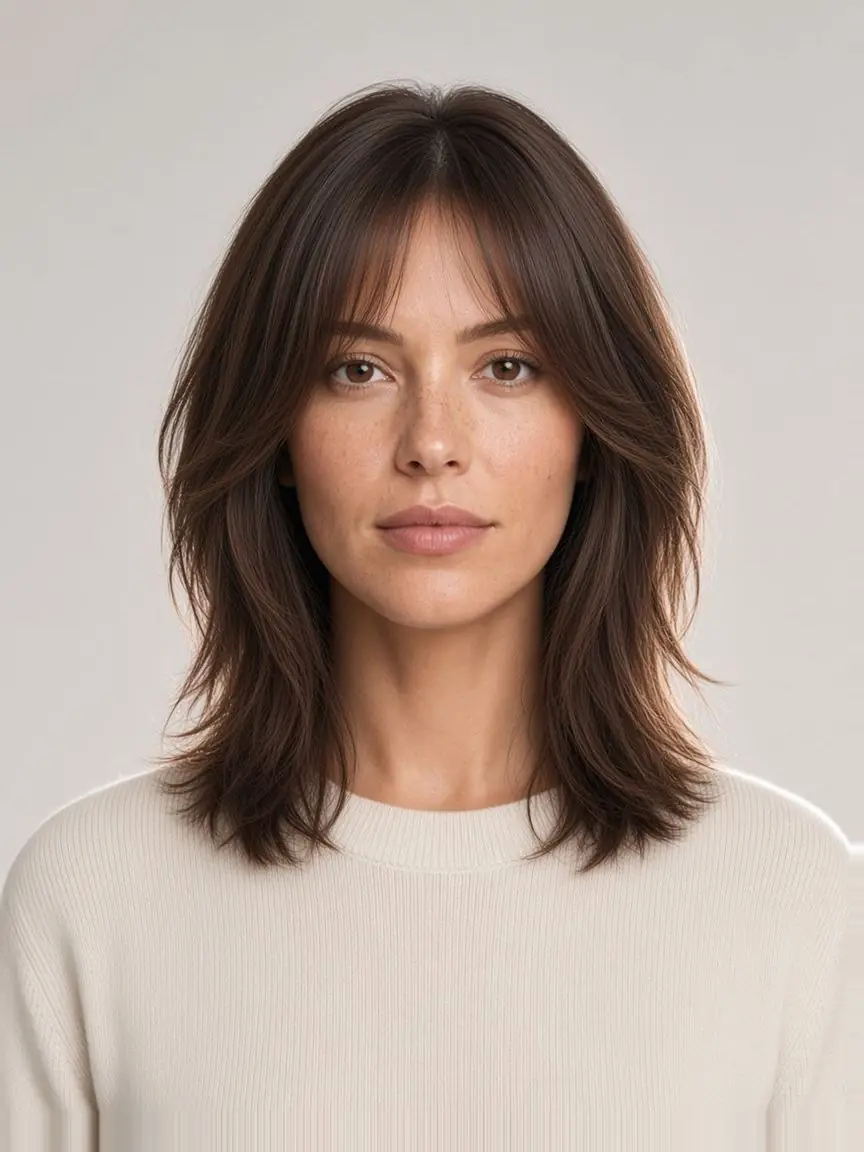
Curtain layers change the opening around the forehead and cheeks. A shag spreads the change through more of the haircut. Compare these hairstyles for square face shapes when you want movement, then decide whether you want to manage only a front section or a more layered shape overall.
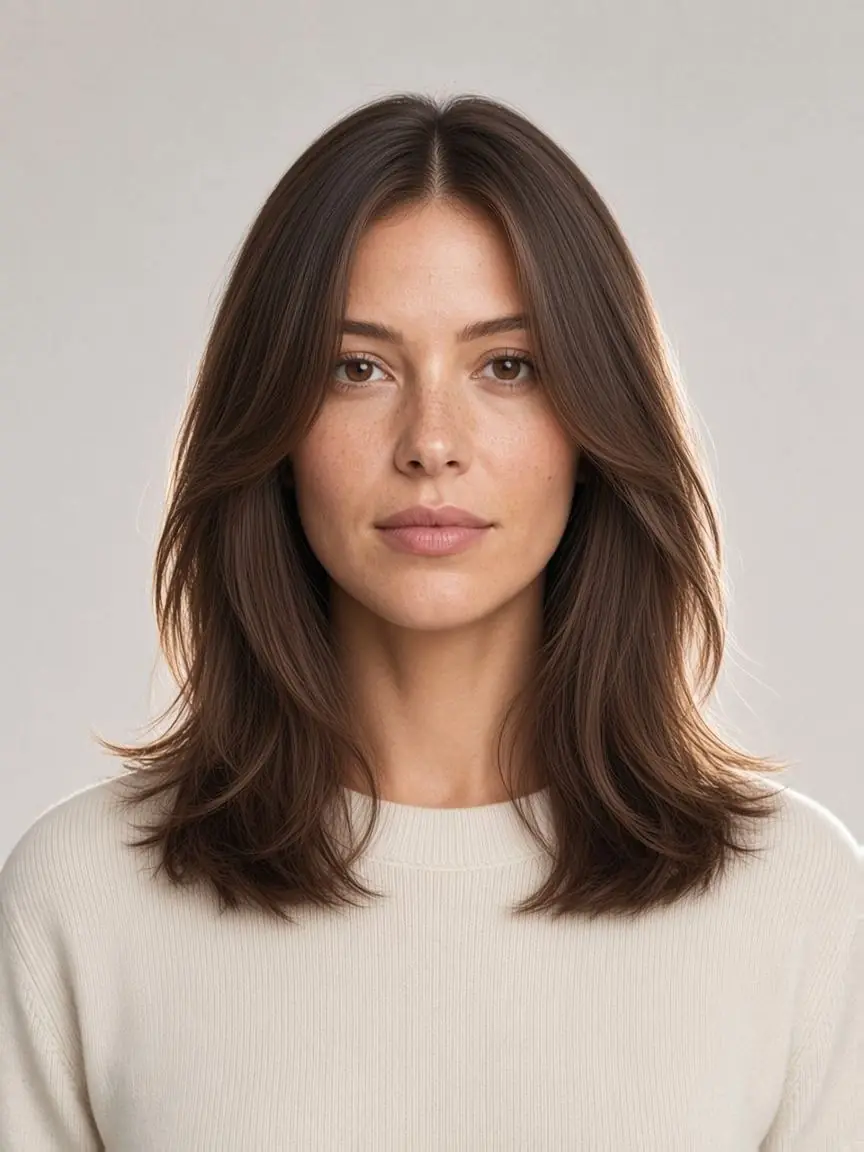
Curtain layers
The separated front pieces leave an opening while adding visible framing at the sides. Use this reference to discuss the width of the opening and where the shortest piece should finish.
Check the fringe with your usual part, glasses and hairline. If you need every front piece to tuck behind your ears, mention that first. A catalog fringe can look settled even when your own front needs daily arranging.
Shag
The shag distributes shorter pieces through the top and sides, with a less continuous outer edge. It is a broader change than adding a fringe to otherwise long, relatively even hair.
Ask how the layers will behave without the reference finish. Agree on the shortest crown and side lengths, especially if you want to tie the hair up. Growing out several short layers is a different commitment from growing out bangs alone.
AI catalog references on another model, not verified face-shape examples or results from your photo.
For hairstyles for square face shapes with bangs, try describing the line instead of requesting a face-shape rule: open in the center, swept sideways, curved at the sides, or firmly horizontal. Bring a photo with your hair pulled back too, so the stylist can see the growth pattern the fringe will work with.
Thick hair: choose where the weight stays
If your shoulder-length hair feels bulky, point to the area that bothers you. Is it beside the cheeks, behind the ears, or at the bottom? Those are different requests. Removing weight everywhere can take away a perimeter you actually like. A stylist can inspect how your density supports the proposed shape.
For thick hair, hairstyles for square face shapes should be compared at a realistic dry width. A smooth photograph may hide the volume you normally wear. Bring a picture after your ordinary drying routine and ask what the reference would require. For fine hair, check how much fullness remains at the ends before agreeing to extensive layers.
Long hairstyles for square face shapes
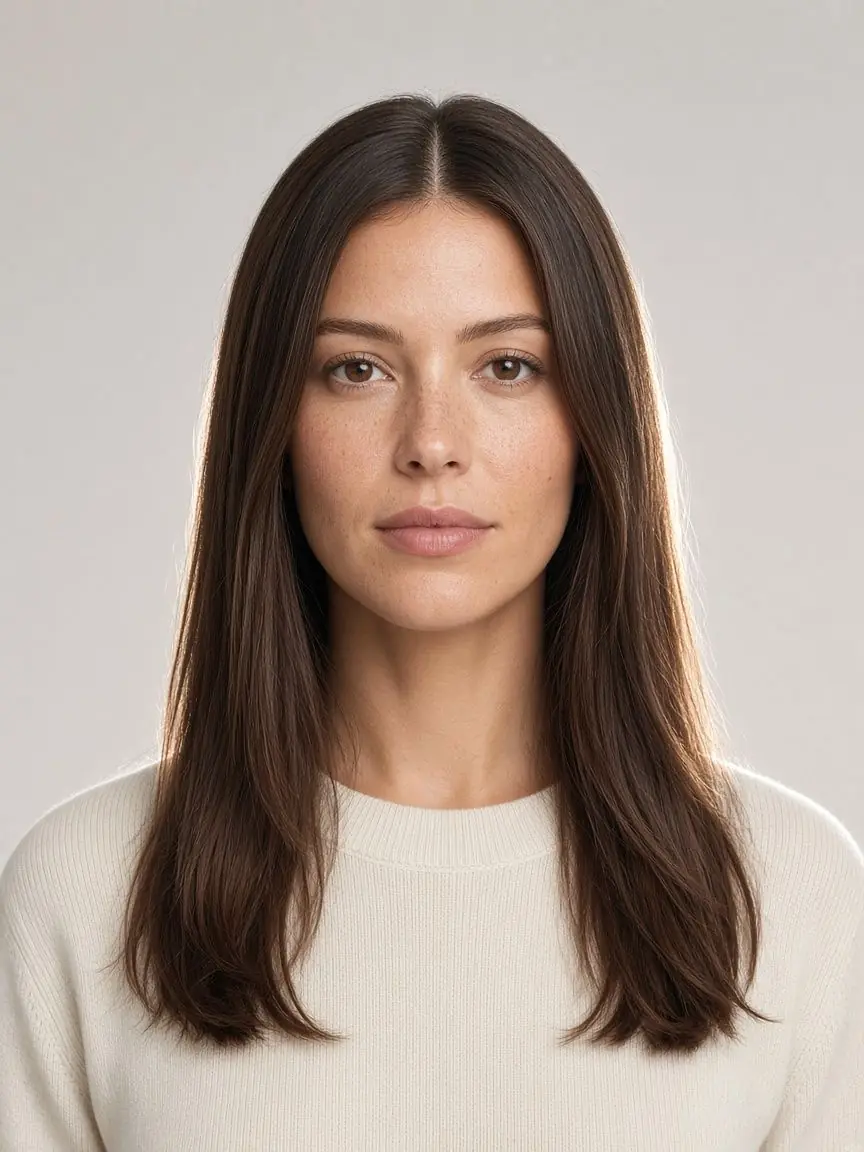
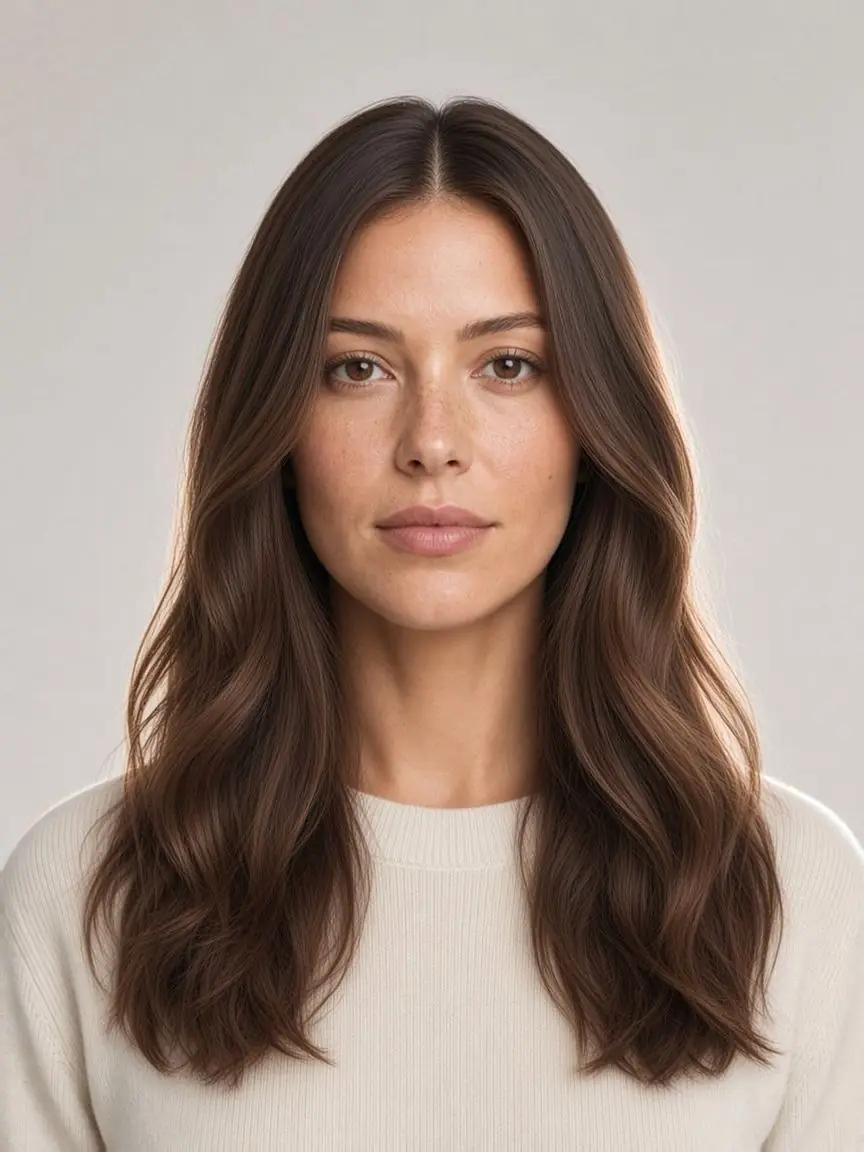
Keeping length lets you compare the finish without committing to a shorter perimeter. The useful distinction here is the line: straighter sections hanging down, or bends creating an uneven side outline. Neither choice changes your face shape, and neither is automatically more suitable.
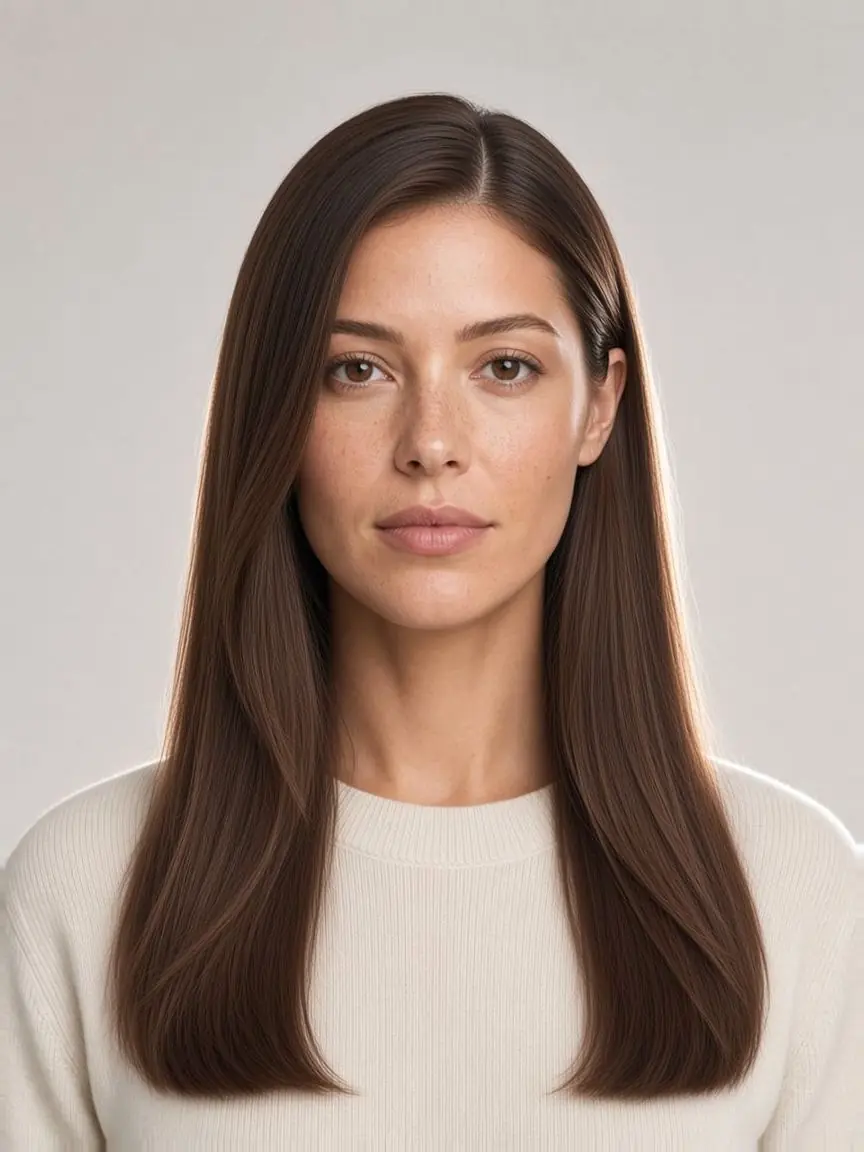
Sleek straight
This reference keeps a smooth, continuous fall through the length. Notice how an open front and straighter sides leave the facial outline visible rather than covering every corner.
Use it to discuss a finish you enjoy, not a requirement to straighten natural texture. Ask about the cut underneath the styling. If your hair is not naturally smooth, decide whether recreating this finish suits your routine.
Soft waves
The soft-wave reference adds bends through the retained length. Compare where the widest parts sit and whether you prefer an irregular outline beside the cheeks and jaw.
Look for a reference close to the wave you actually wear. A generated wave does not tell you how your hair will respond to a cut or hold a styled bend. Discuss what the outline looks like after ordinary drying.
AI catalog references on another model, not verified face-shape examples or results from your photo.
When comparing long hairstyles for square face shapes, keep the practical details visible. Show your stylist the shortest front piece you want, whether you wear a center or side part, and how often the hair is tied up. A long haircut can still include short sections that will not reach a tie.
Natural curls and coils: start with the dry silhouette
Curly hairstyles for square face shapes need references showing the texture you intend to wear. Compare the dry outline near the temples, cheeks and lower edge. A stretched length and a finished curl can sit very differently; agree on the visible finishing point before discussing how much to cut.
The full hairstyle chooser includes curly and coily filters. Black women and anyone seeking natural-texture references can use those choices without assuming one texture from ethnicity. You can keep fullness, create a more compact shape, or leave the jaw exposed. Straightening is not a prerequisite for a considered haircut.
Turn two pictures into a useful salon brief
Write one sentence about each favorite: “I like the bob's edge, but need the front to tuck back,” or “I want layers around my face while keeping the bottom substantial.” Add what you normally do after washing and how often you are willing to reshape the cut.
For hairstyles for square face shapes, this brief is more useful than asking for the single best cut. Bring your ordinary hair alongside the reference, and ask what will change when the styling is removed. Keep the features you chose, even if the final plan borrows from both pictures.
Compare hairstyles for square face shapes on your photo
Bring one photo to your chosen cuts
You can browse first. If you want to carry a photo into the studio, prepare it here on your device. Selecting a catalog cut will not generate an image or spend credits.
JPEG, PNG, WebP or supported HEIC/HEIF · up to 20 MB.
Preparing a photo stays in this browser. Choosing a reference opens the corresponding studio preset; it does not generate automatically. Check the selected looks and the displayed credits before generating. AI generation requires sign-in, uploads the submitted photo for processing and uses one credit per successful result. Read the pricing and photo privacy details.
Questions before choosing
Can I have a pixie or other very short cut?
Yes. Short hairstyles for square face shapes do not need to conceal the lower face. If an open jawline appeals to you, compare the front direction, side length and nape. The full chooser includes pixies and cropped options; check the growth pattern and trim routine with your stylist.
Do these choices change after fifty?
There is no automatic age cutoff for a bob, fringe or longer hair. Consider your current density, texture, preferred shape and maintenance. If those have changed, bring recent photos rather than relying on a haircut that worked years ago. No preview promises a younger-looking face.
Where are the men's options?
The men's face-shape guide compares crops, parts and longer styles using the men's catalog. For a square outline, first decide whether you like a close side or retained movement. Then compare the front and any beard separately, instead of choosing only from the face-shape label.
Editorial reading: Byrdie's square-face gallery and Who What Wear's stylist discussion. Our comparisons describe catalog references; an in-person stylist can adapt the features to your own hair.