
Oval face hairstyles: choose your next cut
Oval face hairstyles offer plenty of room to experiment. Start with how much length you want to keep, where you like fullness, and how often you want to style it. A face-shape label does not choose those things for you.
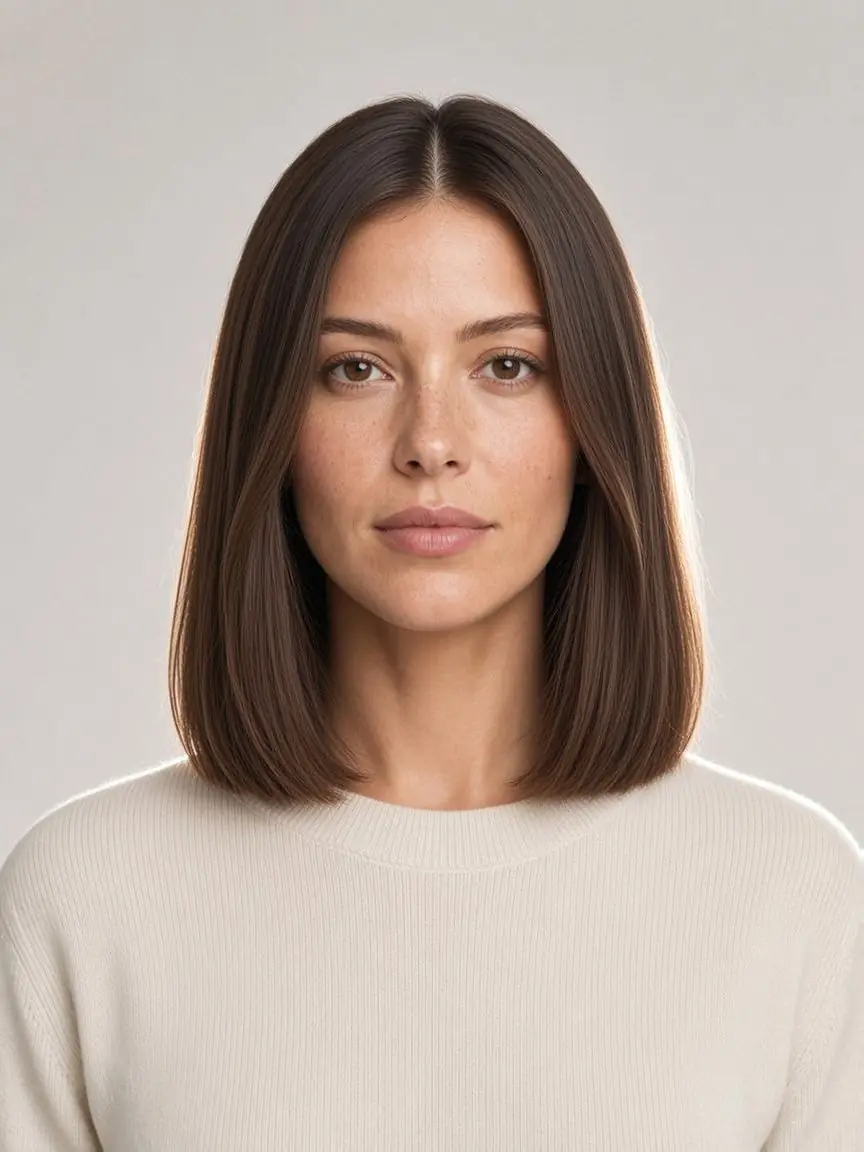
For a shorter outline, compare a pixie with a French bob. To keep more length, compare a lob with curtain layers. For longer hair, compare layered ends with curls. These six references connect to actual studio presets, so you can take a specific choice into a preview instead of searching again for a similar name.
Is oval the right starting point?
An oval outline is generally longer than it is wide, with a gently curved jaw. The oval face-shape guide explains the comparison. A straight-on photograph can help you describe your outline, but camera distance, expression and hair affect the impression. You do not need a precise ratio before choosing a haircut.
Oval face hairstyles are useful references if your outline sits between categories. If yours looks noticeably long or narrow, compare the same cut with less crown height or more fullness beside the face. These are optional visual effects, not corrections you owe your face. Our face-shape chart explains the neighboring descriptions.
Short oval face hairstyles: pixie or bob?
The first decision is how much hair you want around your ears and neck. A cropped perimeter and a chin-length edge feel different even when both count as short. When comparing oval face hairstyles, look at the side outline too. Check whether you still want to tuck hair behind your ears or tie any of it back.
Pixie
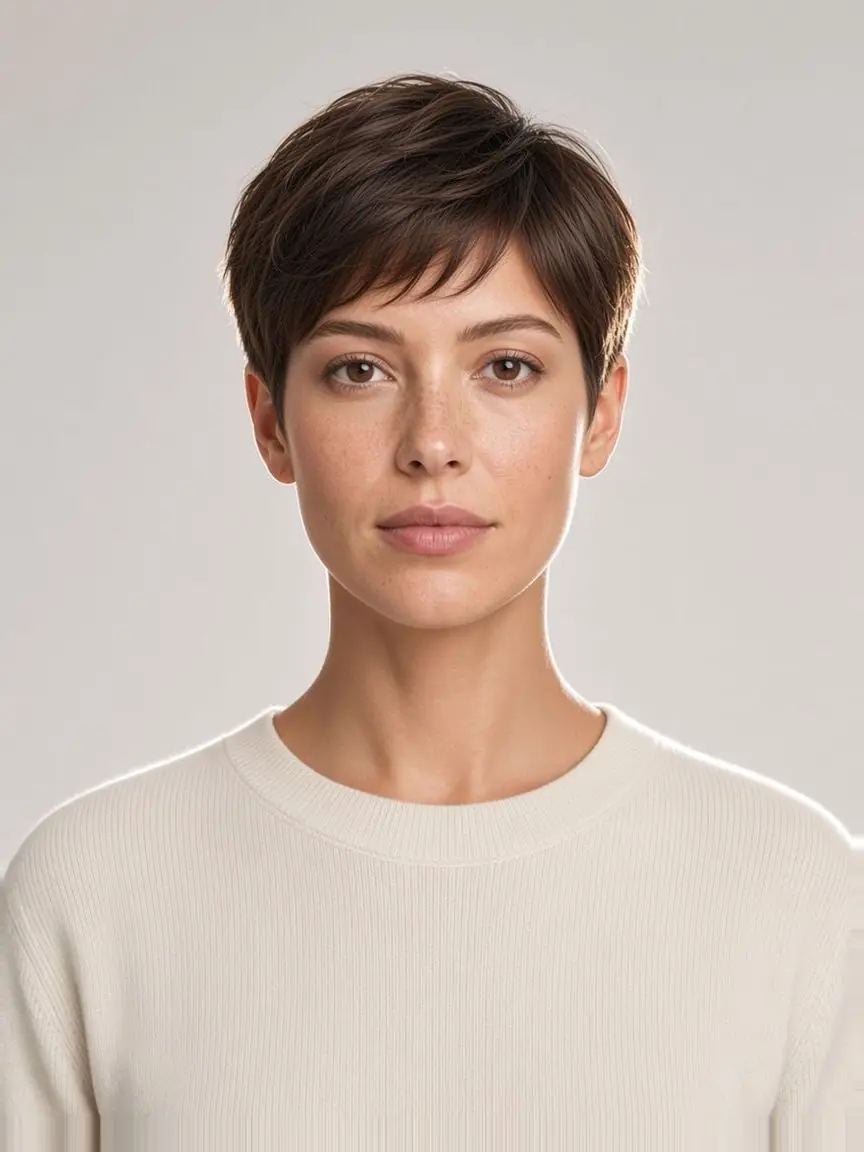
A pixie exposes more of the ears, neck and jaw. Its short perimeter makes the direction of the front especially noticeable: swept sideways, lifted or laid closer to the head.
Choose this reference for a clear change in length. Ask how the front will sit with your natural growth pattern and how the shape will grow out between appointments. Shorter does not automatically mean no styling.
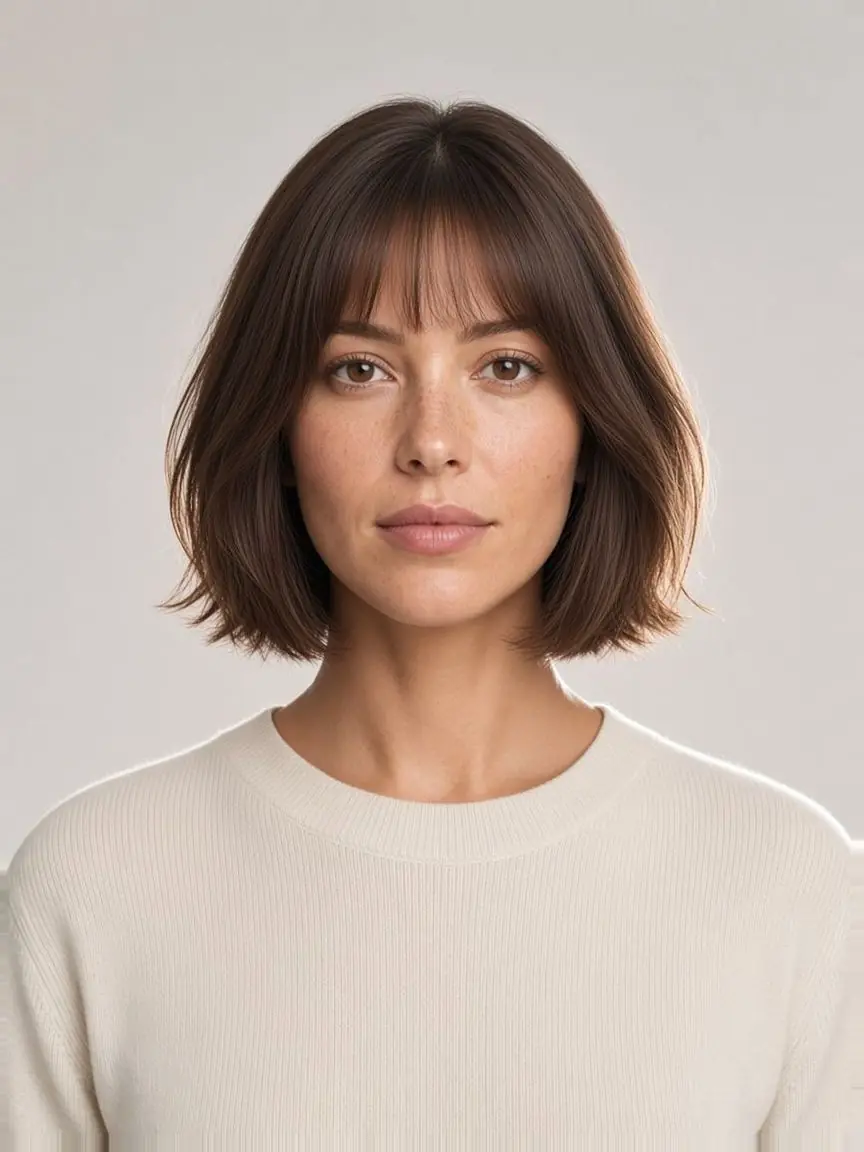
French bob
A French bob keeps a visible edge near the jaw and more hair beside the cheeks. Its fringe and perimeter give you two separate features to discuss.
Use the photo to decide whether you like that compact outline. Ask your stylist to show the dry finishing point before cutting; waves and curls will not settle exactly like a straight catalog image.
AI catalog references on another model, not verified face-shape examples or results from your photo.
Before choosing between these short oval face hairstyles, name the part you like: the open neck, side sweep, fringe or edge. You can ask for one feature without copying every detail of the model's hair. Take a side-view reference to the appointment as well as the front.
Medium oval face hairstyles: length or face framing?
A lob and curtain layers are a useful comparison when you want a change without losing all your length. One makes the perimeter the main feature; the other changes how shorter pieces sit around the forehead and cheeks. Decide whether those front pieces need to stay out of your face without clips.
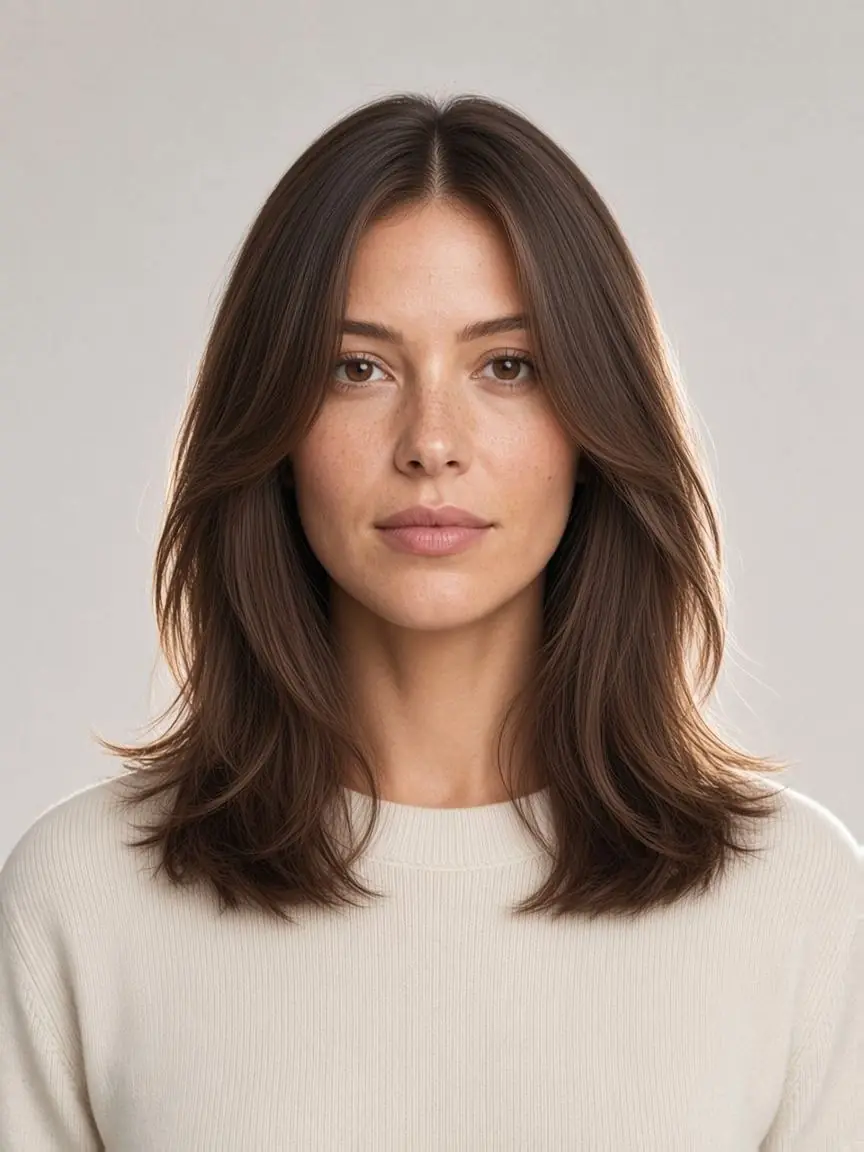
Lob
The lob keeps a relatively clear edge below the jaw. It is a useful reference for comparing a shorter overall length while retaining movement beside the neck.
Check the actual length needed for your ponytail rather than assuming every lob will tie back. If your ends flip at the shoulder, decide whether you like that movement or would style it differently.
Curtain layers
Curtain layers introduce shorter, separated pieces around the face while retaining a longer outline. The front becomes part of the style even when the rest is tied up.
Ask where the shortest pieces will fall when dry. Consider your parting, cowlicks and glasses: a still image does not show whether you will need to reset the fringe each morning.
AI catalog references on another model, not verified face-shape examples or results from your photo.
For oval face hairstyles with bangs, start with the amount of forehead coverage you want. A separated fringe leaves an opening; a fuller fringe makes a more continuous line. Neither is required by an oval outline. Bring your glasses to the appointment if the fringe will sit near their top edge.
Fine, thick and straight hair change the choice
The shape of a haircut and the amount of hair supporting it are separate decisions. If your ends already look sparse, ask what will remain at the perimeter before requesting extensive layers. If your hair feels heavy, show where the bulk bothers you instead of simply asking for “more texture.” Your stylist can examine the hair in person.
For straight hair, compare oval face hairstyles in their uncurled form. A round-brush finish may need recreating. Ask where the cut will fall with your usual part and drying routine. A smooth lob and airy layers can both be options, but they make different demands on your morning.
Long oval face hairstyles: layers or curls?
Keeping length does not mean keeping every detail unchanged. Compare the ends, shortest front piece and side volume independently. Use these oval face hairstyles to decide which feature matters most, without treating a longer face as a reason you must cut your hair short.
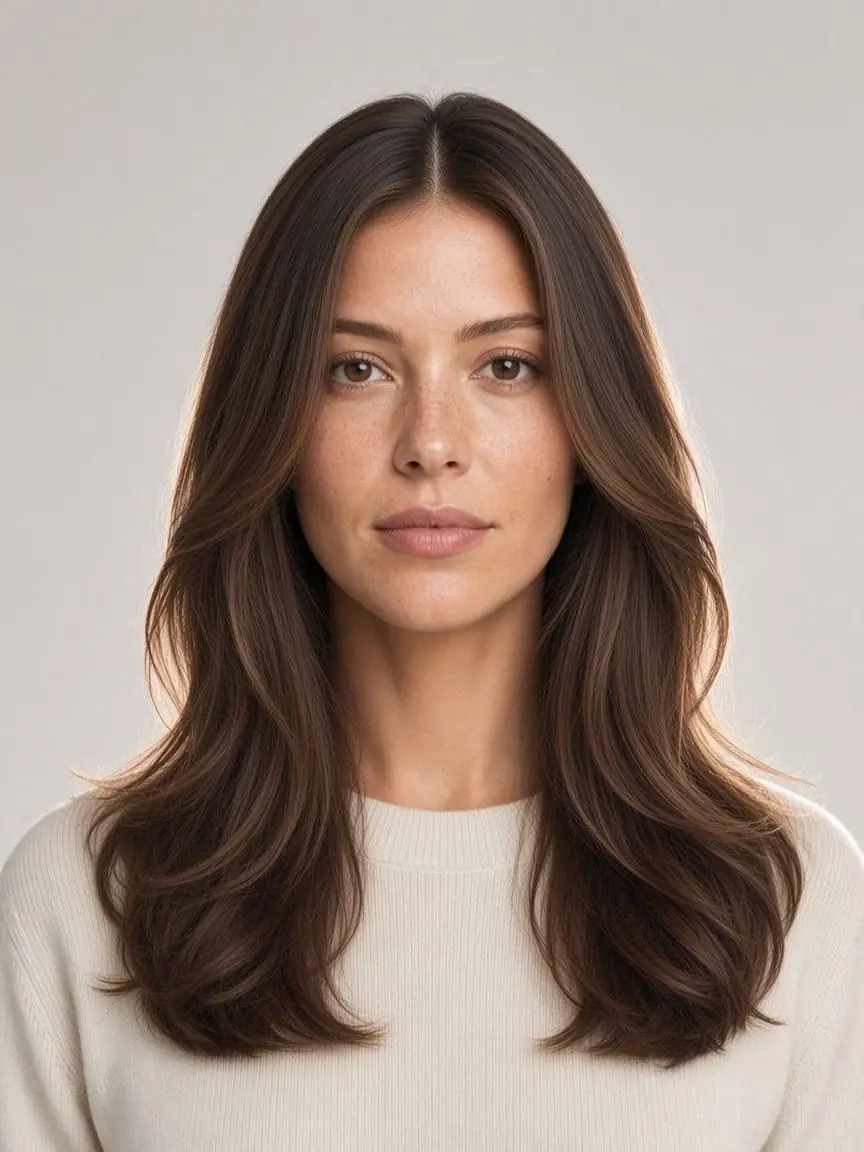
Long layers
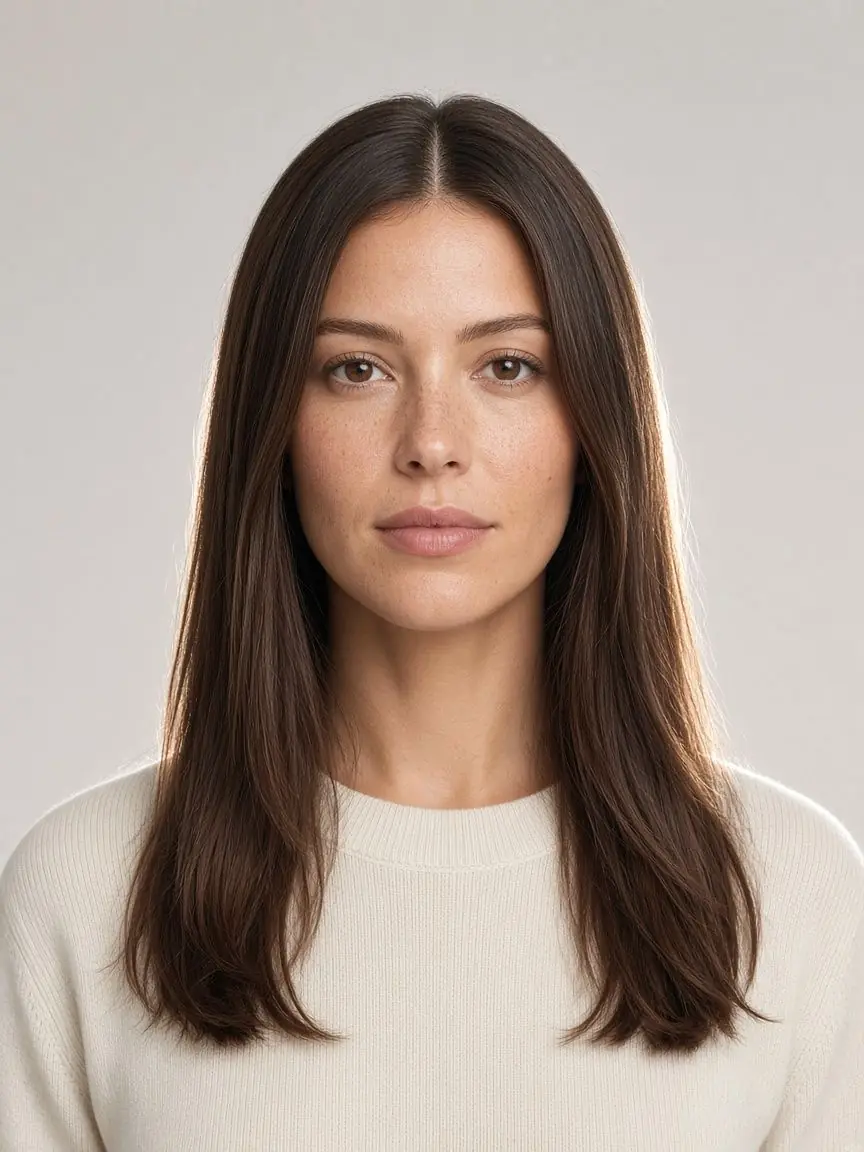
Long layers retain the overall length while changing how the ends overlap. Look at where shorter sections begin, rather than judging only by how far the longest hair reaches.
Bring a limit for the shortest front piece if you need to tuck or tie it back. Ask how much styling created the reference finish, especially if your everyday hair is straighter or less dense.
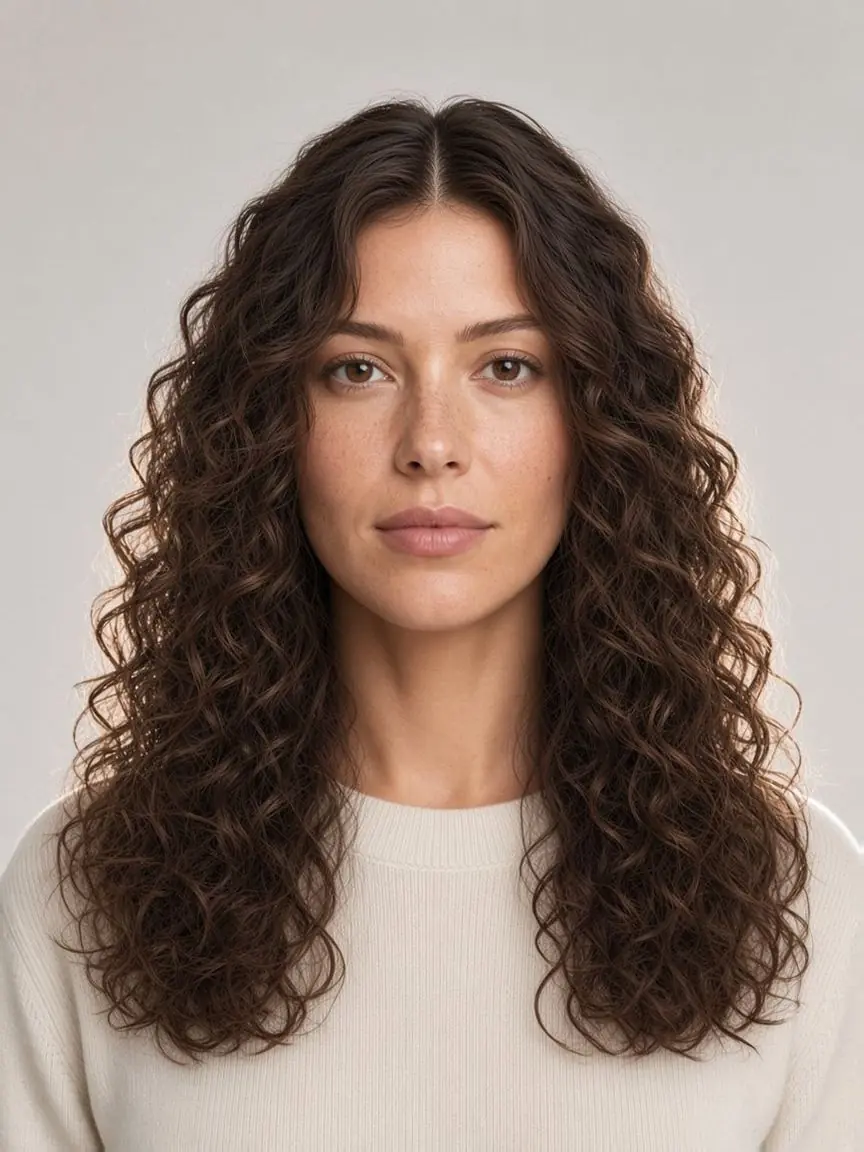
Curls
The curls reference shows a fuller, textured silhouette around the sides and through the ends. Compare its width with the layered option to decide how much visible volume you enjoy.
This preset illustrates a look; it does not measure your exact curl pattern. Discuss dry length and shrinkage with your stylist, and use references close to the texture you normally wear.
AI catalog references on another model, not verified face-shape examples or results from your photo.
Curly and coily hair deserve their own references
Oval face hairstyles for natural texture should start with the silhouette your own curls or coils create. Compare the dry outline at the temple, cheek and shoulder. If an example shows much looser curls than yours, do not use it as a promise of how the same length will fall.
The full hairstyle selector includes curly and coily filters with corresponding images. This also supports Black women looking for texture-specific inspiration: select the texture you wear, rather than assuming one hairstyle from ethnicity. Bring a dry-hair photo and explain whether you want to keep your current volume.
Decide on maintenance before the haircut
When shortlisting oval face hairstyles, write down three practical limits: how long you will spend styling, how often you want a trim, and whether your hair must fit under a helmet or into a tie. A dramatic fringe can suit someone who enjoys styling it and frustrate someone who wants to leave it alone.
Ask about both the freshly cut shape and the next stage of growing it out. A short front section might need attention before the rest does. Keep the answer specific to your hair rather than relying on a universal trim schedule or somebody else's “wash-and-go” label.
What about oval face hairstyles for men?
A men's shortlist often needs a closer look at the fringe, sides, nape and beard. Our men's face-shape hairstyle guide lets you compare real men's presets by texture and length. Use it for crops, curtains, flow and shorter sides instead of treating the women's references here as interchangeable.
Preview your shortlist on one photo
When comparing oval face hairstyles, keep the photo, hair color and viewing angle consistent. Open a pair above, inspect the selected styles in the studio, then decide whether to generate. Preparing a photo here is optional; it does not create an AI result.
Bring one photo to your chosen cuts
You can browse first. If you want to carry a photo into the studio, prepare it here on your device. Selecting a catalog cut will not generate an image or spend credits.
JPEG, PNG, WebP or supported HEIC/HEIF · up to 20 MB.
Browsing references is free. AI generation requires sign-in and credits; each successfully completed image costs one credit. The studio shows the selected looks before you generate. A preview is a visual exploration, not a prediction of a haircut, density or future growth. Read pricing and the photo privacy policy before uploading.
Questions before you book
Are there oval face hairstyles to avoid?
There is no universal forbidden-cut list. If a reference feels wrong to you, identify whether it is the height, width, fringe or finish. Compare a version changing one detail. Disliking a photo does not mean your face shape is the problem.
Should I choose short or long hair as I get older?
Age alone does not choose length. For oval face hairstyles after forty, fifty or beyond, consider your current texture and density, preferred silhouette and routine. Ask for a cut supporting those preferences without expecting a promise about looking younger.
What should I show my stylist?
Take two references and a sentence for each: “I like this edge but need the front to tie back,” or “I want this side volume with my natural curls.” Show your ordinary hair alongside any AI preview. Give your stylist specific features to adapt, rather than an entire generated image to reproduce.
Editorial reading: Byrdie's oval-face haircut gallery and Vogue's stylist discussion. These comparisons describe our catalog references and are not a personal consultation.