
Eyeglasses for face shape: find your frame shortlist
Choosing eyeglasses for face shape starts with the effect you enjoy: a clear straight edge, a softer curve, or attention near the brows. Use your outline to narrow the comparison, then let comfort and personal taste decide.
Compare six frame families below and save two to try in person. The illustrations show differences in shape; they are not products for sale or pictures of glasses fitted to your face. The shortlist works without a photo or account.
Use your face shape as a starting point
Look at the outline with your hair moved away from the sides. Compare the forehead, cheeks and jaw rather than trying to fit every feature into a perfect geometric shape. The face-shape chart explains neighboring categories. If two descriptions seem plausible, keep both in mind; your glasses do not depend on choosing one label correctly.
Guides to eyeglasses for face shape often recommend contrasting lines. That gives you a starting comparison, not a rule. Straight rims can add a defined edge beside rounded cheeks; curved rims can sit alongside an angular jaw. Repeating the same shape can also be a deliberate style choice.
For eyeglasses for face shape comparisons, use these questions:
- Round: do you prefer a shallow rectangular edge or a deeper square outline?
- Oval: do you want a horizontal line or more emphasis at the outer corners?
- Square: would a circular rim or a shallower oval create the curve you enjoy?
- Heart: how much lower-rim depth do you like beneath a broader upper face?
- Diamond: do you prefer attention at the brows or a quieter rim around the eyes?
- Long or oblong: how does a deeper frame sit between your eyebrows and cheeks?
- Triangle or pear: would a strong top edge or raised corners provide the emphasis you want?
These are options for looking, not instructions to correct your face. When selecting eyeglasses for face shape, keep a favorite outside the usual recommendations if it feels right. The same comparison applies to men's and women's frames; shop labels do not determine which lines you can wear.
Turn the suggestions into two choices
Use the selector to make a first pair. Choose your closest outline, then leave the suggested direction or replace it with your own preference. Add a practical concern, such as sliding frames, bangs or headphones. Your notes will include that concern so it does not disappear behind the style decision.
A useful shortlist of eyeglasses for face shape includes a reason for each comparison. “Round versus oval, because I want to compare depth” gives you something specific to judge. “Anything that suits me” leaves the decision much harder to explain at a store.
Choose two frames to try in person
Pick an outline, or leave it uncertain. Your preferences can override the starting suggestions. No photo or account needed.
Rectangle & Round
Compare one straight outline with one curved outline before choosing a face-shape label.
Check in person: Try the actual frame: check nose contact, pressure at the temples and behind the ears, and cheek clearance when smiling.
Read or copy my notes
Style suggestions only. An optician can confirm physical fit, lens measurements and prescription suitability.
Eyeglasses for face shape: six outlines to compare
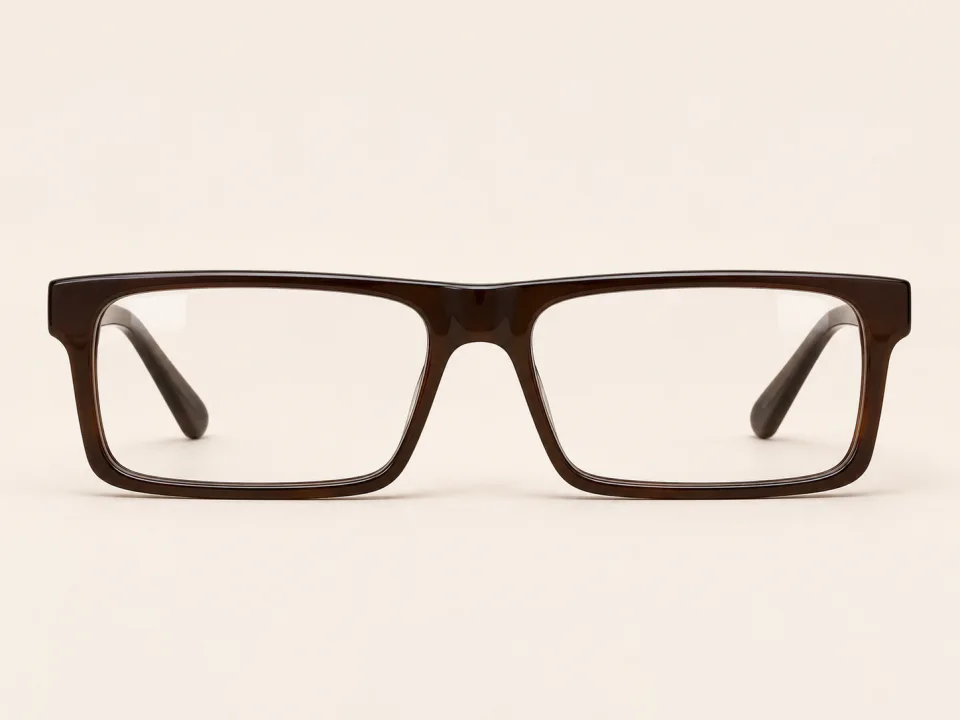
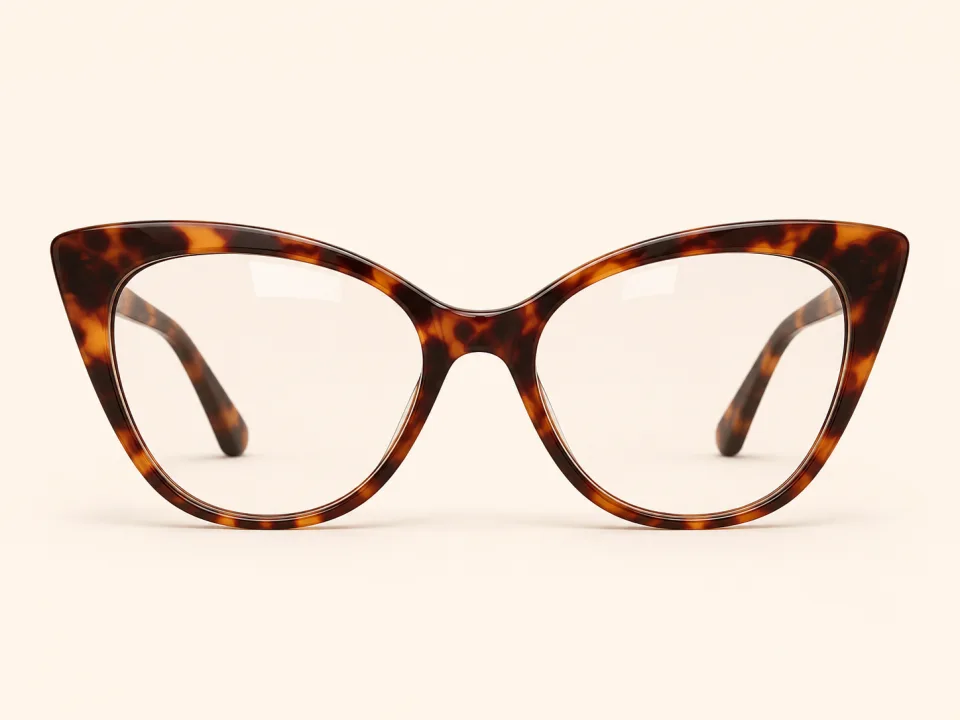
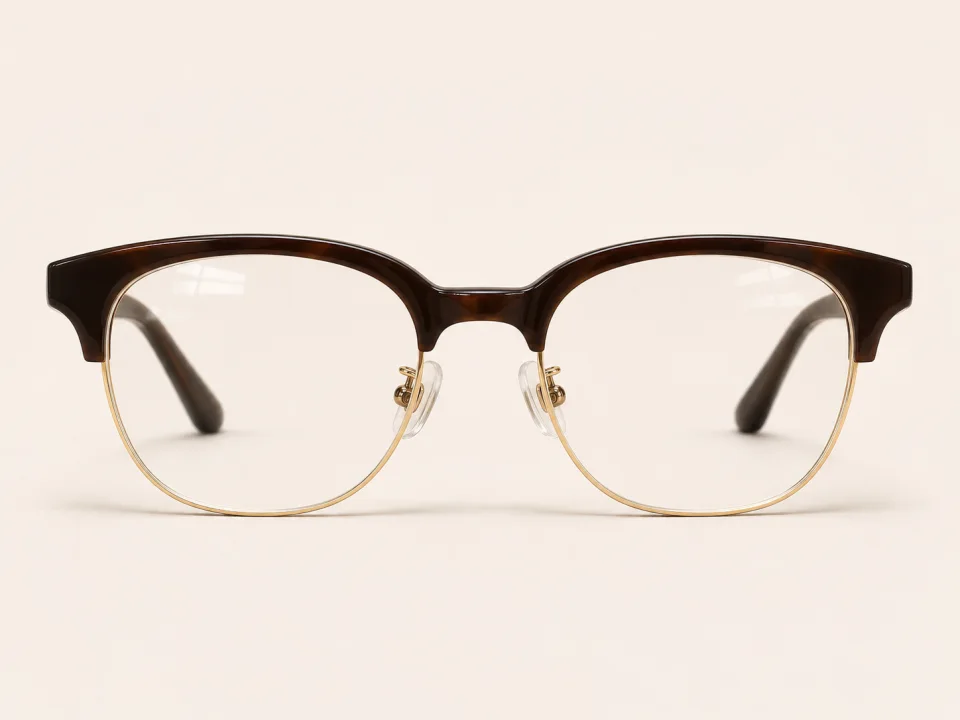
Start with the edges, then notice rim thickness and color. The first pair compares shallow and deep angular frames; the next pair compares two curves; the final pair compares emphasis near the brows. Each image is an AI illustration of a generic frame family. Images are not to physical scale, and the materials shown do not establish comfort or weight.
Use these eyeglasses for face shape references to choose a direction before looking at specific models. Once you find a real frame you like, inspect its stated dimensions and try it on. Two frames sold under the same shape name may fit very differently.
Rectangle
The straight upper and lower edges make a clear horizontal line. Compare this shallow shape with the deeper square frame beside it: the two can feel quite different even in the same dark color. This is a useful starting contrast against a rounded facial outline.
Look at the space below your eyebrows and whether the narrow opening feels visually cramped. A rectangular outline does not tell you the actual bridge fit or lens dimensions.
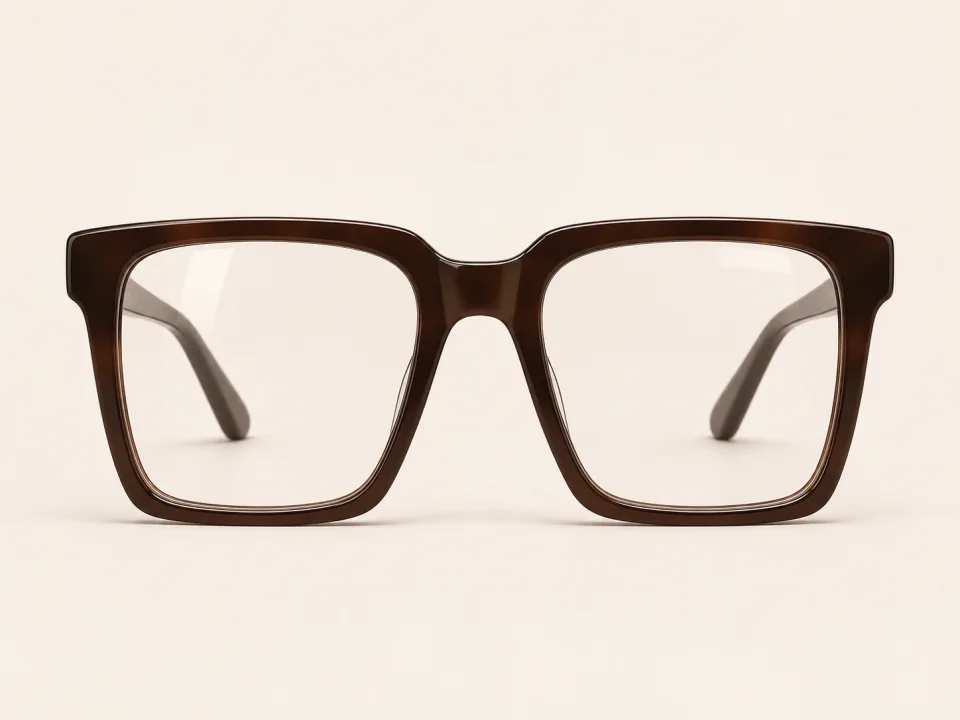
Square
This frame keeps visible corners but adds more vertical depth than the rectangle. It can make the glasses a stronger part of your look. Compare the lower rim against your cheeks, especially if you smile broadly or prefer a frame that sits low.
Try the actual model with your normal expression and a smile. A deeper frame is a visual option, not proof that a particular prescription or lens design will work in it.
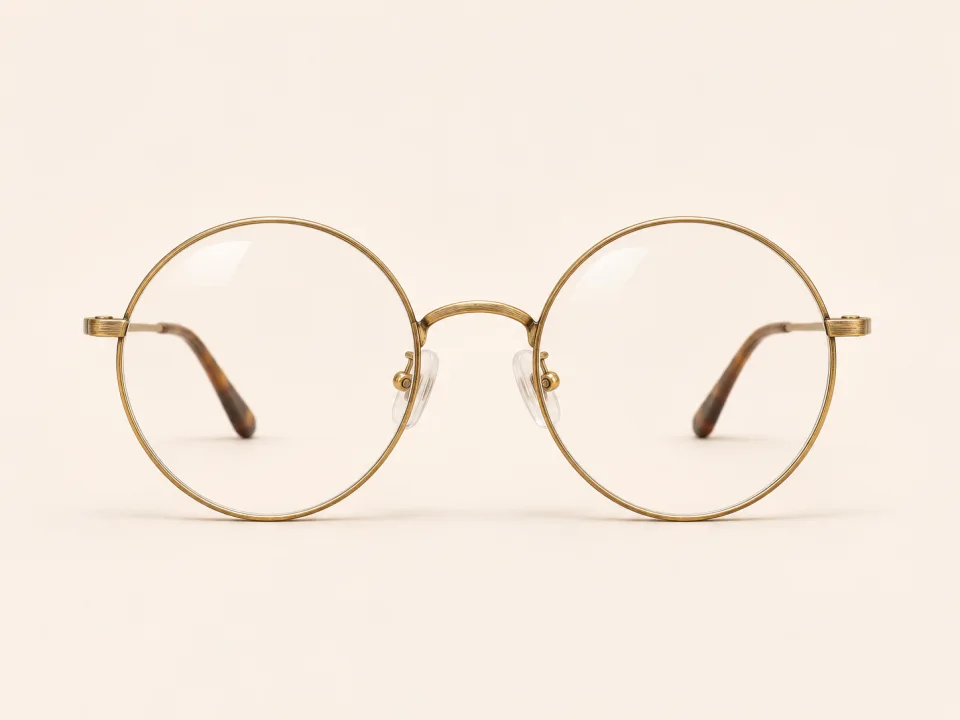
Round
The circular wire rim repeats a curve from top to bottom. Against an angular outline, it offers a clear contrast; against a rounded outline, it repeats the same visual language. Either effect can be intentional. Notice how much less dark material surrounds the eyes here.
Compare a similar circle in a thicker material before deciding that all round frames look delicate. Frame shape, rim thickness and color are separate choices, even when shopping filters combine them.
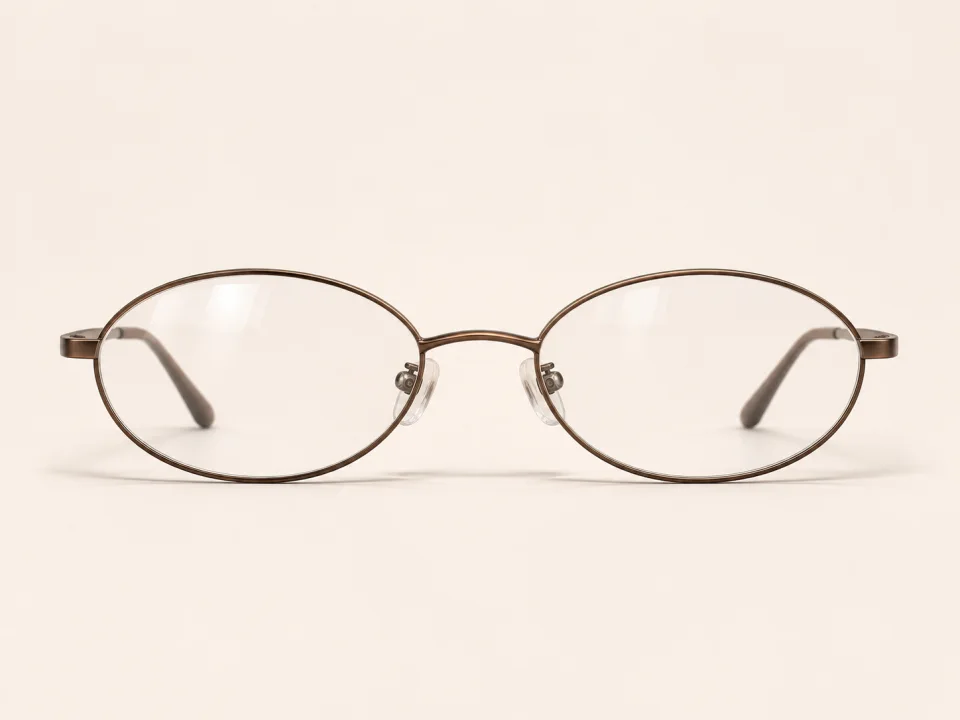
Oval
The oval keeps a curved rim but stretches it sideways. Set it beside the round example to see the difference in height. This is a useful second option when you enjoy a curved outline but want the glasses to occupy less of the area between brow and cheek.
Ask to try the actual width you need. A small-looking outline in a photograph is not necessarily a small frame, and these illustrations are not shown at a shared physical scale.
Cat-eye
The upper corners rise and extend outward while the lower rim remains curved. This draws attention toward the outer eye area. Compare that direction with the browline frame, which puts its strongest material across more of the top edge rather than mainly at the corners.
Inspect the hinge area with your hair both tucked and loose. Choose the amount of upsweep you enjoy; gender labels in a store do not determine whether this outline belongs on your shortlist.
Browline
The dark upper section carries most of the visual weight, while the thin metal lower rim leaves the cheeks more visible. This creates a different effect from a full dark square. It is a useful comparison when you want definition near the brows without equally thick lower edges.
Check how your eyebrows and any fringe sit beside that upper line. The nose pads shown are an illustration of construction, not a guarantee that this shape will stay in place on your nose.
Check the real frame, not just its outline
Choosing eyeglasses for face shape is a visual step. Physical fit is a separate check. Ask an optician to assess nose contact, pressure around the temples and ears, and whether the frame moves or touches your cheeks when you smile. Bring your current glasses if there is a specific problem you want to improve.
Avoid guessing fit from these photographs. There is no shared measurement scale, and your face-shape label does not specify bridge size or pupillary distance. For prescription glasses, have the appropriate professional confirm the measurements and whether the frame suits your lenses. Warby Parker's fit guide explains the practical checks in more detail.
If your glasses slide, a different outline may not solve it. Discuss the bridge and adjustment first. Keep this separate from choosing eyeglasses for face shape so that a frame you love visually still gets a proper comfort check.
Bring your everyday hair into the comparison
Check a frame with your usual hairstyle, not only with your hair pushed back for a fitting. A heavy fringe may sit close to the top rim; loose side pieces may cover an upswept corner. Tuck the hair once, then let it fall normally. Notice which version you will actually wear most often.
When comparing eyeglasses for face shape with bangs, look at the space around the brows and the hinge area. With headphones, test both together. If you are considering a haircut too, use the hairstyle guide to choose hair references separately. Our AI studio previews hairstyles using credits; this glasses guide does not generate eyewear try-on images.
Common questions about eyeglasses for face shape
Which glasses work with an oval outline?
Start with two effects rather than a universal best frame. Our starting pair is rectangle and cat-eye, so you can compare a horizontal edge with raised outer corners. If you prefer curves, switch to round and oval. Eyeglasses for face shape recommendations should help you describe what you like, while the real frame still needs to fit.
Can a round face wear round glasses?
Yes. Repeating a curve is a valid aesthetic choice. Compare a circle with an angular frame and decide which effect you prefer. A categorical ban on round glasses would remove an option before you have seen it in context. Keep rim thickness and size in the comparison too.
Can I upload a photo to try these glasses?
This page offers visual references and an editable shortlist, without uploading a photo. It does not place frames on your face. If you use a retailer's virtual try-on, treat the image as another visual aid and verify physical fit separately. Our face-shape detector provides an approximate outline category, not eyewear sizing.
What should I save before visiting a store?
Download your two frame families and fit concern, then add the names or photos of actual models you find. Bring both candidates to the same fitting session if possible. A shortlist of eyeglasses for face shape is most useful when it helps you ask a clear question and compare the answers under the same conditions.
For additional perspectives, read Zenni's face-shape guide and Warby Parker's explanation of shape and personal style. The illustrations and shortlist here are general styling references, with no retailer affiliation or measured fit claim.